


















Radiation levels remain normal, but another blackout underscores how years of war have steadily eroded the safety margins around Europe’s largest nuclear facility.
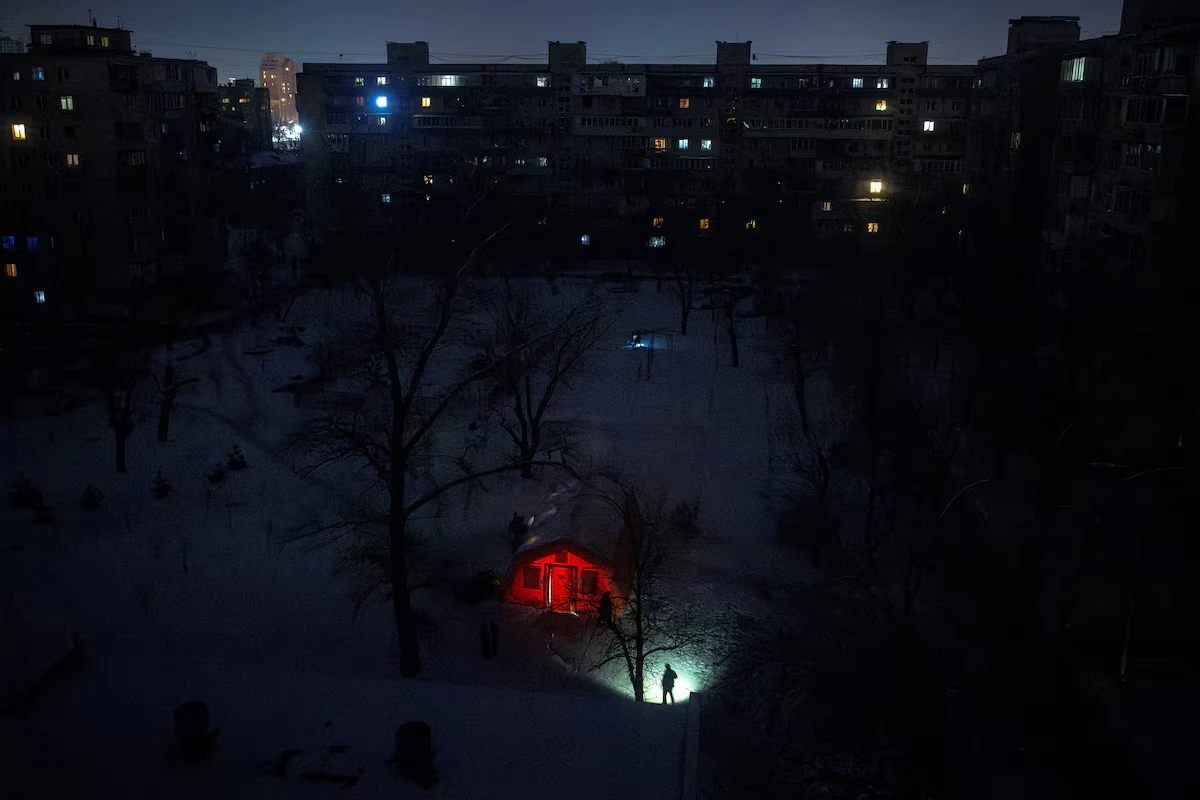
The Russian-held Zaporizhzhia nuclear power plant lost its external electricity supply on August 20 after a high-voltage line was damaged, forcing the facility to rely on emergency diesel generators. The Moscow-installed administration said staff were monitoring the plant and maintaining all six reactors in a safe condition.
Officials at the plant said radiation levels remained within normal limits and reported no release of radioactive material. That is an important distinction: the loss of off-site power is a serious nuclear-safety event, but it is not in itself evidence of a reactor accident, fuel damage or an immediate radiological threat to surrounding communities.
All six reactors at the Zaporizhzhia nuclear plant are currently shut down and are not generating electricity. They still require a reliable power supply, however, because pumps, monitoring equipment, safety systems and spent-fuel facilities must continue operating even when the reactors themselves are no longer producing power.
Emergency diesel generators are designed precisely for such circumstances. They can supply electricity to essential safety equipment when connections to the national grid fail. But they are a backup system rather than a normal source of power, and their reliability depends on fuel stocks, maintenance, functioning machinery and trained personnel.
According to Daycom’s analysis of verified public information, the immediate situation does not indicate a nuclear accident. The deeper concern is cumulative: every loss of external power removes another layer of normal protection, and repeated blackouts force emergency systems to perform duties for which they were designed only as a temporary safeguard.
Before Russia’s full-scale invasion, the plant had a far more robust network of external power connections. Fighting, damaged substations and repeated destruction of transmission infrastructure have gradually reduced that redundancy. The plant now depends on a far more fragile electricity network than nuclear engineers would consider normal.
Reliable off-site power is one of the basic conditions of nuclear safety. Even after a reactor is shut down, nuclear fuel continues to generate residual heat and must be monitored and cooled. Spent fuel also requires controlled storage conditions, making uninterrupted electricity essential to preventing a technical problem from developing into a more serious event.
The frequency of blackouts is therefore as important as the latest outage itself. Since the beginning of the full-scale war, Zaporizhzhia has repeatedly lost all external power and switched to diesel generators. By 2026, such episodes had become a recurring feature of the plant’s wartime operation rather than an exceptional contingency.
Earlier outages have sometimes lasted for hours and, in more difficult cases, for days. Restoring damaged lines has required access for repair crews, local security arrangements and, on several occasions, mediation by the International Atomic Energy Agency because transmission infrastructure lies in territory exposed to military activity.
Repeated use of emergency systems creates its own pressures. Diesel generators can function effectively, but they require fuel, servicing and reliable supporting equipment. A nuclear installation is designed around multiple independent layers of protection, and every prolonged loss of one layer increases dependence on the remaining ones.
Zaporizhzhia is Europe’s largest nuclear power plant, with six VVER-1000 reactors. Russian forces seized the facility during the opening weeks of the 2022 invasion. It stands near Enerhodar on the southern bank of the Dnipro, in an area that has remained close to active military operations throughout the war.
The reactors are in shutdown states, meaning their heat output is far below what it would be during normal electricity generation. Yet shutdown does not eliminate decay heat. Fuel continues producing heat after a reactor stops, while spent fuel must also remain under controlled conditions for long periods after it leaves the reactor core.
That distinction explains why saying the plant “produces no electricity” can be misleading without further context. It does not need power to generate electricity for the grid, but it does need electricity to keep nuclear material safely cooled, monitored and contained. Loss of grid power therefore remains a significant safety event.
The diesel generators themselves are not a sign that a meltdown has begun. On the contrary, their automatic start is evidence that an engineered safety system is doing its job. The risk lies in what would happen if external power remained unavailable long enough for additional backup systems, fuel supplies or equipment to fail.
Nuclear safety is built on defence in depth: if one system fails, another should take over, followed by further layers of protection. The concern at Zaporizhzhia is that war repeatedly removes or degrades those layers. A system designed for rare emergencies is being required to absorb recurring disruptions over several years.
That vulnerability has been demonstrated before. During earlier periods without external power, restoring grid connections required negotiations and access to damaged infrastructure near the front. The longer an outage lasts, the more safety depends on the condition of generators, the availability of fuel and the ability of specialists to reach equipment.
The precise cause of the high-voltage line damage reported on August 20 had not been independently established in the first accounts. Russia and Ukraine have repeatedly blamed each other for military activity around the plant. Without verified technical evidence, responsibility for this specific outage cannot be assigned with confidence.
What can be stated more firmly is that external power was lost, the plant switched to emergency diesel generation and no abnormal radiation levels were reported. Those facts support a serious but measured assessment: the facility is operating under degraded conditions, while there is currently no evidence of a radiological emergency.
Normal radiation readings should not be mistaken for proof that the broader situation is normal. Radiation monitoring primarily detects consequences after radioactive material has escaped. Nuclear safety is designed to prevent conditions from deteriorating that far, and reliable electricity remains one of the systems intended to stop such escalation.
Water supplies are another long-term concern. The destruction of the Kakhovka dam in 2023 altered the hydrological environment around the plant and forced operators to rely on alternative water sources and the cooling pond. Shut-down reactors require much less water than operating units, but dependable cooling resources are still necessary.
The result is a layered vulnerability: reduced external power connections, concerns about water, ageing and repeatedly used equipment, constrained access for maintenance and an active war nearby. None of these factors alone means an accident is imminent, but together they narrow the margin available for technical failure or human error.
IAEA experts have remained at the plant since 2022, giving the agency an on-site presence and access to some operating information. Their mission can monitor conditions and report safety concerns, but it does not control the territory, command the plant or possess the authority to halt military operations in the surrounding area.
The political dispute over the facility remains unresolved. Russia controls the plant and has installed its own management, but the site lies on internationally recognised Ukrainian territory. Kyiv argues that lasting nuclear safety requires the station to return to Ukrainian control, while Moscow says its personnel are maintaining safe operations.
The IAEA has generally avoided assigning blame for individual incidents without evidence it can verify independently. Instead, it has repeatedly focused on preserving external power, cooling, physical integrity, staffing and access — the practical conditions required to prevent a military confrontation from becoming a nuclear emergency.
The next critical indicator will be how long the current blackout lasts. If the damaged line is repaired quickly, diesel generation can return to its intended standby role. If restoration takes longer, attention will increasingly turn to generator reliability, fuel reserves, maintenance capacity and access for repair personnel.
Previous outages have shown both possibilities. Some grid connections have been restored relatively quickly; others have required prolonged negotiations and local arrangements before technicians could work safely. That unpredictability is precisely why each new loss of external power attracts concern far beyond the immediate battlefield.
Zaporizhzhia has lost external power before, and that repetition is the most troubling part of the August 20 event. The reactors remain shut down, emergency systems are functioning and radiation levels are normal. Yet a nuclear plant should not have to prove its resilience by repeatedly surviving conditions classified as emergencies.
As long as the Zaporizhzhia nuclear plant remains inside a war zone, the greatest danger may be cumulative rather than dramatic: another damaged line, another blackout, another prolonged period on emergency equipment. Nuclear safety is built on redundancy. War, year after year, has been steadily consuming it.