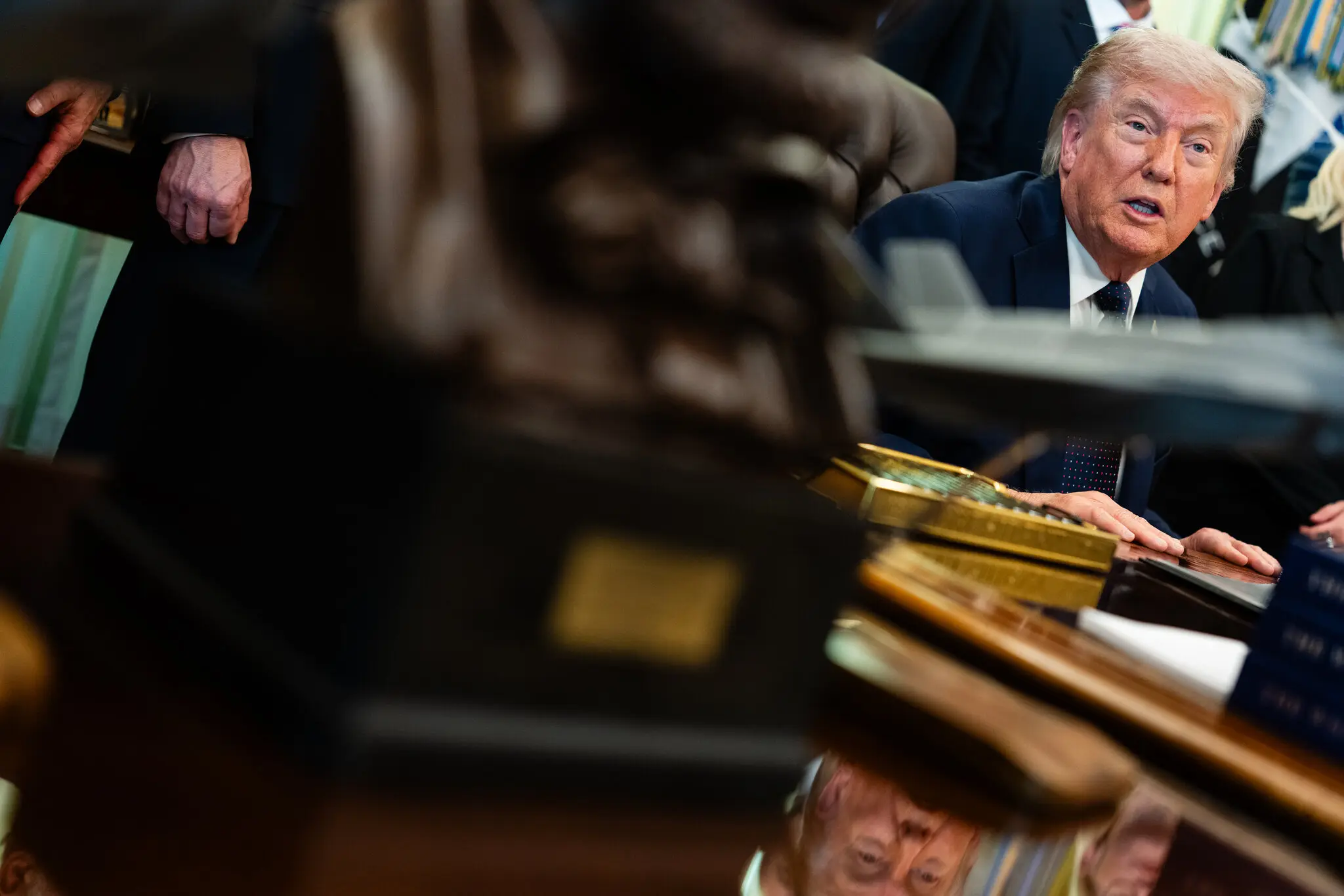
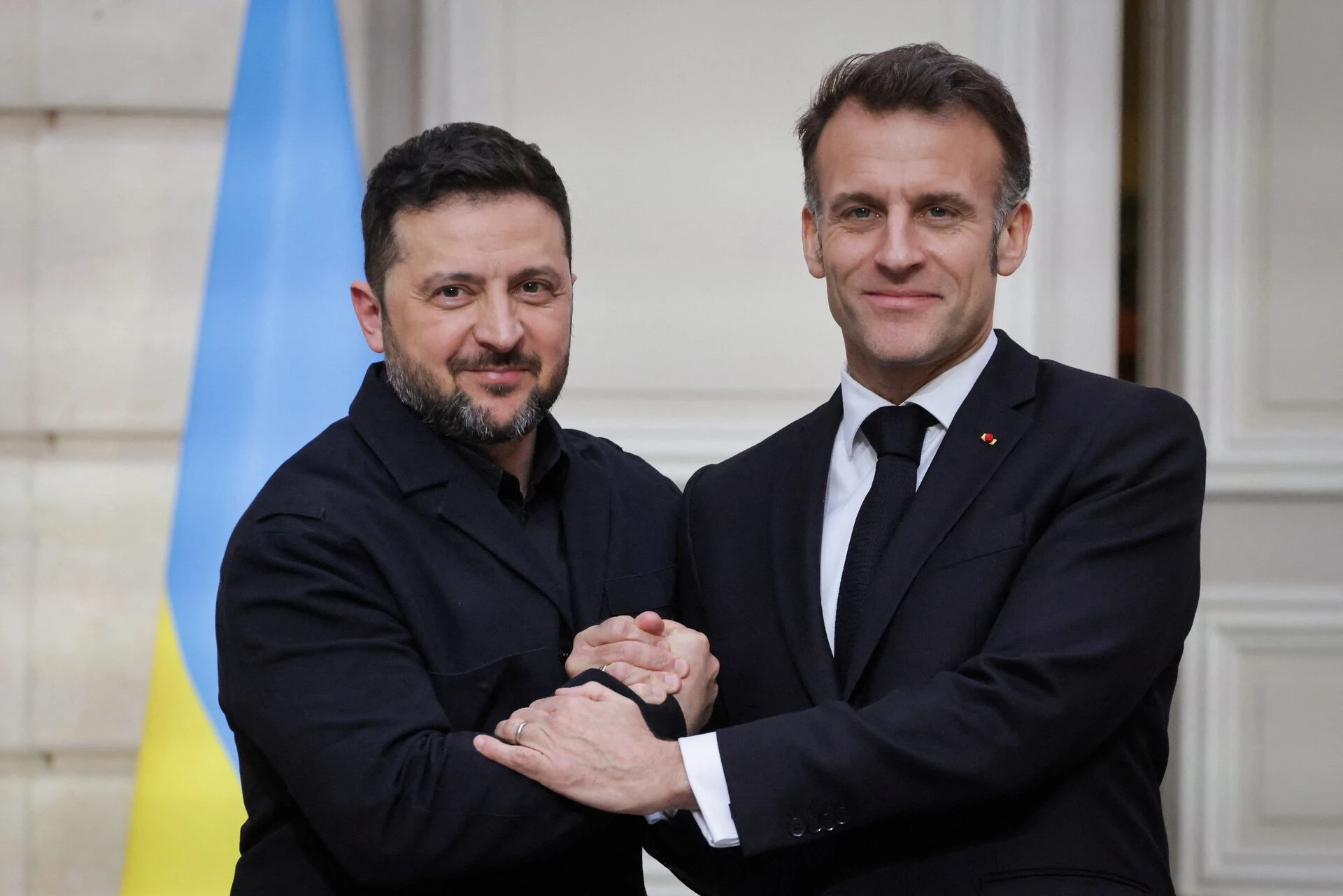






















At first glance, Washington appears to have secured a diplomatic result that looked uncertain only days ago. After a White House meeting involving American, Israeli and Lebanese officials, Donald Trump said the cease-fire between Israel and Lebanon would be extended for another three weeks. That pushes the deadline beyond April 26 and gives the parties time until May 17. In Middle Eastern politics, however, time is rarely a solution in itself. More often, it merely postpones the moment when the underlying weakness of an agreement becomes impossible to ignore.
The real significance of this extension lies not only in its duration. The United States is trying to move the conflict out of the logic of near-automatic retaliation and into a direct interstate channel, one in which Israel and Lebanon communicate through diplomacy rather than through artillery fire and airstrikes. In that sense, the White House is attempting something broader than simply lowering the temperature in southern Lebanon. It is testing whether that front can be separated from the wider regional war and folded into a more manageable political process.
That ambition matters because the Lebanese front has never been a purely bilateral one. It has always existed inside a larger strategic map, where local escalation can quickly feed a broader confrontation involving Iran, Israel and the United States. According to Daycom’s earlier analysis, the extension should therefore be read not as a peace breakthrough, but as an effort to prevent one of the region’s most combustible arenas from re-entering a wider chain reaction.
At first glance, Washington appears to have secured a diplomatic result that looked uncertain only days ago. After a White House meeting involving American, Israeli and Lebanese officials, Donald Trump said the cease-fire between Israel and Lebanon would be extended for another three weeks. That pushes the deadline beyond April 26 and gives the parties time until May 17. In Middle Eastern politics, however, time is rarely a solution in itself. More often, it merely postpones the moment when the underlying weakness of an agreement becomes impossible to ignore.
The real significance of this extension lies not only in its duration. The United States is trying to move the conflict out of the logic of near-automatic retaliation and into a direct interstate channel, one in which Israel and Lebanon communicate through diplomacy rather than through artillery fire and airstrikes. In that sense, the White House is attempting something broader than simply lowering the temperature in southern Lebanon. It is testing whether that front can be separated from the wider regional war and folded into a more manageable political process.
That ambition matters because the Lebanese front has never been a purely bilateral one. It has always existed inside a larger strategic map, where local escalation can quickly feed a broader confrontation involving Iran, Israel and the United States. According to Daycom’s earlier analysis, the extension should therefore be read not as a peace breakthrough, but as an effort to prevent one of the region’s most combustible arenas from re-entering a wider chain reaction.
And that is precisely where the central weakness begins. Hezbollah was not part of the Washington talks and did not become a full political owner of the arrangement that emerged from them. Formally, Israel and Lebanon sit across from each other as states. In practice, the actor most capable of collapsing any cease-fire remains outside the diplomatic frame. That gap is not procedural. It is structural.
The contradiction goes to the heart of Lebanon’s political reality. The agreement depends on the authority of a state that still does not hold a full monopoly over war and peace on its own territory. Beirut may sign, negotiate and publicly endorse the extension, but the durability of any pause still depends on a parallel armed force that calculates its interests through a different strategic lens. So long as that remains true, the calendar of diplomacy will always rest on a battlefield logic it does not fully command.
That is why the extension should be treated less as proof of stabilization than as a test of governability. Can the Lebanese state take even limited practical steps that show southern Lebanon is no longer an autonomous space for military decision-making outside formal institutions? Can it demonstrate that a cease-fire signed in diplomatic language can be enforced in political reality? The answer to those questions will determine whether May 17 carries any meaning beyond being another temporary marker in a conflict that keeps changing shape without truly ending.
The military picture already suggests how narrow the margin is. Even after the announcement of the extension, the reality on the ground did not disappear. Strikes, exchanges of fire, localized operations and calibrated signals of force continued to shape the atmosphere in southern Lebanon. This reveals the true nature of the current arrangement. It is not peace. It is controlled friction: a condition in which each side seeks to avoid a major escalation while preserving the tools and posture needed to resume pressure at any moment.
Such arrangements can be useful, but they are not self-sustaining. Their stability depends not on trust, but on restraint. And restraint in this region is usually temporary, contingent and vulnerable to events that no diplomatic script can fully contain. A local attack, a misread signal, a cross-border strike or a shift in Iranian calculations could quickly transform a managed pause into a new escalation spiral. In that sense, the cease-fire is less a settlement than a holding pattern.
Its political importance, moreover, reaches well beyond Lebanon itself. For Washington, reducing violence on the Lebanese front is part of a wider effort to narrow the number of active theaters surrounding Israel. At a time when the war with Iran has only partially cooled and tensions around the Strait of Hormuz remain acute, the White House has an obvious interest in removing Lebanon from the list of immediate detonators. Every front that can be temporarily quieted gives the United States more room to manage the larger regional crisis. Every front that reignites makes diplomacy with Tehran weaker, narrower and more expensive.
For Lebanon, the stakes are more intimate and more existential. The country is being offered yet another chance to reclaim some measure of agency after weeks of destruction, casualties and renewed exposure of its institutional fragility. But that opportunity comes with a hard condition. Beirut must show that it is capable not merely of participating in talks, but of translating those talks into authority on the ground. That is where previous stabilization efforts have so often failed: the external framework was built, but the internal distribution of power remained untouched.
Israel, for its part, has not secured a final answer either. Its core position remains unchanged: no extended truce has real strategic value if Hezbollah retains the infrastructure, command capacity and geographic freedom needed to strike northern Israel again. That is why Israel continues to insist on preserving room for action under the banner of self-defense. Yet this logic carries its own danger. The broader the definition of that right becomes, the easier it is for any cease-fire to turn into a low-intensity conflict rather than a road toward genuine de-escalation.
For Trump, the extension also serves another purpose. It projects an image of regional management: not the resolution of every contradiction, but the temporary separation of fronts, the lowering of simultaneous pressure points and the presentation of that reduction as evidence of control. In the short term, that approach can produce visible results. But its limits are just as visible. If the key armed actor at the center of the crisis remains outside the full political structure of the deal, then every extension lasts only as long as all sides find it useful to act as though the arrangement is sturdier than it really is.
That is why the conclusion should remain restrained. Extending the cease-fire until May 17 is not a peace agreement, nor is it yet the assured beginning of one. It is an attempt to buy time for a structure that still has not resolved its deepest contradiction: the gap between Lebanon’s diplomatic sovereignty and Hezbollah’s military autonomy. Unless that gap begins to narrow in practical terms, the new date will not mark a step toward peace. It will mark only another postponement of the next escalation.
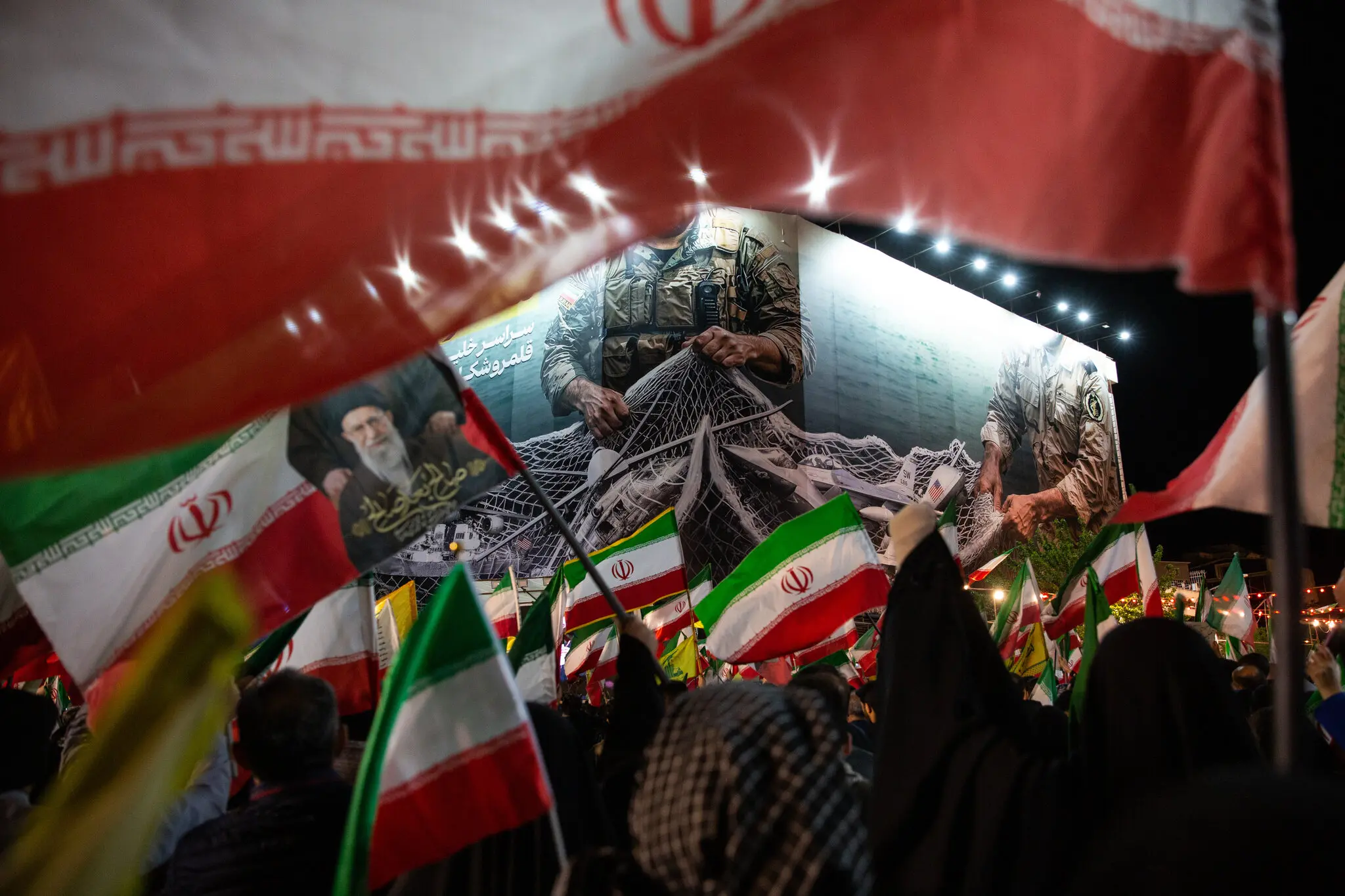





 Міністр оборони США Піт Хегсет заявив, що нові військові зусилля щодо проведення торговельних суден через Ормузьку протоку були тимчасовими оборонними зусиллями, незважаючи на обмін вогнем між США та Іраном у понеділок — Чіп Сомодевілла