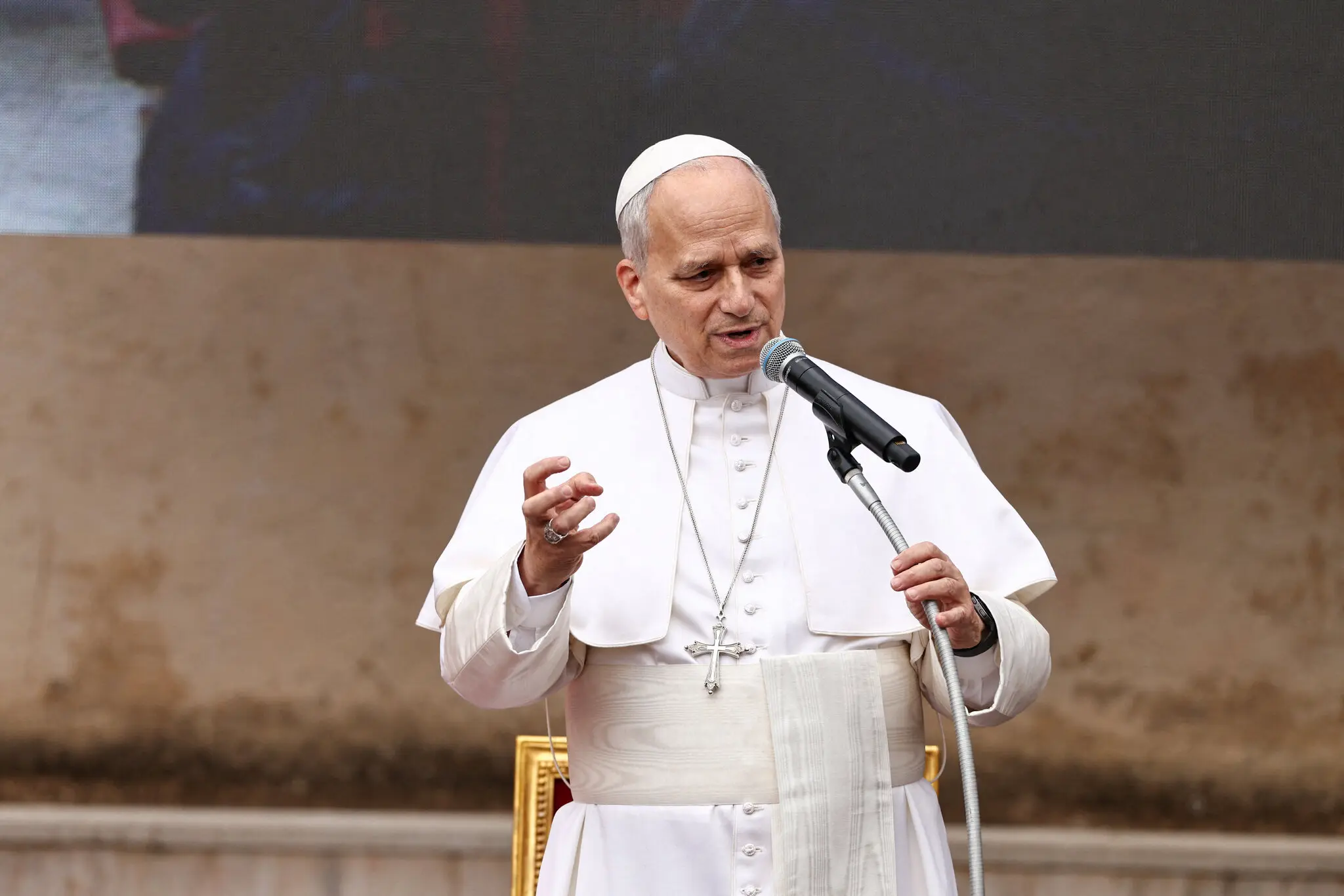




















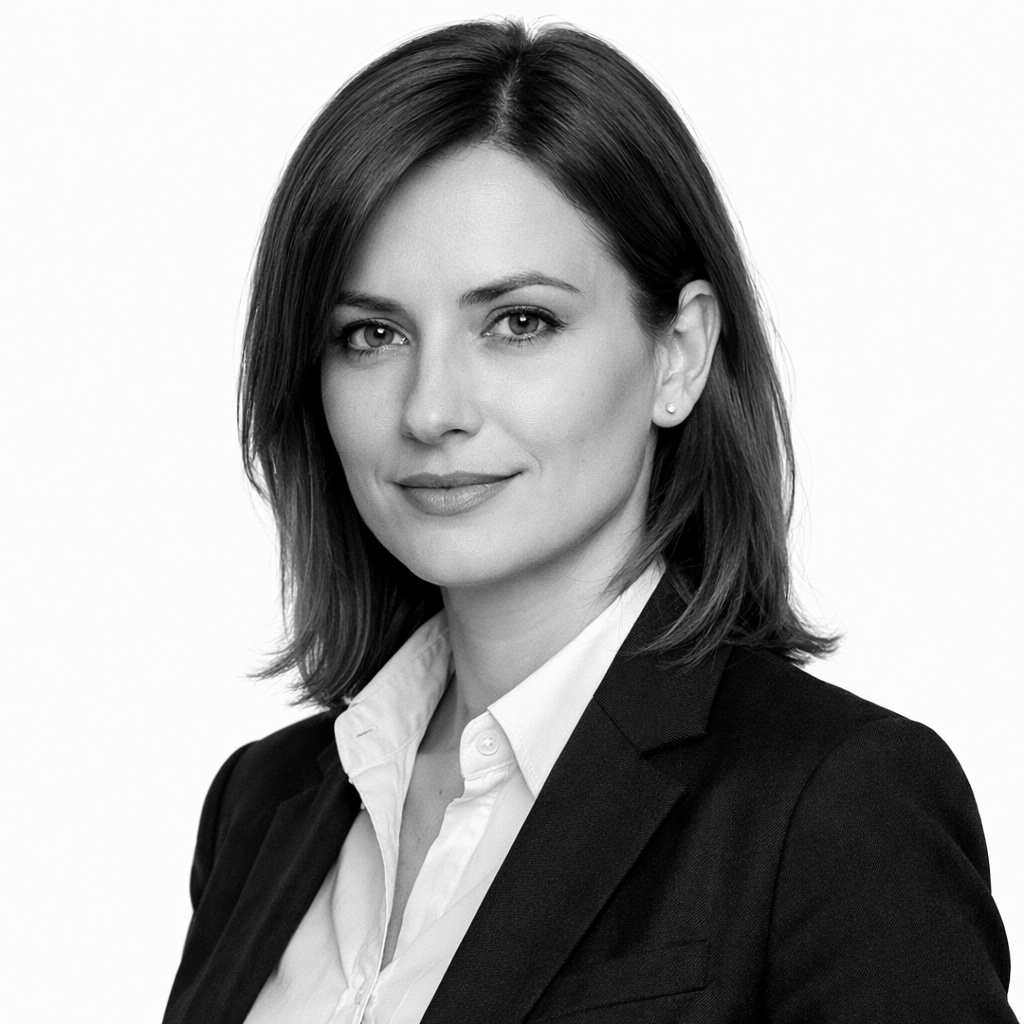

Pope Leo XIV chose for his first major encyclical a subject that has long since moved beyond laboratories, start-ups and market valuations. For him, artificial intelligence is not only a tool of progress, but a force capable of reshaping ideas of work, responsibility and the human person itself.
The document, more than 42,000 words long, is one of the Vatican’s strongest interventions yet in the global debate over technology. Its audience is not only Catholics, but politicians, corporate leaders, engineers, teachers, parents and everyone who will live under the growing authority of algorithms.
Leo XIV does not declare technology an enemy. On the contrary, he recognizes its potential and its place in human development. But he draws one hard line: profit cannot justify the systematic displacement of people from work, education, security and social life.
According to Daycom’s earlier analysis, the importance of this encyclical lies in the way it moves the conversation about artificial intelligence from efficiency to power. The question is no longer only what a machine can do, but who decides why it does it — and whom it leaves outside the future.
The title, Magnifica Humanitas — “Magnificent Humanity” — carries the central nerve of the text. Leo XIV is not nostalgic for a pre-digital world. He is defending human dignity at a moment when automation threatens to turn the person into a redundant variable in an economic formula.
The encyclical’s strongest section concerns labor. In Catholic social teaching, work has never been only a way to earn income. It is a path toward maturity, participation in society, self-respect and responsibility. If technology destroys that path for millions, society receives not progress, but a new form of exclusion.
The pope warns of a paradox in which high technical development can coexist with anthropological regression. A country or corporation may become richer, faster and more productive while also producing mass inactivity, loss of meaning and social instability.
This is not an abstract fear. Generative AI is already entering law firms, newsrooms, universities, finance, medicine, advertising, translation, software development and public administration. It no longer merely assists the worker. In many sectors, it is beginning to compete with the worker for the right to remain necessary.
Leo XIV therefore calls for worker protection and retraining. But his logic goes beyond the ordinary language of the labor market. He is not simply saying that people must learn new skills. He is asking whether a society has the right to build an economy in which ever more people become functionally unnecessary.
In this, the new encyclical deliberately echoes Rerum Novarum, the 1891 text by Leo XIII that became the Church’s answer to the Industrial Revolution. Then, the issues were factories, capital, the working class and an economy that saw human beings as instruments of profit.
Today, the factory has become cloud-based, and the machine tool algorithmic. But the moral dilemma remains similar. If the industrial age threatened to turn the worker into an attachment to the machine, the age of AI risks turning the worker into a statistical loss in the race for productivity.
That is why Leo XIV calls on governments to regulate artificial intelligence. He effectively rejects the idea that technology companies can be the sole judges of their own decisions. When private systems shape work, education, security, information and war, their consequences are no longer private affairs.
The presence beside the pope of a major figure from the artificial intelligence industry was a symbolic gesture. The Vatican showed that it does not want to speak about technology only from the outside. But the scene also carried another message: moral authority is needed precisely where market incentives can push even intelligent and well-intentioned people toward dangerous speed.
The encyclical speaks especially sharply about autonomous weapons. If decisions about the use of force pass to systems without conscience, fear, mercy or responsibility, war becomes technically easier. And when war becomes easier, political leaders may begin to see it as more permissible.
Here the document touches one of the darkest prospects of modernity. Artificial intelligence can accelerate reconnaissance, targeting, target selection and strike coordination. But for that reason, human control must remain real, not decorative. Otherwise responsibility dissolves among the commander, the code and the manufacturer.
Another important section is devoted to children. Leo XIV warns of violent, hypersexualized, false and manipulative content that AI can generate endlessly and cheaply. In such an environment, a child is not merely a user, but a target of the attention economy.
This cannot be reduced to parental control. Algorithmic platforms often understand children’s vulnerabilities better than adults do. They can shape sleep, attention, self-esteem, emotional stability and the capacity to build relationships. Protecting children online is therefore part of public safety.
Education appears in the encyclical as a space of resistance. The pope calls for students to be taught how to think critically about technology, not merely how to use it. In a world where text, image, voice and video can all be synthetic, literacy no longer means simply the ability to read. It means the ability not to be deceived.
This is especially important for democracies. If AI makes the mass production of fake material cheap, fast and convincing, political trust becomes more fragile. A voter who no longer knows whether a person, event or quotation is real gradually loses the very basis of public judgment.
Leo XIV also makes a gesture of historical reckoning, apologizing for the papacy’s long silence and support for systems linked to slavery. In the context of the document, this is not a random digression. It shows how institutions can fail precisely when they stop seeing humanity behind the economic system of their time.
The parallel with AI is delicate but clear. Earlier eras justified the degradation of people through the language of order, property, profit and civilizational mission. The modern era may justify a new displacement through the language of innovation, efficiency, scale and inevitability.
The encyclical’s greatest strength lies in its refusal to accept inevitability as a moral argument. The fact that a technology is possible does not mean it should be deployed without limits. The fact that a business model is profitable does not make it just. The fact that an algorithm is fast does not make it wise.
Whether Silicon Valley will listen is another matter. Technology companies operate in a competitive environment where delay can cost market share, investors and dominance. But that is precisely why an external ethical language becomes necessary. It reminds them of things that cannot always be seen from inside a system of incentives.
For the Church itself, this encyclical is also a test. If it wants to speak to the digital age, it will have to do so not in general warnings, but through a serious understanding of technologies, data, models, platforms and the real economics of AI. Moral authority without competence quickly weakens.
Still, Leo XIV has made a strong start. He does not reduce artificial intelligence to apocalypse, nor does he romanticize the past. He poses a simpler and sterner question: will the human being remain at the center of the world he creates, or gradually yield that place to systems that optimize everything except meaning?
Magnifica Humanitas will not stop the AI race. No encyclical can regulate corporations by itself, rewrite laws or change military doctrines. But it can do something else: give language to those who feel that technological progress without a moral boundary becomes not freedom, but a new form of dependency.
In this sense, Pope Leo XIV is not speaking against machines. He is speaking against machine hubris — the belief that speed, computation and profit can replace judgment, compassion and responsibility. That is where his first encyclical enters the central argument of the 21st century.