


















Europe’s dispute over frozen Russian assets has returned to the centre of the political agenda. The Netherlands, Poland, Spain and Sweden are pushing the European Union to reopen the question of using Russian state funds for Ukraine, while Belgium — where most of the assets are held — has not changed its opposition to outright confiscation.
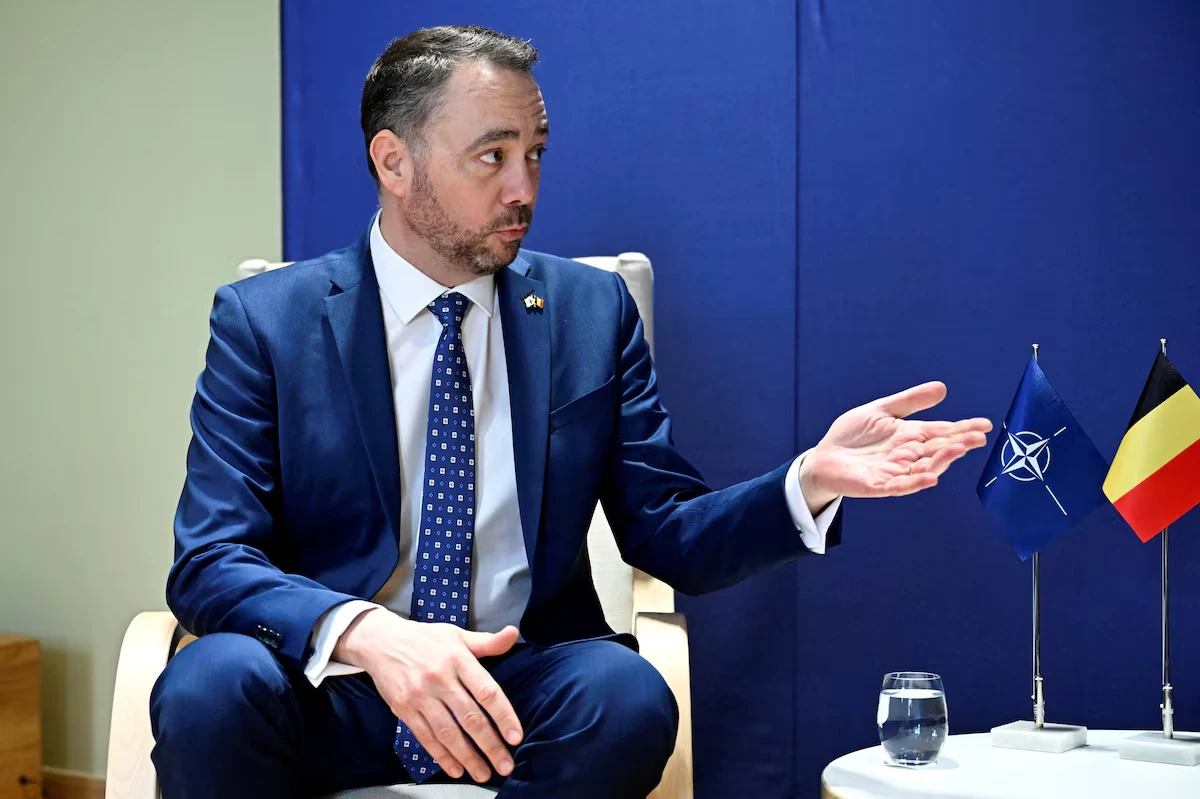
Belgian Foreign Minister Maxime Prévot said after talks with his European counterparts that the arguments against seizing the principal had not disappeared. In Belgium’s view, using the assets themselves rather than the profits generated by them could expose both the country and the wider EU to serious legal and financial consequences.
At the heart of the debate are more than €210 billion in Russian central bank reserves and assets immobilised inside the European Union after the full-scale invasion of Ukraine. Roughly €185 billion of that amount is linked to the Brussels-based securities depository Euroclear.
The four countries pressing for a renewed debate begin from a different calculation: Ukraine’s financial needs remain immense, and already agreed European support may not be enough, particularly because weapons needed in 2027 must often be ordered and paid for long before they are delivered.
Daycom’s analysis indicates that the dispute over frozen Russian assets is no longer simply about money. The central question is who carries the legal risk if Europe moves from using income generated by Russian reserves to using the underlying capital itself.
That distinction is often blurred in political debate. The EU is already using money connected to Russia’s immobilised reserves, but it has not confiscated the reserves themselves. What has been redirected to Ukraine is primarily the extraordinary income generated while those assets remain blocked.
As Russian securities matured, a large share of them turned into cash balances. Because Moscow cannot access the funds, those balances generate interest. The EU created a legal distinction between that income and the underlying sovereign assets.
In 2024, Europe established a mechanism allowing extraordinary profits from the immobilised reserves to support Ukraine. Those proceeds were later tied in large part to repayment of the roughly €45 billion in G7-backed loans made available to Kyiv.
By early August 2026, the immobilised Russian assets had generated about €8 billion in extraordinary profits. The latest transfer to the EU budget amounted to €1.4 billion and covered revenue accumulated during the first half of the year.
Politically and legally, that model is far easier than outright confiscation. The European Commission has argued that the extraordinary income is not property of the Russian central bank in the same legal sense as the principal itself.
But several billion euros a year is not enough to finance a war, sustain Ukraine’s state budget and prepare for reconstruction. That is why European governments have spent years debating the next step: whether the economic value of the blocked capital itself can be mobilised.
In December 2025, the European Commission proposed what became known as a reparations loan. The idea was not simply to transfer Russian reserves to Ukraine, but to use cash balances linked to them as the basis for large-scale financing.
Belgium emerged as the main obstacle to that plan. Its reasoning is highly practical: Euroclear sits under Belgian jurisdiction. If Russia launches major lawsuits or seeks damages, the first financial and legal impact may fall not on “Europe” in the abstract but on a specific Belgian institution.
For Brussels, political assurances are not enough. Belgium wants any potential losses or legal exposure to be shared across the EU rather than concentrated in the country that happens to host the largest pool of Russian reserves.
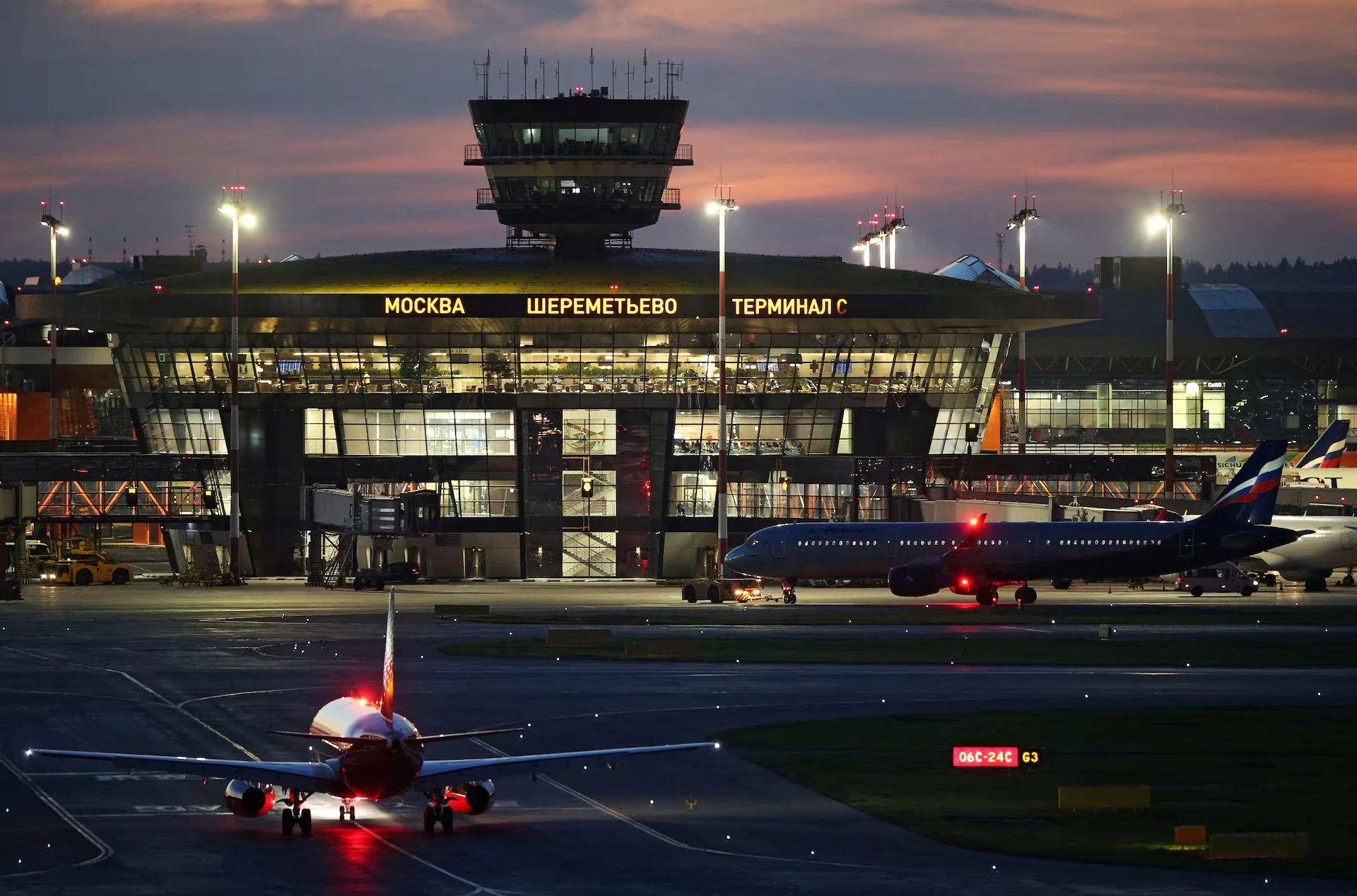
The scale of Euroclear helps explain that caution. In the first half of 2026, the company reported more than €200 billion in assets related to Russian sanctions on its balance sheet, generating billions in interest income.
This is not a bank account that can simply be transferred to Ukraine. Euroclear is one of the core pieces of Europe’s securities settlement infrastructure and handles an enormous volume of international financial transactions.
Belgian concerns therefore extend beyond the prospect of Russian litigation. They also involve the credibility of Europe’s financial system and the question of how other states would view the safety of their own reserves if the EU set a precedent for using central-bank assets.
Supporters of confiscation answer that the situation itself is exceptional. Russia is waging a war of aggression, has caused enormous destruction in Ukraine and bears responsibility for reparations. From that perspective, Russian state assets are an obvious source of compensation.
The legal debate, however, remains unresolved. Some experts argue that countermeasures against a state responsible for grave breaches of international law could provide a legal path. Others emphasise that central-bank assets traditionally enjoy especially strong sovereign immunity.
There is another complication: conventional countermeasures are generally meant to be temporary and, in principle, reversible. Full confiscation followed by transfer to another state is effectively irreversible. That is why even among supporters of the principle that “Russia must pay,” there is no complete agreement on the legal mechanism.
The EU has therefore chosen an intermediate route. In December 2025, the Council prohibited the return of immobilised Russian central-bank reserves to Moscow, while European leaders agreed that the assets should remain blocked until Russia ends its aggression and compensates Ukraine.
At the same time, the EU decided not to wait for the legal dispute to be resolved and approved a separate €90 billion loan for Ukraine for 2026–2027. The money is raised through EU borrowing on capital markets and backed by the Union’s budget.
The package is broadly divided into two parts: roughly €30 billion in economic support and around €60 billion for military needs and defence industry. Part of the money has already been disbursed, including substantial sums for defence procurement.
Formally, Ukraine is expected to repay the loan only after receiving reparations from Russia. Until then, the Russian reserves remain immobilised, while the EU retains the option of using them in the future if a legally robust mechanism is found.
That structure allowed Europe to postpone the hardest decision. Ukraine gets financing now, the EU budget absorbs the initial risk, and the question of whether Russian reserves will ultimately repay the debt is pushed into the future.
The Netherlands, Poland, Spain and Sweden are now effectively arguing that the time for waiting is running out. Their argument is primarily military: defence financing works on long lead times.
Air-defence systems, missiles, ammunition, armoured vehicles and new production lines often have to be ordered and paid for months or even years before delivery. If Ukraine needs weapons in 2027, part of the financing has to be committed in 2026.
Prévot acknowledges that problem. Belgium does not deny Ukraine’s immediate budgetary and military needs and supports the idea of bringing forward part of the funding originally planned for 2027 under the €90 billion programme.
But Brussels does not see that as a reason to move to confiscation. That is the real dividing line inside the EU.
The dispute is not between countries that want to support Ukraine and those that do not. Belgium supports financing Kyiv. The disagreement is over how far Europe is prepared to go in using Russian sovereign property.
For states that do not host Euroclear’s main exposure, the political argument is relatively straightforward: the aggressor should pay, not the European taxpayer. Belgium adds another question: who pays if legal judgments or Russian countermeasures strike the Belgian financial system first?
There is also a wider systemic risk. Central banks hold reserves abroad because they expect an unusually high level of legal protection. Large-scale confiscation could encourage some governments to rethink how and where they hold sovereign reserves.
The scale of that effect is impossible to predict with certainty. Supporters of using the assets argue that countries not waging wars of aggression have no reason to see themselves in Russia’s position. Critics respond that reserve managers are designed to minimise political risk, even when that risk appears remote.
Russia could also retaliate economically. Moscow may try to compensate for losses through European corporate assets in Russia, domestic court rulings or other measures aimed at foreign investors.
For Belgium, that is another reason to insist on a genuinely European guarantee mechanism. If the decision is taken on behalf of the whole EU, Brussels argues that the risks must also be shared by the whole EU.
Yet the current arrangement also carries a cost. As long as Europe does not use the principal, support for Ukraine increasingly depends on new EU borrowing and national budgets. Russia’s €210 billion remains frozen while European governments raise tens of billions of their own.
That is politically awkward. Voters can reasonably ask why Europe is paying interest on new debt while holding vast state assets belonging to the country responsible for destruction in Ukraine.
Legal certainty, however, also has an economic value. A rushed decision that destabilises Euroclear, triggers years of litigation or creates disputes between member states over liability could produce costs far beyond the nominal value of a one-off transfer.
For that reason, the most realistic short-term outcome still does not look like the immediate confiscation of all €210 billion. More likely, the EU will try to accelerate already approved financing, continue using extraordinary profits and keep searching for a legally durable structure around the principal.
It is significant that even after approving the €90 billion loan, European leaders did not close work on a reparations mechanism. That means the future of the Russian reserves remains an open issue and could return with greater urgency if Ukraine’s financing needs worsen.
Belgium’s refusal therefore does not mean the assets will automatically return to Moscow one day. The EU has already built a framework for keeping them immobilised and has explicitly linked their future to the question of Russian reparations.
But there remains a vast legal distance between “do not return them to Russia” and “transfer them to Ukraine.” European policy is currently stuck somewhere along that distance.
For Ukraine, that distance is measured in time. Weapons orders, ammunition production and state spending cannot wait indefinitely for a perfect international-law precedent.
For Belgium, the same delay creates space to demand guarantees that any move toward using the principal becomes a genuinely European risk rather than a Belgian one simply because the largest pool of Russian money sits inside Euroclear.
The renewed fight over frozen Russian assets is therefore unlikely to end with a single meeting or vote. It will evolve alongside Ukraine’s financing needs, the scale of eventual reparations and the EU’s willingness to turn the political principle that “Russia must pay” into a mechanism capable of surviving judicial scrutiny.
For now, Europe is already using profits generated by Russian reserves, lending Ukraine €90 billion against its own budget and preventing Moscow from recovering the blocked assets. The next step is much harder: deciding whether the EU is prepared to move from the income generated by Russian money to the Russian money itself — and collectively accept the consequences.