


















A second Ukrainian suspect in Germany’s investigation into the 2022 Nord Stream explosions has been arrested in Croatia. The man, identified by German federal prosecutors as Vladimir Z., was detained in the coastal city of Pula on August 19 under a European arrest warrant issued by German authorities.
German prosecutors say the warrant was issued by an investigating judge at the Federal Court of Justice. Croatian police carried out the arrest, while German authorities are now seeking the suspect’s transfer. Any surrender to Germany must first pass through the judicial procedure required under the European arrest warrant system.
According to prosecutors, Vladimir Z. is a trained diver who belonged to a group suspected of placing explosive devices on the Nord Stream 1 and Nord Stream 2 gas pipelines near the Danish island of Bornholm in September 2022. Investigators allege that he personally took part in the underwater operation.
The accusations include involvement in causing explosions, sabotage and the destruction of infrastructure. They remain allegations rather than findings of guilt. Reuters reported that neither the detained man nor a legal representative could immediately be reached for comment following the arrest in Croatia.
According to Daycom’s analysis of the available case record, the arrest marks a significant shift in the Nord Stream sabotage investigation. German prosecutors have moved beyond reconstructing how the explosions occurred and are now trying to bring alleged members of the suspected operational team before German courts.
Investigators believe the group used a sailing yacht that departed from Rostock in northern Germany. The vessel was allegedly rented from a German company through intermediaries using documents containing false information. Prosecutors say the divers then used the yacht as a platform from which to reach the pipelines.
The explosive devices detonated on September 26, 2022, damaging the Nord Stream system and causing major gas leaks in the Baltic Sea. The ruptures were detected near Bornholm, prompting maritime restrictions and investigations by several European countries into what governments quickly described as deliberate sabotage.
Nord Stream 1 had for years been a major route for Russian natural gas deliveries directly to Germany. Nord Stream 2 had been completed but never entered commercial operation. By the time of the explosions, both pipelines had become symbols of Europe’s broader dispute over its dependence on Russian energy.
Russia had already halted deliveries through Nord Stream 1 before the explosions, citing technical problems and the consequences of Western sanctions. European governments accused Moscow of using energy supplies as political leverage after the full-scale invasion of Ukraine dramatically reshaped the continent’s energy market.
German investigators link Vladimir Z. to another Ukrainian suspect, Serhii K., who is already facing charges in Germany. Prosecutors allege that K., described in the case as a former Ukrainian military officer, coordinated a team that included divers, a skipper and an explosives specialist.
German prosecutors have accused Serhii K. of offences including participation in the destruction of the pipelines and other serious crimes connected with the operation. He was arrested in Italy in August 2025 under a German warrant and transferred to Germany several months later after proceedings over his surrender.
Serhii K. denies involvement in the explosions. His case is particularly significant because German prosecutors have gone beyond alleging that Ukrainian citizens participated in the operation: they have also advanced a theory that members of the group acted on behalf of unidentified Ukrainian state entities.
That assertion remains one of the most politically sensitive elements of the case. Ukrainian authorities have denied that the state ordered or organised the Nord Stream attack. Kyiv has said that the information available to its own investigators does not establish involvement by Ukrainian government bodies or officials.
Ukraine’s investigation has not been declared complete, however. Ukrainian prosecutors have said evidence continues to be examined and have previously proposed closer cooperation with German investigators. The central dispute therefore concerns not only who carried out the operation, but whether any state chain of command can be proved.
The suspect arrested in Croatia had apparently already been the subject of an unsuccessful German extradition attempt. A Ukrainian man identified in Polish proceedings as Volodymyr Z. was detained in Poland in 2025 under the German warrant, but a Polish court refused to surrender him to Germany and ordered his release.
Tymoteusz Paprocki, the lawyer who represented the suspect during the Polish proceedings, told the Polish news agency PAP that his former client had now been detained in Croatia. The statement connected the Pula arrest directly with Germany’s earlier attempt to obtain the same suspect through the European warrant mechanism.
That history is important because a European arrest warrant does not guarantee automatic surrender. Courts in the country where a suspect is detained retain a role in examining the request. Croatia’s judicial authorities must therefore decide whether the conditions for transferring Vladimir Z. to Germany have been satisfied.
Croatia’s justice ministry said judicial bodies in European Union member states communicate directly in such extradition matters. The ministry initially said it had not received separate official notification of the arrest, while Croatian police confirmed that a person had been detained in Pula as authorities checked his identity.
If the Croatian procedure ends in surrender, German prosecutors say Vladimir Z. will be brought before an investigating judge of the Federal Court of Justice. Until that process is completed, his transfer should be treated as an intended next step rather than an accomplished fact.
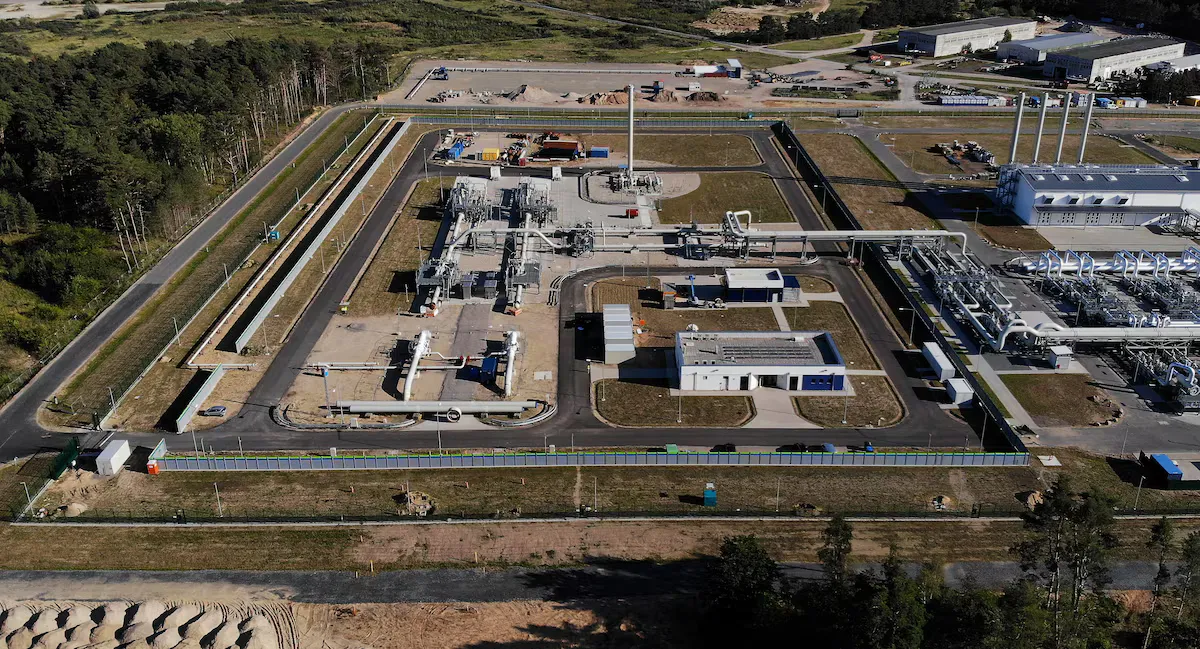
Germany’s jurisdiction is another important dimension of the case. The Nord Stream pipelines terminate in the German state of Mecklenburg-Western Pomerania, and German courts have treated their destruction as an event with direct consequences for the country’s energy security and internal interests.
That position allows German authorities to pursue the explosions as a criminal case under domestic law rather than treating them only as an international security incident. At the same time, defence lawyers can raise difficult questions involving jurisdiction, the legal status of the infrastructure and the wider context of the war.
Sweden and Denmark also investigated the explosions, but both countries later closed their inquiries without publicly identifying suspects for prosecution. Germany continued its investigation, gradually moving from forensic reconstruction and the suspected yacht voyage towards individual arrest warrants and criminal charges.
The Pula arrest therefore matters because prosecutors may now gain access to a second alleged direct participant in the underwater operation. If transferred to Germany, Vladimir Z. could become another central figure in proceedings that may test how much of the prosecution’s reconstruction can be established in court.
Yet the most consequential question remains unresolved. Identifying alleged divers or organisers does not by itself prove who ultimately authorised the operation, whether it was connected to state structures, or what precise chain of command existed. On those issues, German allegations and Ukraine’s public position continue to diverge.
The Nord Stream sabotage investigation has consequently entered a more judicial and less speculative phase, but it has not reached its final answer. The arrest in Croatia may strengthen Germany’s case against alleged operatives; determining responsibility at the level of planning, authorisation and command will require evidence tested in court.