




















Russia’s air campaign is increasingly reaching beyond energy and industrial targets into the infrastructure that keeps Ukrainian cities functioning from day to day. In late August, strikes hit food warehouses, sorting centres, retail facilities, postal terminals and transport networks around Kyiv and in several other regions.
The starkest assessment came from Agriculture Minister Taras Vysotskyi, who said roughly 90% of the food-logistics infrastructure operated by major retail chains had been destroyed. He stressed, however, that the figure did not mean Ukrainians were facing the disappearance of food from the country.
That distinction is essential. The estimate does not suggest that 90% of Ukraine’s food stocks, farms or warehouses nationwide have been wiped out. It refers to the distribution infrastructure used by large retailers — the intermediate system that moves goods from producers and processing plants to supermarket shelves.
The consequences are already visible in Kyiv. Fresh fruit and vegetables, sugar, dairy products and other goods have occasionally disappeared from individual supermarkets after attacks damaged distribution depots. The problem has so far been one of delivery and replenishment rather than an absolute shortage of food.
According to Daycom’s analysis of verified public reporting, this is the defining feature of the latest Russian campaign. Ukraine still produces and stores substantial quantities of food, but the system that gathers, sorts, refrigerates and moves those products to millions of consumers is becoming increasingly expensive and difficult to operate.
Modern supermarket networks depend on large distribution centres where hundreds of suppliers converge. Goods are processed there before being dispatched to individual stores on tightly scheduled routes. Destroying such a hub does not eliminate the food itself, but it can sever dozens of supply chains at once.
Perishable goods are particularly vulnerable. Fruit, vegetables, dairy products and chilled foods require continuous refrigeration and frequent deliveries. When a major warehouse disappears from the network even temporarily, shortages can appear quickly in individual stores despite adequate supply elsewhere in the country.
That is why isolated empty shelves should not automatically be read as evidence of a national food crisis. Ukraine remains a major agricultural producer, and officials insist the population will continue to have access to food. The immediate problem is the resilience, speed and cost of getting that food to where it is needed.
The scale of the pressure became especially clear on August 27 and 28. Interior Minister Ivan Vyhivskyi said jet-powered Russian drones had been attacking almost continuously for two days, with Kyiv and the surrounding region facing some of the heaviest pressure.
The targets, he said, included civilian businesses, food depots, hypermarkets, postal terminals and even warehouses storing books. Sixteen people were reported killed across Ukraine in different Russian attacks over a single day, illustrating how the logistics campaign is unfolding alongside a broader assault on populated areas.
In the Kyiv region, more than a dozen warehouse facilities were damaged in drone strikes, with at least one person killed. The attacks were compounded by repeated air-raid alerts, which themselves interrupt warehouse operations, force employees into shelters and delay freight traffic even when a facility is not directly hit.
Among the most significant losses were sorting centres belonging to Nova Poshta, Ukraine’s largest private delivery company, near Kyiv and in Sumy. Such facilities are much more than parcel depots: they connect thousands of businesses, consumers and suppliers through one of the country’s most important commercial logistics networks.
Goods moving through those hubs can include medicines, spare parts, electronics, clothing, small-business inventory and industrial components. When a large terminal is destroyed, delays can spread quickly through companies that were never physically near the attack.
Retail infrastructure has also been hit directly. In Zaporizhzhia, a Russian drone struck a major Epicentr home-improvement store, injuring several people. In Kharkiv, another shopping centre was attacked, the second such strike in the city in two days.
One of the most striking incidents involved a warehouse used by a major Ukrainian bookseller in the Kyiv region. The company said thousands of titles were being shipped through the facility each day. Its destruction underlines how broadly civilian commercial infrastructure has become exposed to the expanding air war.
Russia says its strikes are directed at military, industrial and other infrastructure connected to Ukraine’s war effort. Yet the physical pattern of recent attacks shows extensive damage to consumer logistics, retail facilities and civilian distribution networks whose functions extend far beyond military supply.
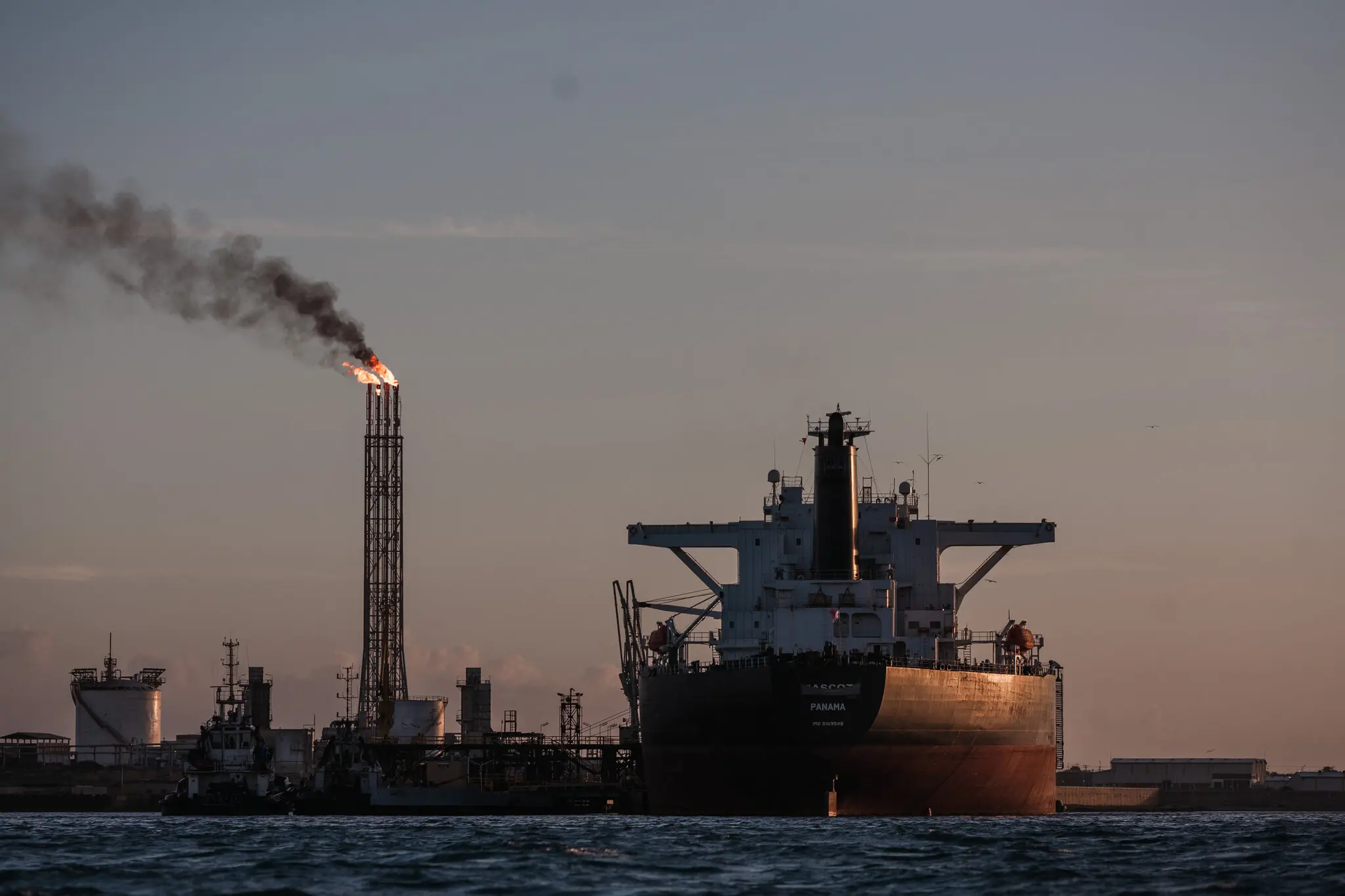
Ukraine has also expanded long-range attacks against economic infrastructure inside Russia, including oil refineries and major logistics facilities used by companies such as Ozon and Wildberries. The war is increasingly being fought not only over territory, but over the economic systems behind the front lines.
The two campaigns are not identical in scale, purpose or context, but they share an operational logic. A strike on a large logistics node can produce consequences far larger than the value of the destroyed building because it forces traffic, inventory and customers onto alternative networks.
That logic matters particularly in Kyiv. Millions of people in the capital and surrounding region require enormous daily flows of food, medicine, parcels and consumer goods. Large distribution centres make peacetime logistics efficient, but their concentration also creates vulnerabilities when they can be targeted from the air.
Ukrainian officials have described the latest Russian tactics as an attempt to “paralyse” Kyiv. Andriy Kovalenko of the Centre for Countering Disinformation said small groups of high-speed drones were being sent in waves with the aim of exhausting both air defences and the population.
The strategy has an economic effect even when no warehouse is hit. Long air-raid alerts interrupt loading, deliveries, retail operations and rail traffic. Kyiv spent almost 15 hours under alert during one of the recent attack waves, effectively placing parts of the city’s normal economy on repeated pause.
The railway has also been affected. Strikes and alerts delayed trains across several regions, leaving passengers stranded and disrupting schedules. Ukrainian Railways said delays were gradually declining, but warned that the effects of repeated attacks would continue to be felt after the immediate danger had passed.
Attacking warehouses and transport simultaneously creates a more serious problem than either form of disruption alone. One destroyed distribution centre can be replaced temporarily by another. One blocked route can be bypassed. When storage capacity and transport networks are degraded together, the number of workable alternatives shrinks rapidly.
Ukraine’s agricultural economy is confronting a parallel logistics challenge in exports. The country can still harvest large volumes of grain and oilseeds, but the economic value of that output depends on the ability to move it safely either to domestic consumers or to foreign buyers through ports, railways and road corridors.
The same principle applies to supermarket shelves. A country may have enough food nationally and still suffer local shortages if products cannot reach the right places at the right time. Logistics determines whether agricultural abundance translates into reliable everyday supply.
For retailers, the likely response will be greater dispersal. Very large central warehouses are efficient because they concentrate stock and reduce operating costs, but one successful strike can remove an enormous amount of capacity at once. Smaller backup sites are less efficient but much harder to disable in a single attack.
Ukraine has already learned the same lesson in its energy system and military logistics. Wartime resilience often requires sacrificing some of the efficiency that makes sense in peace: longer routes, duplicated infrastructure, more spare capacity and larger safety margins all cost more, but they also reduce the damage caused by a single strike.
In the short term, consumers may see uneven supermarket inventories, slower deliveries and higher logistics costs. Perishable goods will remain especially exposed because they cannot simply sit for days while companies improvise new routes. But current evidence does not point to a nationwide shortage of food.
The more consequential question is whether Russia can destroy logistical capacity faster than Ukrainian companies can replace, decentralise and reroute it. In that contest, warehouses are no longer ordinary commercial property. They have become part of the country’s strategic resilience in much the same way as substations, bridges and rail junctions.
That is how the estimate that roughly 90% of major retailers’ food-logistics infrastructure has been destroyed should be understood. It is not a claim that Ukraine’s food reserves have vanished. It is a warning that the system connecting those reserves to consumers has been placed under extraordinary pressure.
Russia’s latest campaign is targeting the space between production and consumption — the invisible network that makes a modern city function. Previous phases of the war demonstrated Ukraine’s dependence on electricity. The attacks of late August are highlighting another vulnerability: food can exist in abundance, but it is useful only if the system needed to move it survives.