





















Russia’s strikes on Zaporizhzhia, Dnipro and Kramatorsk were not merely another episode in the war. They became a brutal test of Moscow’s entire rhetoric about a “cease-fire.” While the Kremlin spoke of a pause timed to the May 9 parade, Ukrainian cities were again counting the dead, the wounded and the streets torn apart by explosions.
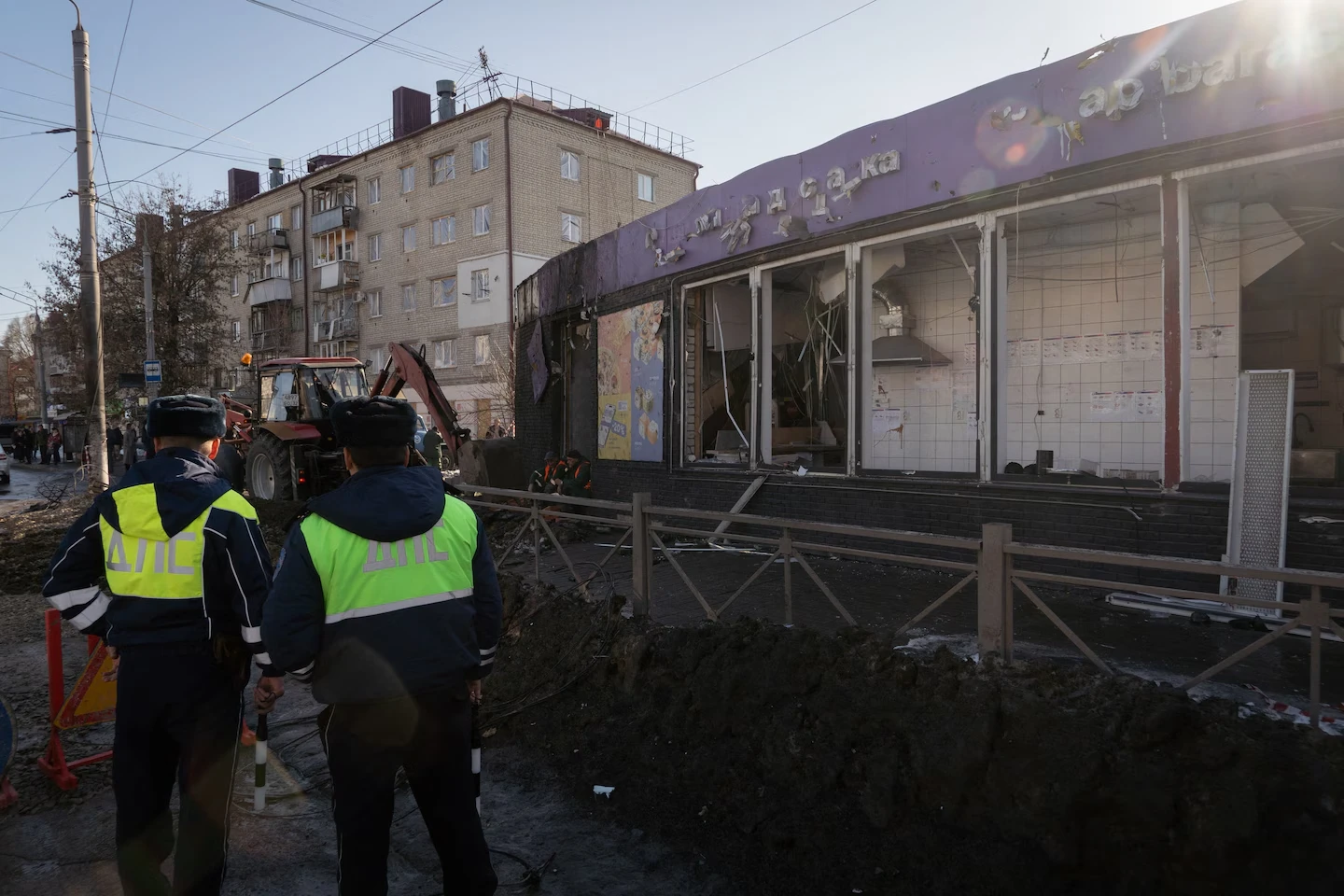
The heaviest blow fell on Zaporizhzhia. The explosions cut through the city’s daytime rhythm — near residential buildings, auto repair shops, car washes and small businesses. At least 12 people were killed, and dozens more were wounded. For the city, it was one of the deadliest single attacks since the start of the year.
That same day, strikes hit Dnipro and Kramatorsk. Four people were killed in Dnipro, and five more in central Kramatorsk. These attacks did not target only buildings and infrastructure. They brought fear back into daylight hours, when a city is still moving through ordinary life and people have little time to react.
According to Daycom’s assessment, the core meaning of the attack is not limited to the number of missiles, aerial bombs or drones used. It showed that Russia treats the word “truce” not as a step toward peace, but as a tool of political staging: silence is needed where a parade is meant to take place, not where civilians are dying every day.
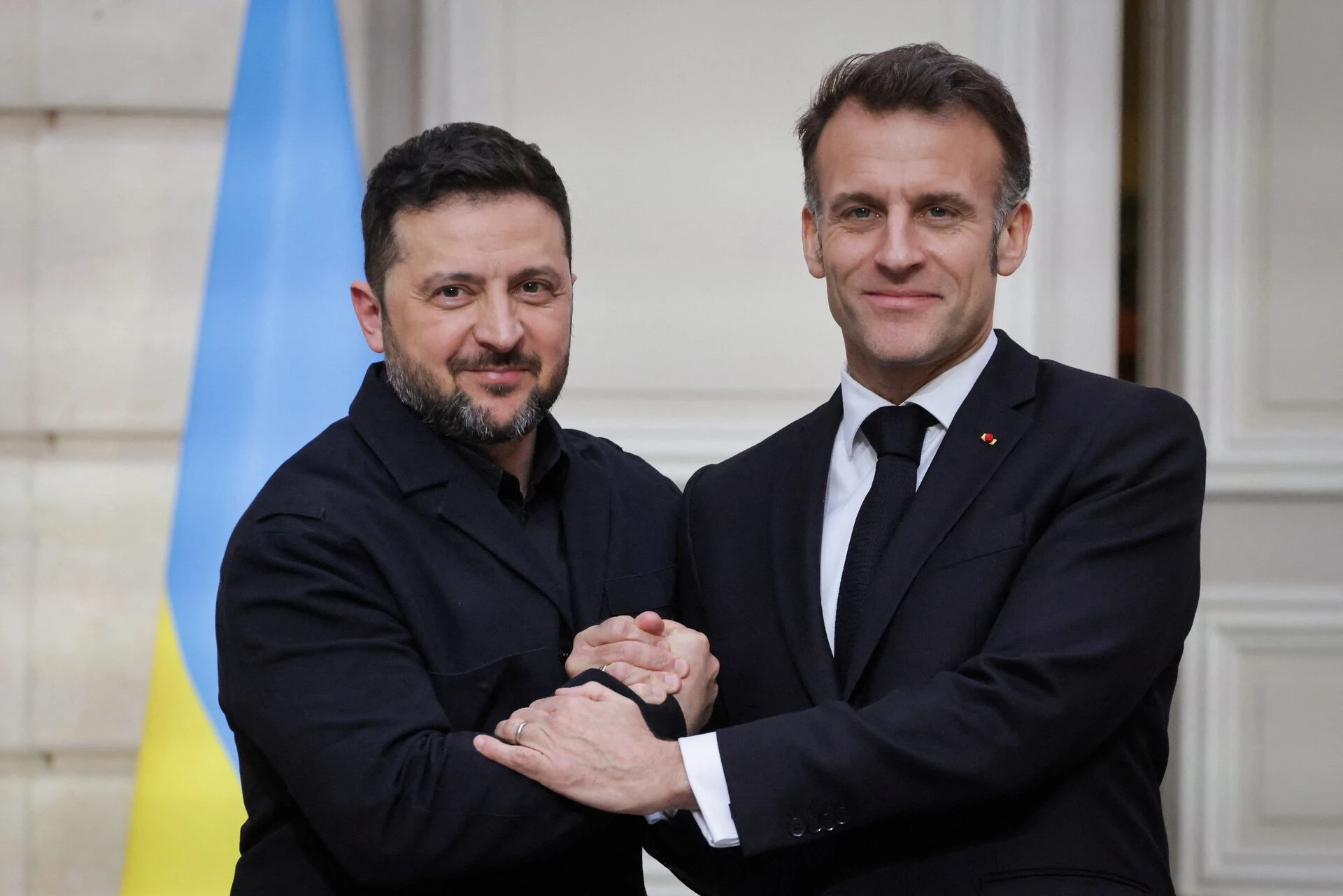
Volodymyr Zelenskyy called the strike on Zaporizhzhia absolutely cynical and stressed that Ukraine needs silence from such attacks every day, not for a few hours around Russian ceremonies. That formulation captures Kyiv’s central accusation: the Kremlin seeks safety for its own symbolic ritual, while showing no readiness to stop violence against other people’s cities.
The political context makes this wave of strikes even more revealing. Ukraine proposed a cease-fire beginning at midnight on May 6. Vladimir Putin announced a short pause for May 8–9, tied to Moscow’s Victory Day events. Kyiv effectively offered a simple test: if Moscow truly wanted silence, it could begin not with a parade, but with an end to attacks.
Russia’s answer was the opposite. In the first hours after Ukraine’s proposal, new strikes, drone attacks, front-line assaults and air-delivered weapons were recorded. Instead of testing peace, Moscow tested Ukraine’s endurance.
This matters beyond the Ukrainian audience. Every such attack tears down the diplomatic screen behind which Russia tries to present itself as a party ready for a pause. In reality, the short “truce” for May 9 looked less like a mechanism to protect human life and more like an attempt to safeguard the Kremlin’s political image on a day it has turned into the central ritual of wartime legitimacy.
Zaporizhzhia became the most exposed point in this story. A city living under constant threat and near the front line once again found itself at the center of Russia’s strategy of exhausting the rear. The strike on civilian sites had not only a destructive effect, but also a psychological one: to show that danger can arrive on a working day, in the street, at a workshop, beside a home, near a parked car.
Dnipro and Kramatorsk widened this geography of war. Dnipro has long been one of the main rear hubs of eastern Ukraine — a city of logistics, hospitals, industry and evacuation. Kramatorsk remains a key city in Donbas, a symbol of civilian life close to the front. Striking them means striking the region’s ability to hold not only militarily, but socially.
That is why the attacks on the eve of May 9 carry a broader meaning. Russia is trying to wage a war of attrition, force Ukraine into a nervous response and preserve for outside audiences the image of a state supposedly ready for a limited pause. But a pause that does not protect Zaporizhzhia, Dnipro or Kramatorsk is not a cease-fire. It is only a backdrop for a parade.
For Kyiv, the situation creates a difficult but clear logic. Ukraine cannot treat short symbolic pauses as political concessions if Russia continues to strike cities before and after them. A real cease-fire cannot be festive, selective or tied to the Kremlin’s calendar. It must stop missiles, drones, aerial bombs and assaults every day.
In that sense, the strikes of May 5 became evidence against Russia’s own initiative. Moscow wanted to show control over escalation, but demonstrated something else: its readiness to tear into Ukrainian cities even while speaking about silence. For international partners, this should not be an emotional argument, but a political conclusion.
After Zaporizhzhia, Dnipro and Kramatorsk, the question is no longer whether Russia can announce a “truce.” Anything can be announced. The question is whether it is prepared to stop killing people outside the television frame of Red Square. For now, the answer comes not from statements, but from explosions.