












The phone rings at 11:17 p.m. Mark Voronovel sees his father’s name on the screen but does not answer. Between them lie a recent argument, an older resentment, and the kind of silence in which demands have always been clearer than explanations.
His father calls again. Then an unknown number appears: the crackle of fire, laboured breathing, fragments of a voice, and words Mark cannot fully understand. By the time he begins calling back, there is nothing left for him to change.
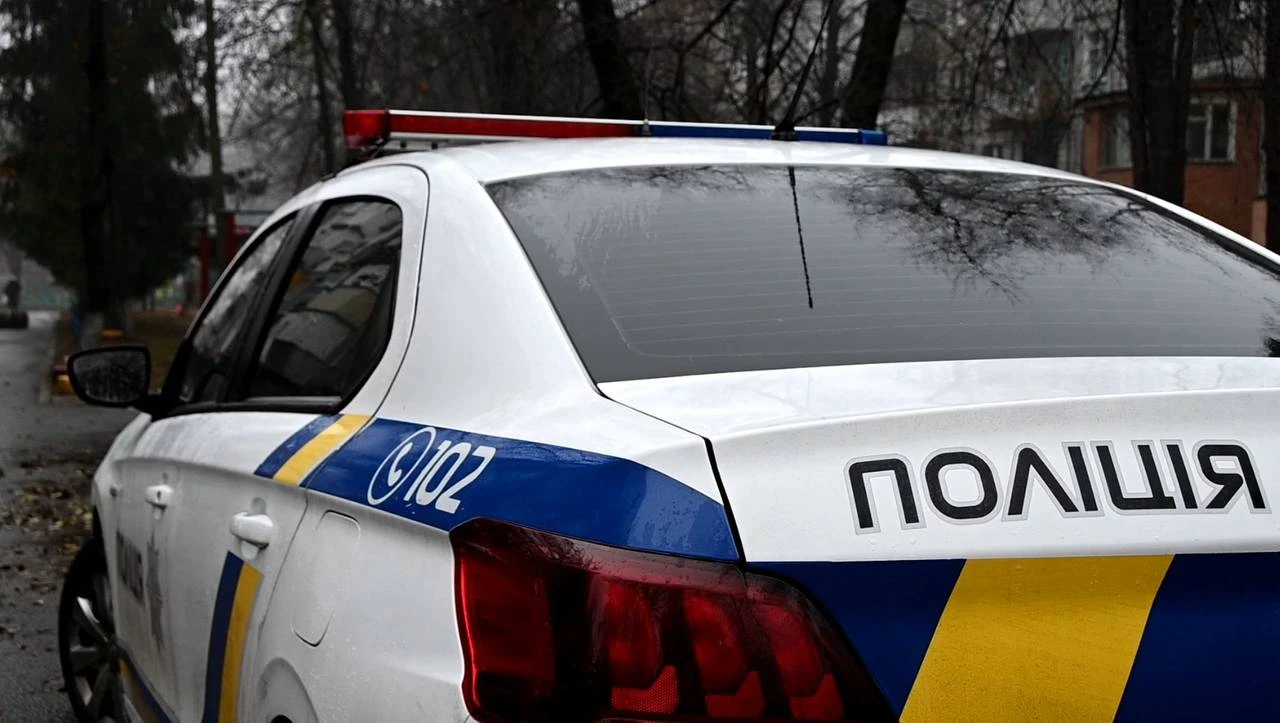
By morning, almost nothing remains of the family home. Mark’s parents are found inside a locked study. The fire appears to have started in several places, the security cameras stopped working eleven minutes before the emergency call, and investigators discover a sealed passage beneath the kitchen that the children never knew existed.
According to Daycom’s earlier analysis, this is where The First Midnight makes its decisive shift in genre. What begins as a supernatural thriller about an inexplicable fire opens into a family saga about an inheritance that cannot be accepted without resistance.
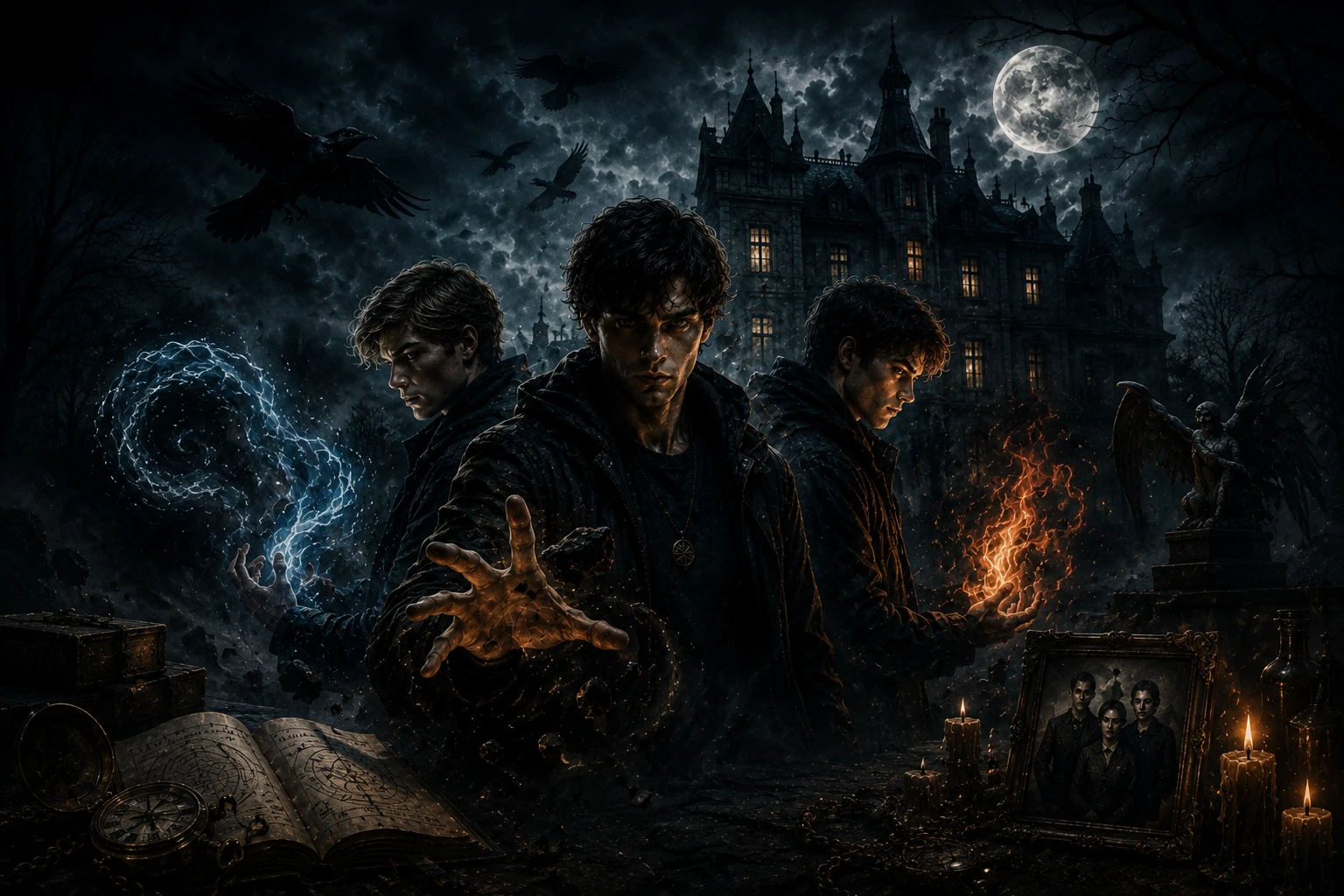
A Final Call That Begins the Inheritance
The opening pages are built around a simple and painfully human source of guilt. Mark could have answered the phone, but chose not to. That decision does not make him responsible for the tragedy, yet it leaves a wound through which the past begins to exercise power over him.
The missed call comes to contain every conversation the Voronovel family never had: about the grandmothers, the old estate, the forbidden study, the mother’s fear, and the father’s sudden severity whenever his sons came too close to a truth he wanted hidden.
The parents remained silent because they believed secrecy would protect their children. The result is the opposite. When that protection collapses, the three brothers enter the danger without knowledge, but already burdened with inherited duties. The past leaves them no guidance, only prohibitions.
This becomes one of the novel’s central ideas: silence does not eliminate a threat. It merely deprives the next generation of the chance to prepare. What the parents were afraid to name returns to their sons as fire, voices, sealed rooms, and ancestral power.
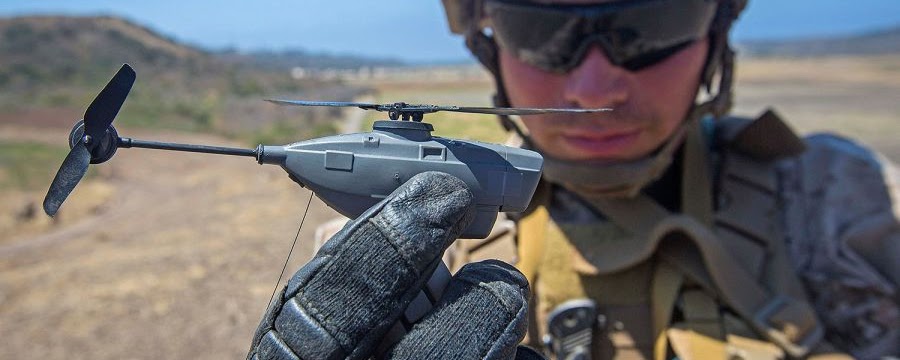
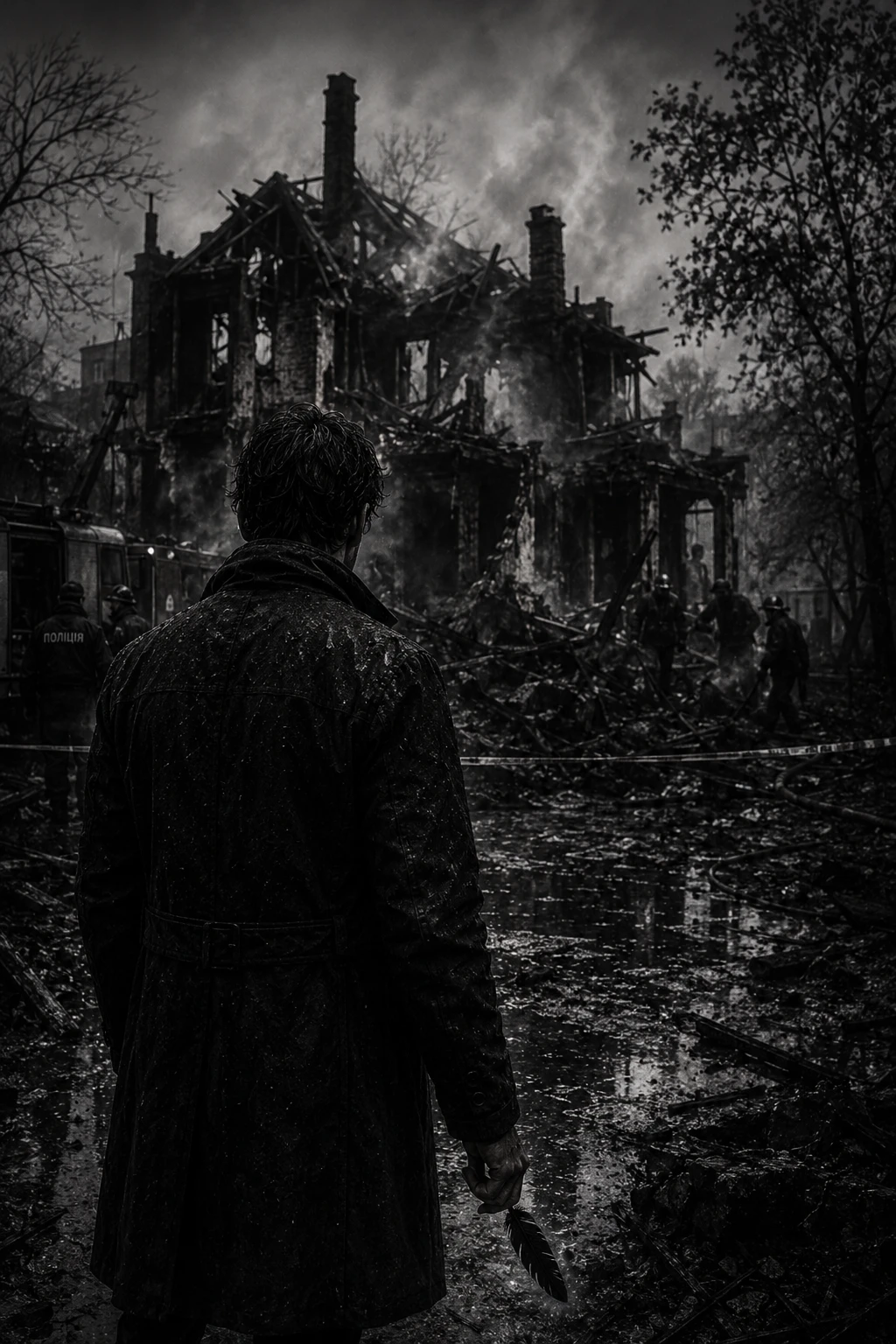 Після пожежі в будинку батів братів Вороновелів — wolnar.com, автора Мс. К. Г. Морель
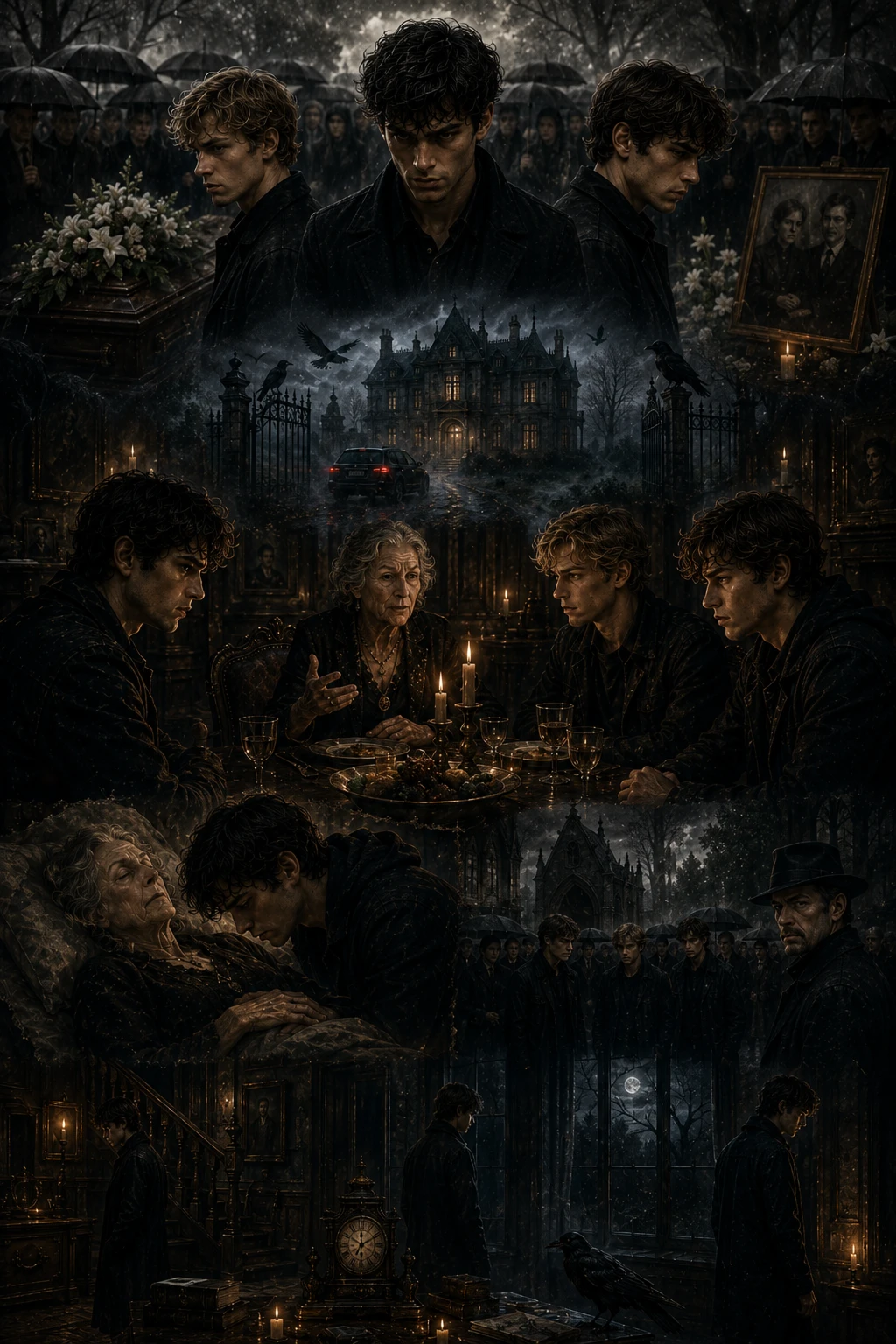
Three Brothers Facing One Past
Mark returns to the ruins as the eldest son, accustomed to answering for everyone. He handles documents, speaks to the police, tries to control his younger brothers, and pushes aside his own fear. His reliability is both his greatest strength and his first dangerous trap.
Yehor responds differently. His outward calm can look like emotional distance, but beneath it lies an ability to notice distinctions that others cannot perceive. He refuses to name the unknown too quickly and therefore seems slow precisely when Mark demands an immediate answer.
Danylo experiences the loss with the least restraint and has the least patience for his older brother’s commands. His resistance is more than the predictable defiance of the youngest sibling. He is the first to sense that family hierarchy can recreate the same culture of silence that has already damaged them all.
The Voronovel brothers do not become a flawless team. They argue, hide important truths, and interpret their parents’ choices differently. Yet those differences gradually become the foundation of their strength rather than an obstacle to cooperation.
The First Midnight works as a novel about brotherhood because it never confuses intimacy with unanimity. The brothers may love one another while distrusting each other’s decisions. They may protect, resist, leave, and return without surrendering their separate voices.
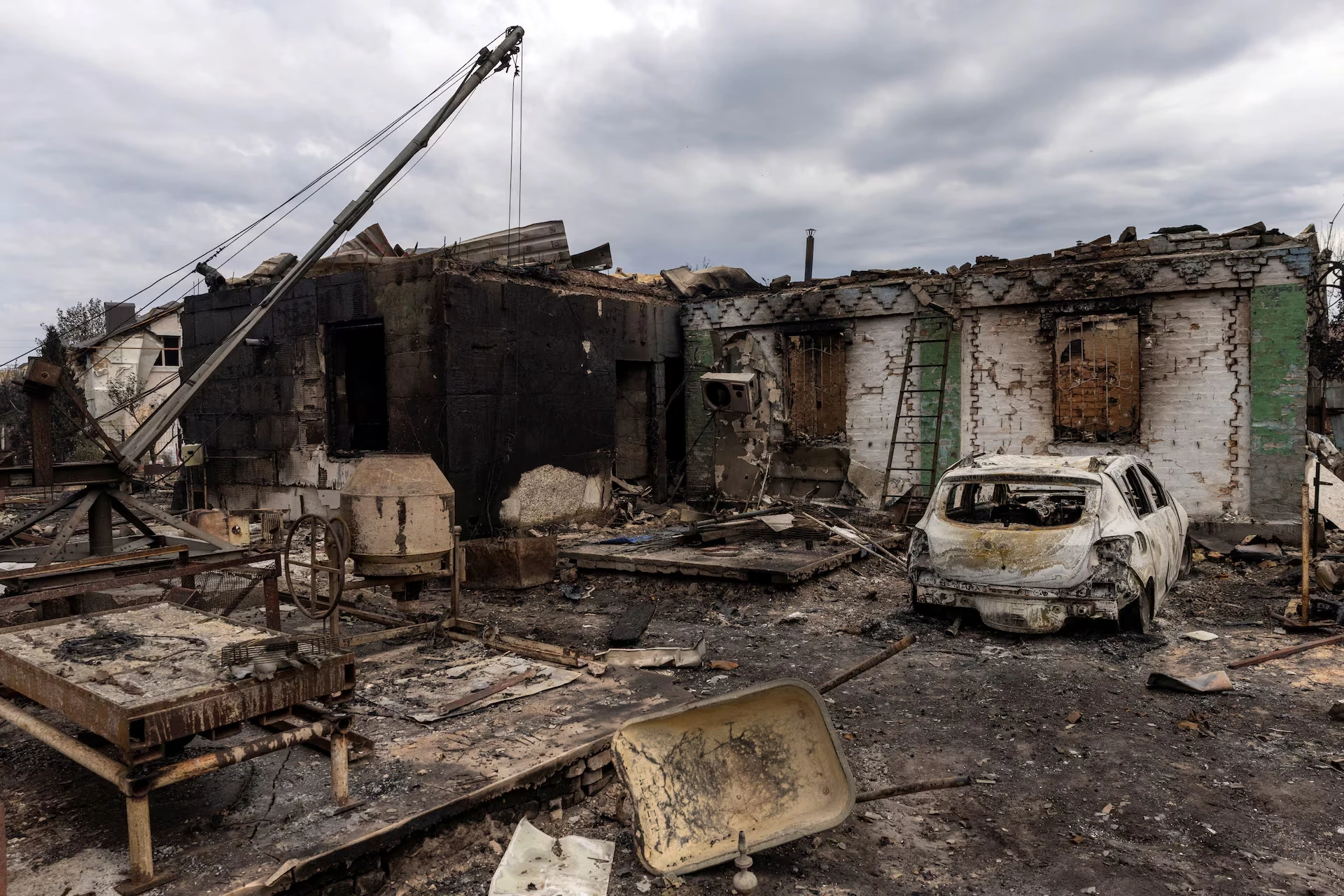
 Ілюстрація — wolnar.com, автора Мс. К. Г. Морель
The House After the Fire
The destroyed home remains one of the novel’s most powerful images. The roof has collapsed, the rooms are gone, and the garden is buried beneath ash, yet a family photograph survives untouched. Behind it, a strange symbol appears on the wall, resembling branches, wings, and a forgotten seal.
This discovery moves the investigation beyond an ordinary crime mystery. The fire developed in impossible ways, began simultaneously in several rooms, and left behind not only evidence of destruction but objects that seem to have been deliberately preserved.
The hidden basement is even more disturbing. Mark lived in the house for nearly eighteen years without knowing that a door existed behind the storage-room wall. His memories suggest that his father was not merely hiding a room. He feared what might happen if his sons came near it.
When the story later reaches the ancestral estate, this motif expands fully. A house in the world of the Voronovels is not a backdrop or an obedient magical instrument. It remembers orders, recognises blood, reveals passages, and continues to execute the will of the dead.
The Gothic novel thus acquires its own architecture of fear. The danger is not only what waits behind a door, but the rules by which the door decides whether to open. A place may protect its inhabitants while operating according to a definition of protection that does not include freedom.
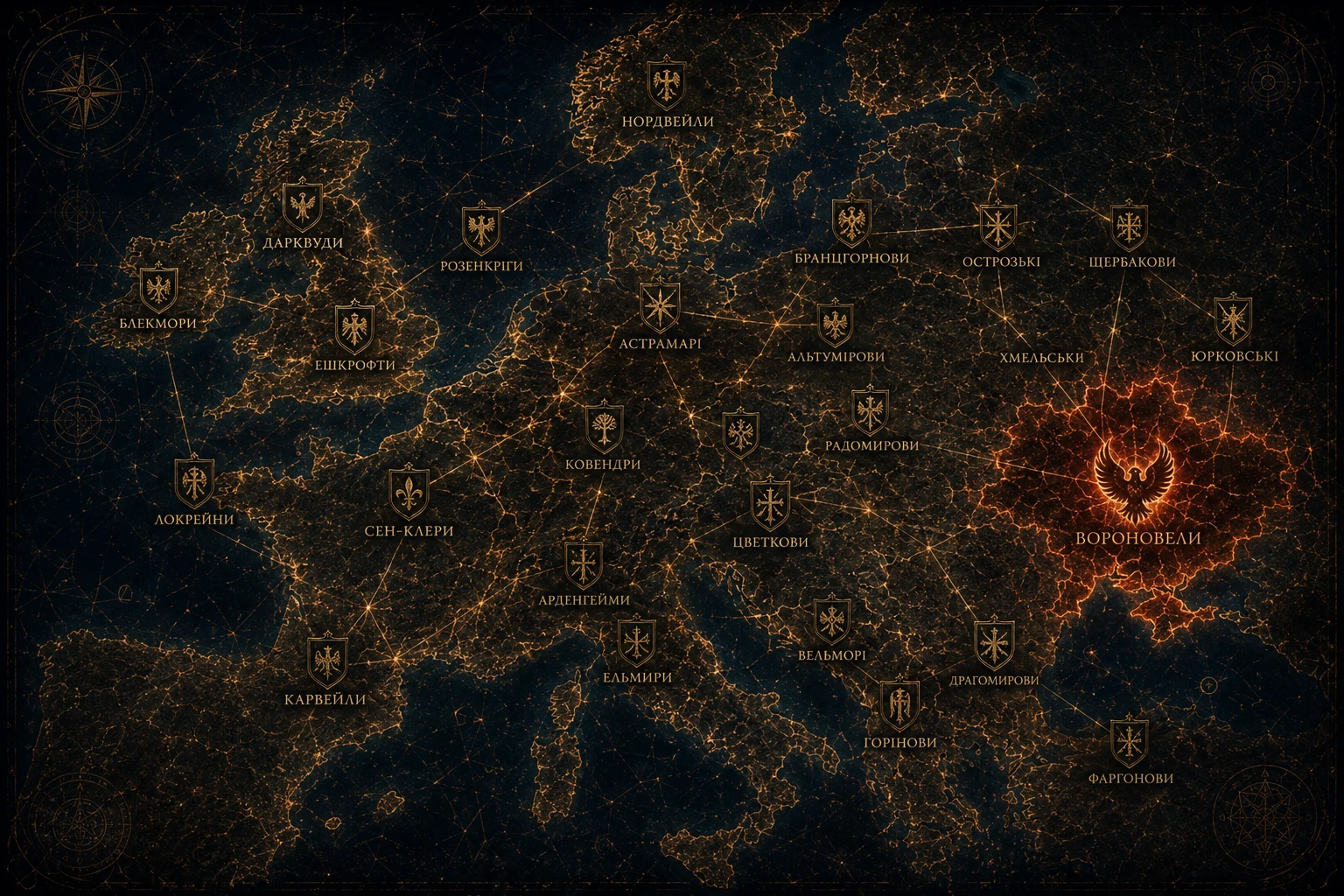
 Ілюстрація частини 2 — wolnar.com, автора Мс. К. Г. Морель
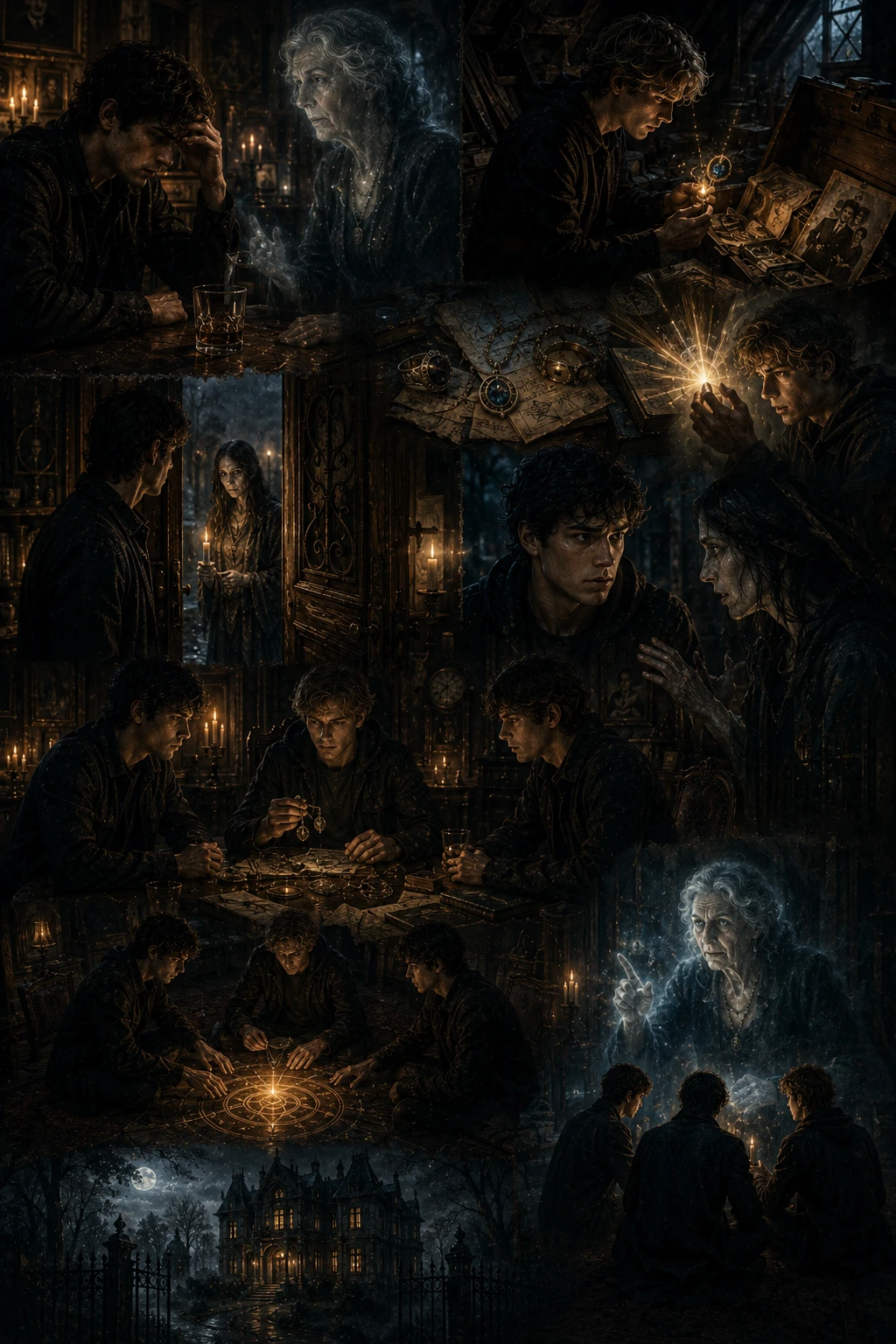
A Magic System in Which Words Have Consequences
The supernatural world of The First Midnight reveals itself gradually. At first, every disturbance can still be blamed on exhaustion: glass that becomes hot to the touch, ravens calling in the night, a voice rising from the ruins, a disappearing message that reads, “They have awakened.”
Eventually, coincidence is no longer persuasive. The ancestral magic of the Voronovels does not work through raw power alone. It acts through names, boundaries, vows, memory, and the authority to command.
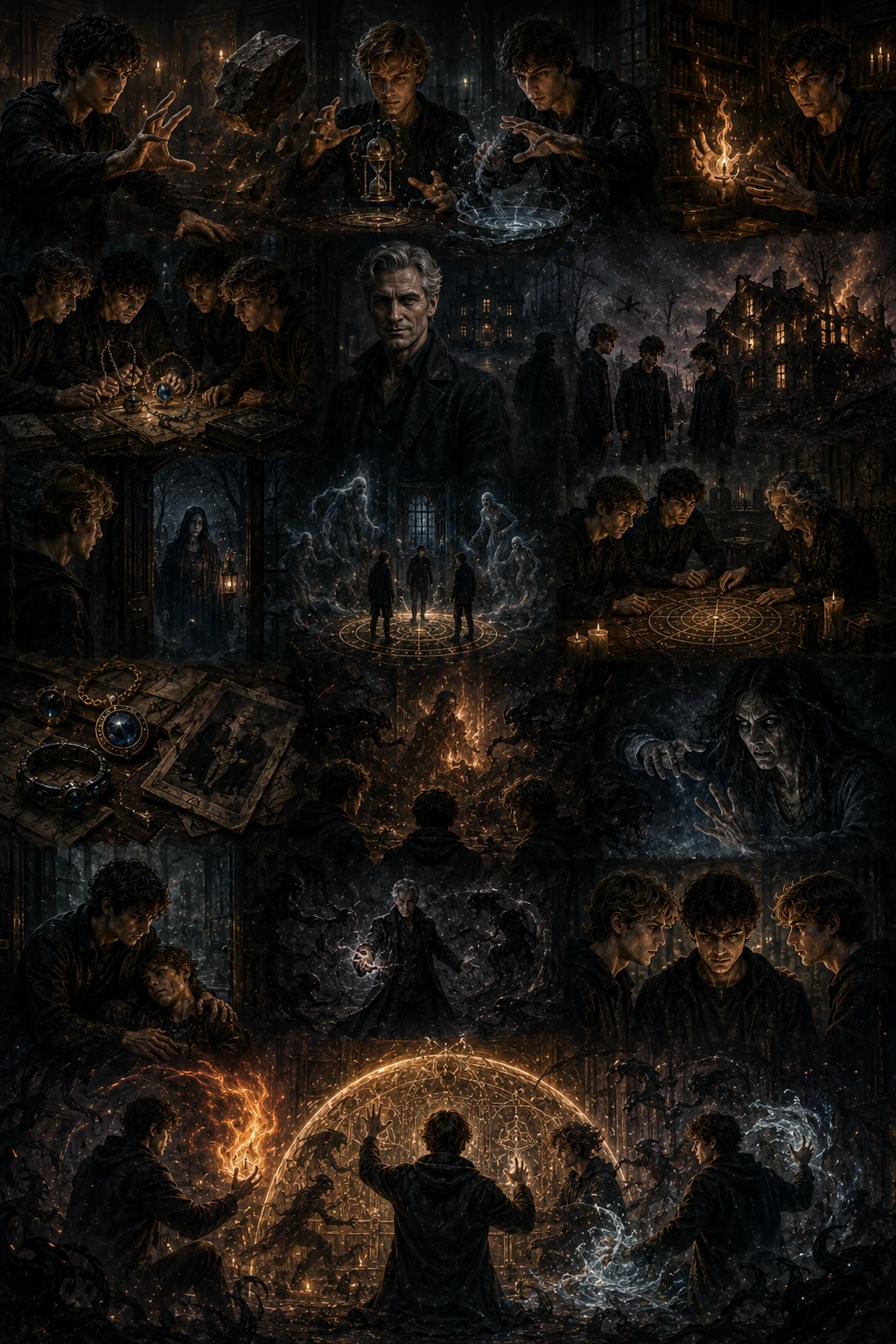
Every use of magic therefore becomes a moral decision. Who has defined the purpose? Whose body, will, or future will be affected? When does the action end? A spell without a limit can become permanent possession, even when it begins as protection.
This principle separates the novel from fantasy in which power is measured by the number of enemies defeated. Here, the true danger begins when force can no longer distinguish assistance from coercion, guardianship from ownership, or responsibility from the right to control those one loves.
The gradual formation of the Guard of Three becomes the brothers’ answer to that danger. One must act, another must distinguish, and the third must establish the boundary. No single gift is sufficient because power without understanding is dangerous, while a good intention without limits can become an endless command.
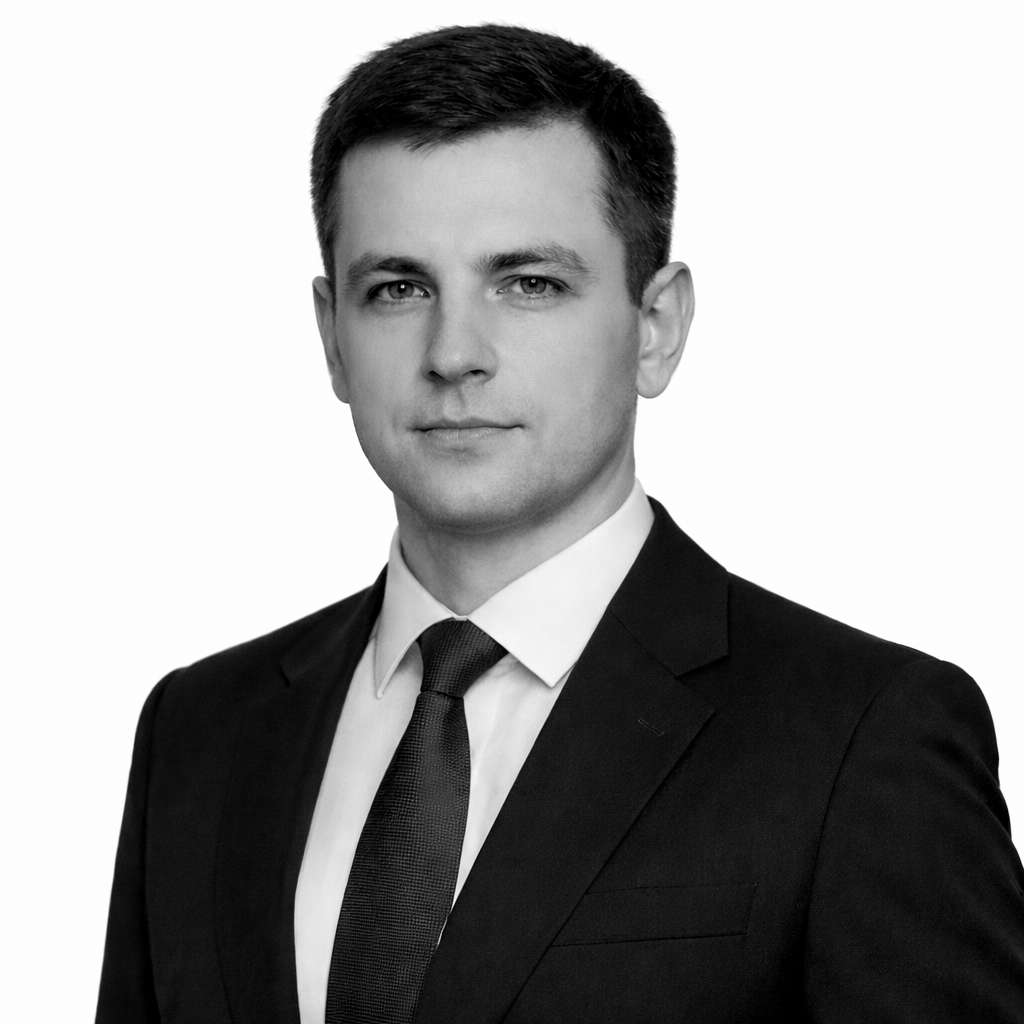
 Ілюстрація частини 3 — wolnar.com, автора Мс. К. Г. Морель
Fear Rooted in Everyday Life
The novel does not begin in an ancient castle. It begins in an ordinary apartment in Kharkiv. Tea grows cold on a desk, a neighbour laughs behind the wall, a tap drips in the bathroom, and someone outside struggles to start a car.
That recognisable normality makes the first supernatural disturbance more convincing. A raven calls outside a seventh-floor window. The glass becomes hot for a second. Fire crackles through a phone connection. Someone knocks at the door, but the corridor is empty.
Each detail appears insignificant on its own. Together, they create the sense that ordinary life has already been breached. The impossible does not arrive with spectacle. It enters through familiar objects that suddenly stop obeying familiar rules.
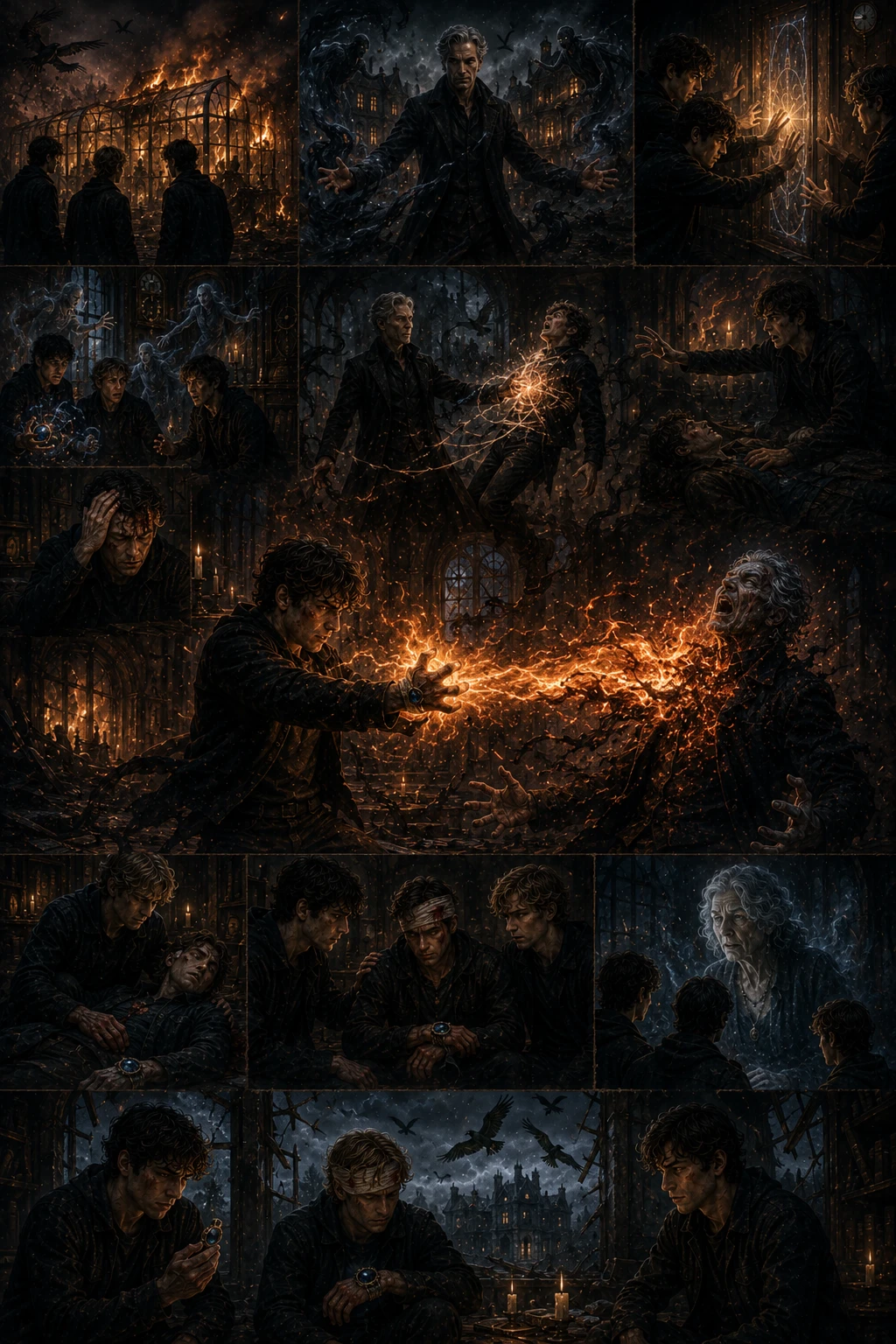
The First Midnight combines dark fantasy with the logic of a detective story. Captain Serhiy Lytvyn investigates the physical circumstances of the fire while Mark confronts what cannot be entered into an official report: his father’s voice inside his head, a figure in the ash, and a mark behind the surviving photograph.
The supernatural does not replace reality; it accumulates on top of it. Police procedures, funeral arrangements, unresolved family resentments, and magical events all exist at once. The characters are never allowed to escape into fantasy from the practical consequences of loss.
The deaths of the parents require more than solving a mystery. Their sons must identify remains, sign documents, return to an altered town, and speak with people who knew the family differently. This material weight prevents the tragedy from becoming a convenient plot device.
 Ілюстрація частини 4 — wolnar.com, автора Мс. К. Г. Морель
Parents Who Tried to Protect Through Silence
The mother and father do not disappear after the fire. They remain present through memories, prohibitions, and decisions whose consequences must now be carried by their sons. Neither parent is reduced to an innocent victim or a simple cause of the disaster.
The father appears to have been preparing for danger, but he was unable to trust his children with the truth. His severity may have grown from fear, yet to his sons it remained control. The final call becomes a belated attempt to break the silence, one Mark never hears in full.
The mother knew more than she allowed others to see. Her fear of certain questions, her refusal to discuss relatives, and her presence inside the locked study on the night of the fire complicate the image of someone who merely stood outside the family secret.
The tragedy of the Voronovels is therefore not created by an external enemy alone. It is also prepared by the belief that adults have the right to decide how much truth their children can endure.
By protecting their sons from knowledge, the parents make them dependent on rules they do not understand. Their intentions may have been loving, but love without openness becomes part of the mechanism that places the next generation in danger.
The novel does not dismiss those intentions. Instead, it shows how care can become coercive when another person loses the right to know, choose, and accept responsibility for their own life.
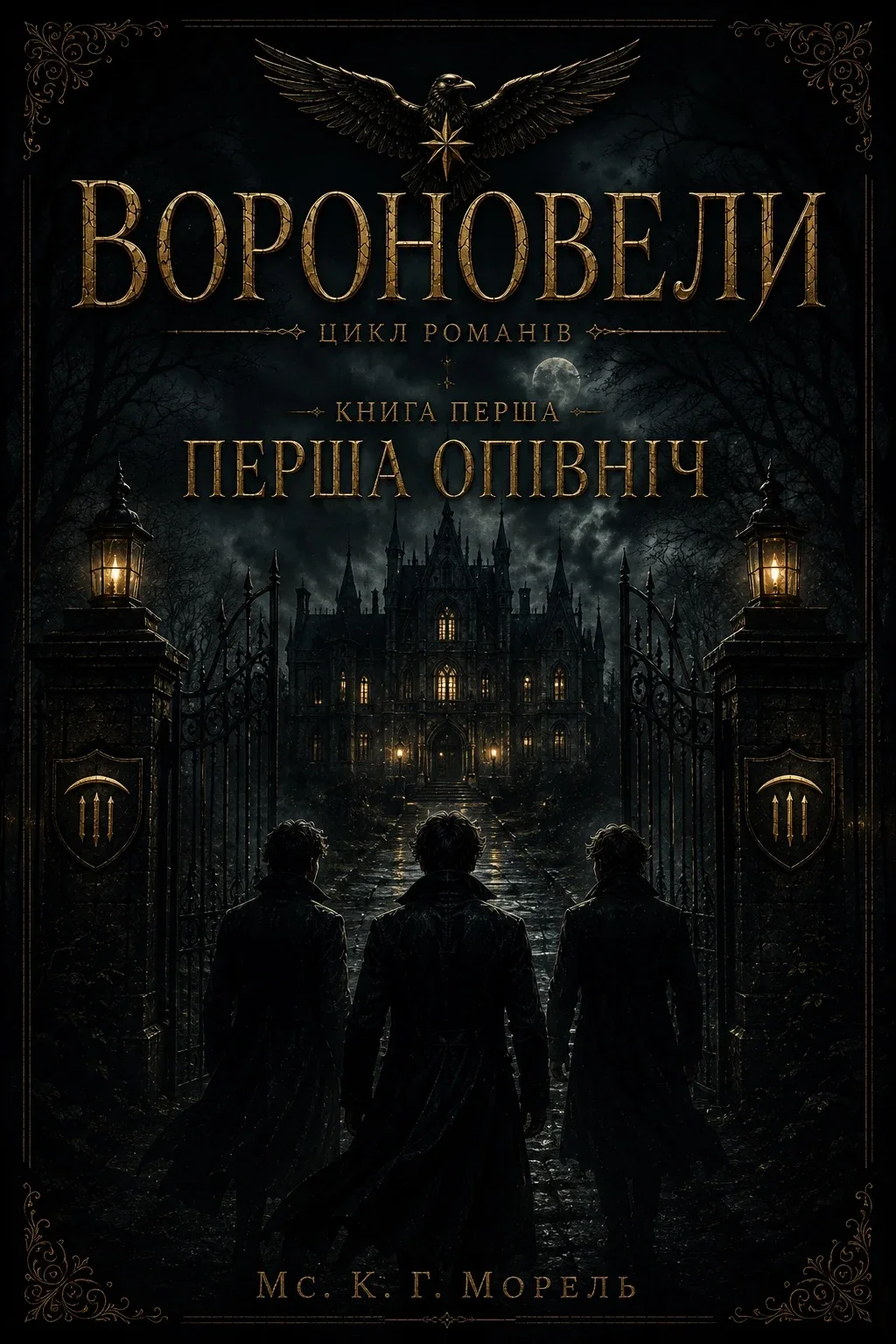 Вороновели. Книга І: Перша опівніч — wolnar.com, автора Мс. К. Г. Морель
Why The First Midnight Works as the Beginning of a Saga
The first volume of The Voronovel Legacy performs a difficult task: it introduces a large fantasy world without becoming an encyclopedia of its laws. The reader learns about bloodlines, seals, and ancient conflicts through danger, mistakes, and personal loss.
The novel does not rush to reveal the full scale of its universe. At first, there are only three sons, two dead parents, and a house that concealed something important. Only gradually does the family mystery reveal a wider order in which a surname is at once an inheritance, an office, and a sentence.
The story’s most important result is not the awakening of extraordinary power, but the transformation of the brothers’ relationship. They begin to understand that repeating the mistakes of their parents does not require cruelty. It is enough to decide once again that silence is more useful than another person’s choice.
The title The First Midnight therefore signifies more than the hour of a magical awakening. It marks the moment when the old order loses the ability to remain invisible. Beyond that threshold, the brothers cannot return to their former lives, but they can still decide what will replace them.
Ukrainian fantasy becomes here a space for examining family authority, inherited guilt, and personal freedom. The supernatural threat merely makes visible the mechanisms that ordinary life often conceals behind care, duty, and good intentions.
The First Midnight begins with a decision not to answer a phone call and moves toward the realisation that some demands from the past cannot be ignored forever. Mark, Yehor, and Danylo must answer not their father, but a history that considers them its property.
That is why the novel serves as a compelling entrance into The Voronovel Legacy. It opens an expansive magical world through an intimate catastrophe and asks the question that will define the entire saga: can heirs accept the power of their bloodline without inheriting its right to decide for them?