




















On the ground, the war in Ukraine is becoming increasingly resistant to large-scale maneuver. Hundreds of miles of fortifications, dense minefields, artillery and constant drone surveillance have made rapid breakthroughs extraordinarily costly. Above that nearly frozen front, however, another war is accelerating — faster, more technological and far wider in geographic reach.
Its battlespace begins a few feet above tree lines, where FPV drones hunt armored vehicles and infantry, and stretches into low-Earth orbit, where satellites help identify coordinates and guide long-range strikes. Between those layers lies an invisible front of radio frequencies, electronic warfare, navigation systems and artificial intelligence.
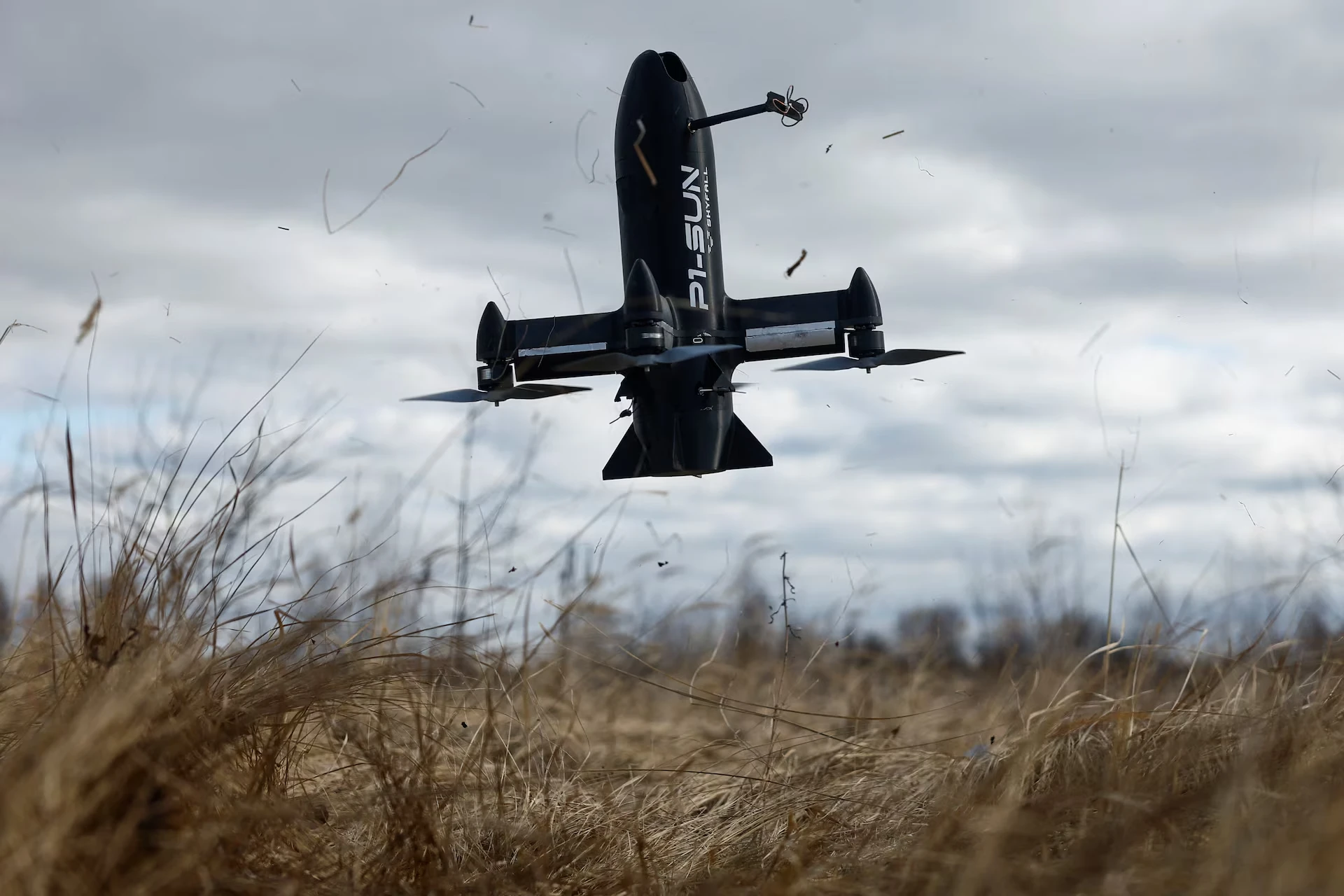
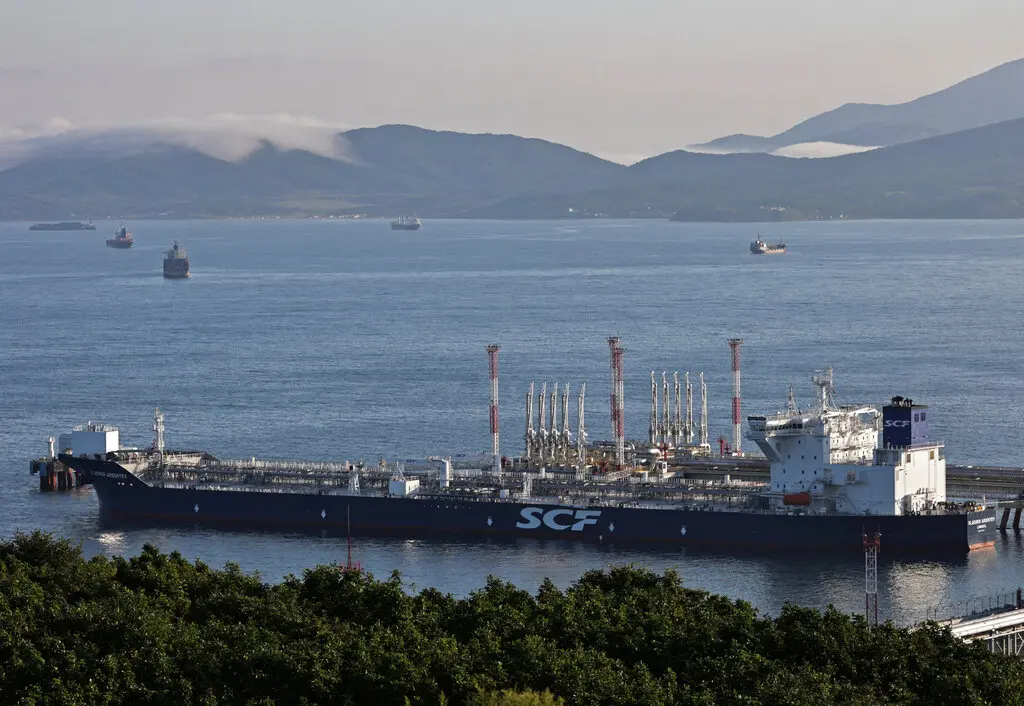
Ukraine is increasingly carrying the air war deep into Russian territory. Long-range drones and cruise missiles are striking oil refineries, military facilities, ports, logistics hubs and energy infrastructure from the Baltic and Black Sea regions to targets hundreds or even thousands of miles from the battlefield.
As Daycom has previously assessed, the central shift is no longer simply about how far a single drone can fly. Ukraine is trying to turn Russia’s vast geography from a traditional strategic advantage into a liability, forcing Moscow to spread radars, air-defense systems and aircraft across the front, major cities, industrial centers and the deep rear.
Russia, meanwhile, is intensifying its own aerial campaign. In July, it launched at least 126 ballistic missiles, the highest monthly total of the full-scale war. Those attacks are increasingly combined with cruise missiles, Shahed-type strike drones, decoys and cheaper weapons designed to overwhelm Ukraine’s air-defense network through sheer volume.
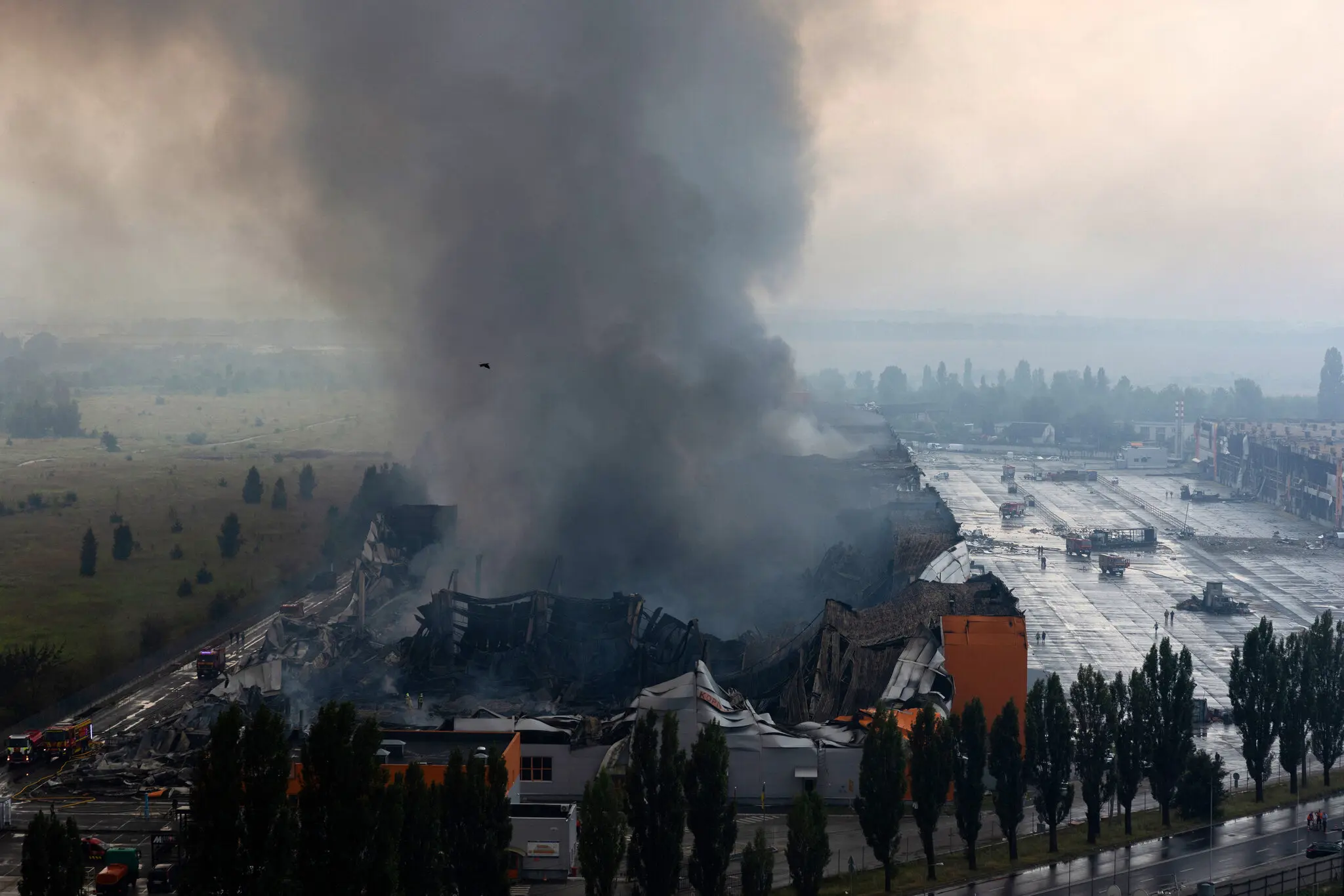
The human cost of that strategy is becoming more severe. Russian strikes are increasingly exploiting gaps in Ukraine’s depleted defenses around major cities. Ballistic missiles remain among the most dangerous threats: the time between launch detection and impact is so short that interception depends on a limited number of the most advanced defensive systems.
For Ukraine, Patriot batteries have become one of the most critical elements of national defense. They remain the country’s principal protection against Russian ballistic missiles, but interceptor stocks are constrained. Air defense is becoming an economy of hard choices: which incoming weapon to engage, which city to protect most heavily and how many expensive interceptors can be spent on a single night of attacks.
The consequences extend well beyond immediate destruction. Strikes on ports and infrastructure can disrupt grain and steel exports, damage industrial logistics and place additional pressure on the power grid. With another cold season approaching, electricity and heating are again becoming part of Russia’s broader strategy of attrition.
The conflict is increasingly dividing into two interconnected wars. The first continues along roughly 800 miles of front, where Russia is trying to advance slowly in the east using its advantages in manpower and resources. The second has no fixed line of contact. Its battlefield includes cities, factories, airfields, warehouses and energy infrastructure deep inside both countries.
It is this second war that is evolving fastest. Russia is fitting relatively inexpensive attack drones with jet engines, expanding its use of satellite-guided weapons and developing lower-cost cruise missiles that occupy the space between slow unmanned aircraft and sophisticated strategic missiles. Guided glide bombs remain another major threat, systematically devastating settlements near the front.
Ukraine is responding with a more fragmented but highly adaptive development ecosystem. Its arsenal increasingly includes long-range drones, missile-drone hybrids and improved navigation and communications systems. Kyiv is also testing domestically produced ballistic missiles, seeking to reduce its dependence on political decisions abroad over access to long-range strike weapons.
One of the central technological contests is now unfolding in electronic warfare. During the early stages of the invasion, powerful jamming could be enough to disrupt a drone attack by cutting navigation or severing contact with an operator. Developers are now responding with backup navigation, machine vision and autonomous guidance systems that can keep an aircraft moving toward its target even after communications are lost.
Artificial intelligence is therefore entering the battlefield less as a futuristic replacement for soldiers than as a practical answer to electronic warfare. A weapon may need to recognize terrain, compare it with stored data and continue navigating without constant external control. The more effective that autonomy becomes, the less decisive conventional signal jamming is likely to be.
Russia faces a different structural problem: geography. Its territory is too large to protect every military base, refinery, factory, port and logistics hub at once. After the full-scale invasion began, air-defense systems including S-300s, S-400s, Pantsirs and Tors were pulled closer to the Ukrainian theater. Every reinforcement of one area inevitably reduced protection somewhere else.
Each successful Ukrainian strike deepens that dilemma. Moving air-defense batteries toward Moscow, industrial centers or strategic facilities leaves fewer systems near the front. Keeping them concentrated around occupied territories and combat zones exposes more of Russia’s interior. The result has included air-defense batteries positioned on high-rise buildings and other improvised measures to protect vulnerable regions.
Ukraine’s pressure campaign therefore depends less and less on the destructive power of a single attack. The more important objective is to create a constant stream of new threats. A strike on a refinery, logistics center, radar or launcher forces Russian commanders to change the architecture of their defenses, and every such move can create a vulnerability elsewhere.
Russia’s largest advantage, however, remains industrial scale. Moscow can mass-produce standardized attack drones, missiles and decoys in quantities Ukraine has not yet been able to match. Ukrainian estimates suggest that Russian industry is capable of producing roughly 120 ballistic missiles per month.
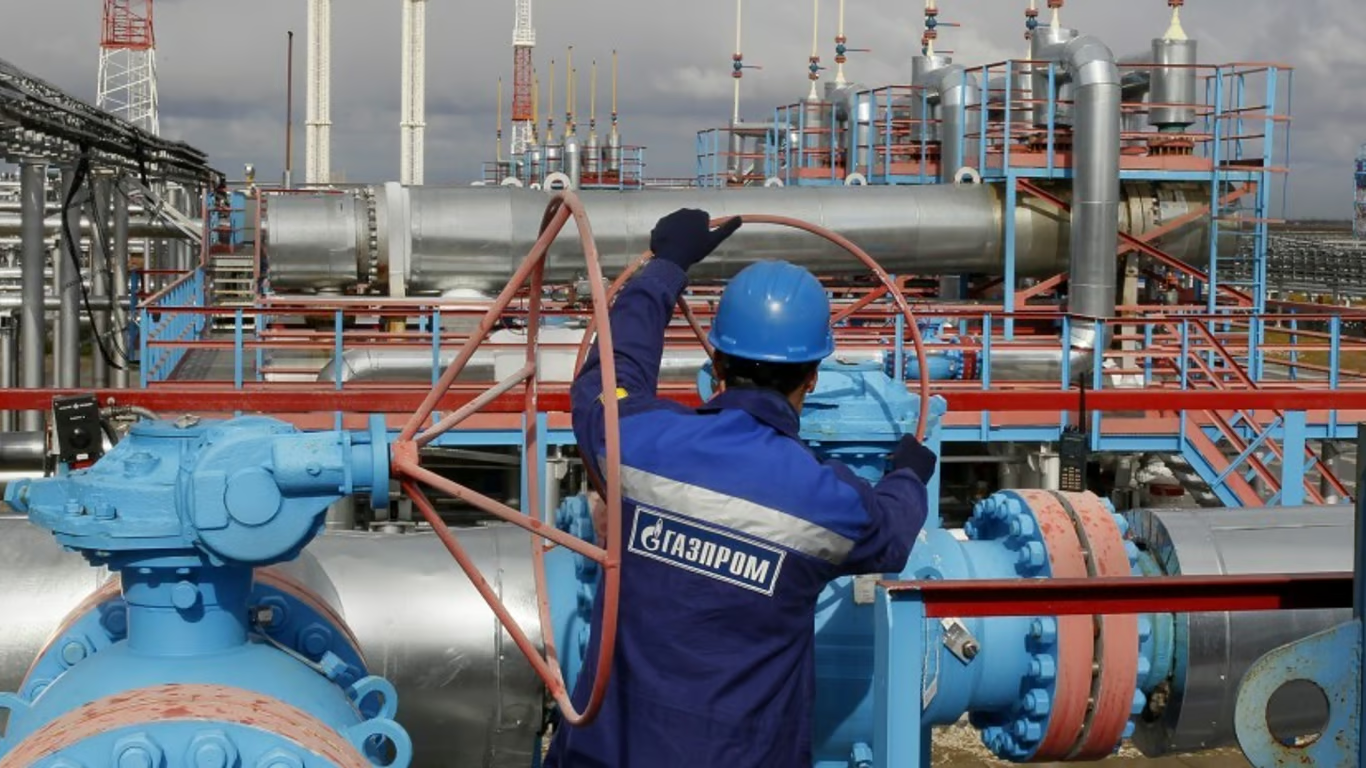
That arsenal is reinforced by weapons supplied by North Korea, a substantial inventory of S-300 and S-400 air-defense systems and continued access to foreign electronics and Chinese dual-use technology. Sanctions have made Russian supply chains more expensive and complicated, but they have not broken them. Russia’s war economy has adapted to a prolonged conflict more effectively than many expected in the first months of the invasion.
This is where the central asymmetry of the air war now lies. Ukraine has advantages in rapid innovation, decentralized development and the ability to alter tactics quickly. Russia has greater manufacturing capacity, deeper resources and the ability to turn a successful design into thousands of standardized weapons.
Both sides are therefore trying to exhaust not merely enemy units but entire systems. Moscow’s calculation is that it can produce offensive weapons faster than Ukraine and its partners can produce and supply interceptors. Kyiv’s strategy is to make the defense of Russian territory so expensive and complex that Moscow is forced into permanent shortages of air-defense coverage at critical points.
That logic helps explain why a technological breakthrough in the sky could ultimately matter more than another few miles gained on the ground. If either side learns how to penetrate the other’s defenses at scale, the consequences will extend far beyond military formations. Industry, transport networks, energy systems and major cities would all become more exposed.
After years of war, the decisive question is no longer simply who has the better drone or the more powerful missile. What matters is who can design weapons faster, manufacture them more cheaply, launch them in greater numbers, make them harder to intercept and continuously revise the software and tactics behind them.
The war above Russia and Ukraine is therefore becoming more than an extension of the battlefield below. It is evolving into a distinct theater of strategic competition — one in which industrial capacity, autonomy, air defense, long-range strikes and artificial intelligence may increasingly determine what happens on the ground.