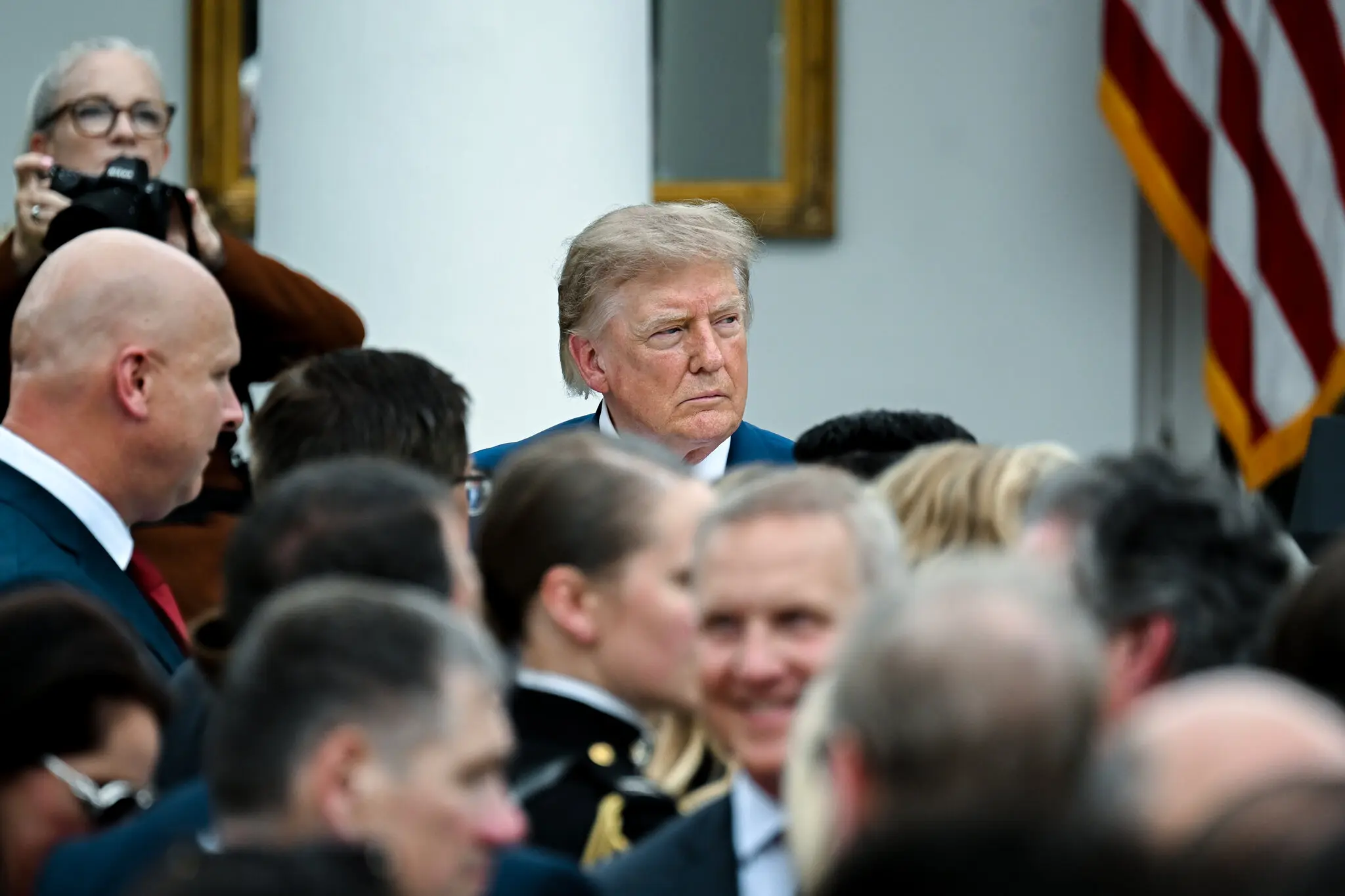
















President Donald Trump has ordered a significant reduction in joint US-South Korea military exercises, changing the programme after this year’s drills had already begun. Ulchi Freedom Shield, originally scheduled to run for 11 days from August 17 through August 27, will now end on August 21.
The revised plan also cuts back parts of the field-training component. A Pentagon official said some live-fire events had been cancelled and other activities shifted toward computer simulation. The Defense Department nevertheless maintains that the core objectives of the exercise will still be met.
About 18,000 South Korean troops had been expected to participate this year. The Pentagon has not publicly disclosed how many US personnel were scheduled to take part. The drills were designed to test responses not only to a conventional North Korean attack, but also to drones, cyber operations and electronic warfare.
Trump justified the decision by pointing to the cost of the exercises, his personal relationship with Kim Jong Un and his desire to avoid sending what he regards as an unnecessarily hostile signal to Pyongyang. He also linked his dissatisfaction with Seoul to South Korea’s refusal to support US actions against Iran.
According to Daycom’s analysis, the reduction in US-South Korea military exercises creates two competing possibilities. It may serve as a diplomatic signal intended to reopen contacts with North Korea, but it also reduces the amount of joint training on which deterrence and operational coordination have depended for decades.
Ulchi Freedom Shield is more than a symbolic show of alliance unity. It is one of the principal tests of whether the two militaries can operate as an integrated force, covering command, communications, logistics, decision-making and coordination under the conditions of a possible conflict on the Korean Peninsula.
That is why former US commanders and Korea specialists have focused particularly on the loss of practical training. Command-post simulations can test planning, but they cannot fully replace large-scale manoeuvres in which units rehearse movement, fire support and coordination in conditions closer to an actual battlefield.
Victor Cha of the Center for Strategic and International Studies has warned that reducing the drills could affect readiness. Readiness, in turn, is central to deterrence: if North Korea or China perceives the allied military posture as weaker, the risk of miscalculation could rise.
Retired General Curtis Scaparrotti, a former commander of US forces in South Korea, has stressed the value of live-fire exercises in particular. Such training allows units to test themselves under demanding conditions and assess not only individual skills, but whether entire formations can function effectively together.
The Pentagon, however, rejects the assumption that the revised programme automatically weakens military preparedness. Officials say the most important training requirements will still be met and that US and South Korean forces will continue exercising separately before the shortened programme ends.
South Korea accepted the changes, although Trump’s announcement appeared to catch Seoul by surprise. Foreign Minister Cho Hyun told lawmakers that South Korean and American officials had not been informed in advance that the president intended to shorten the exercise.
President Lee Jae Myung offered a more conciliatory interpretation. He said the decision could be viewed as a serious attempt to create conditions for dialogue with North Korea and reduce tensions, while insisting that South Korea must continue to maintain credible defence capabilities.
Pyongyang has so far offered no equivalent concession. Kim Yo Jong, the sister of Kim Jong Un and one of the regime’s most influential figures, said that reducing the scale and duration of the drills did not alter what North Korea regards as their provocative character.
At the same time, she did not entirely close the door on personal diplomacy. Kim Yo Jong said her brother retained positive memories of Trump, but added that she was unaware of any meaningful new contact between Washington and Pyongyang despite the US president’s suggestions of renewed communication.
A more tangible North Korean response came from its missile forces. On August 20, North Korea launched around 10 short-range ballistic missiles toward the Sea of Japan. South Korea’s military said the missiles were fired from the Pyongyang area and travelled roughly 300 kilometres.
The launches do not by themselves prove that Trump’s diplomatic initiative has failed. They do, however, illustrate the limits of a unilateral gesture. North Korea continues to combine the possibility of future talks with demonstrations of military capability and has not treated the reduced exercises as sufficient reason to moderate its behaviour.
The situation has a clear precedent. After Trump’s 2018 summit with Kim in Singapore, Washington suspended major summer exercises and later cancelled or reshaped several other drills in an effort to sustain the diplomatic process.
Those negotiations ultimately failed to produce a nuclear agreement. The 2019 Trump-Kim summit in Hanoi collapsed over disagreements about the scope of North Korean denuclearisation and the extent of sanctions relief, after which Pyongyang continued expanding its missile and nuclear capabilities.
That history explains much of the present scepticism. Scaling back military exercises can work as a bargaining signal only if it triggers reciprocal movement. If North Korean military activity continues unchanged, the allies risk giving up part of their own training without materially improving the security environment.
The stakes are particularly high for Seoul. About 28,500 US troops are stationed in South Korea, while the alliance rests on the 1953 Mutual Defense Treaty. Joint exercises are one of the mechanisms that turn those formal guarantees into the practical ability to respond together during a crisis.
The issue is further complicated by the Lee administration’s interest in greater defence autonomy. Seoul supports eventually regaining wartime operational control over combined forces, which makes the quality of joint training even more important to the future command structure of the alliance.
China is also part of the strategic equation. Beijing has urged Washington to abandon what it describes as a hostile policy toward North Korea and return to diplomacy. It has also opposed the hardening of bloc-based confrontation in Northeast Asia.
For Trump, the decision to shorten Ulchi Freedom Shield is therefore about much more than the timetable of a military exercise. It tests his long-standing belief that personal diplomacy with Kim can reduce tensions where sanctions, military pressure and conventional deterrence have failed to resolve the nuclear problem.
So far, Pyongyang’s answer remains deliberately mixed. North Korea has not repudiated the history of personal ties between Kim and Trump, but it continues to describe US policy as hostile, dismisses the shortened drills as an insufficient concession and is still conducting ballistic missile launches.
The consequences of Trump’s decision will become clearer only after Ulchi Freedom Shield ends on August 21. If the move opens a path to substantive negotiations, the White House will be able to argue that the diplomatic risk produced a return. If not, the allies may have to determine how to replace lost joint training.
That is the central dilemma for the US-South Korea alliance. A diplomatic gesture can be made with a single political decision; rebuilding complex habits of military coordination takes far longer. The debate over Ulchi Freedom Shield is therefore not only about Kim Jong Un, but about how predictable US security guarantees remain for allies across Asia.