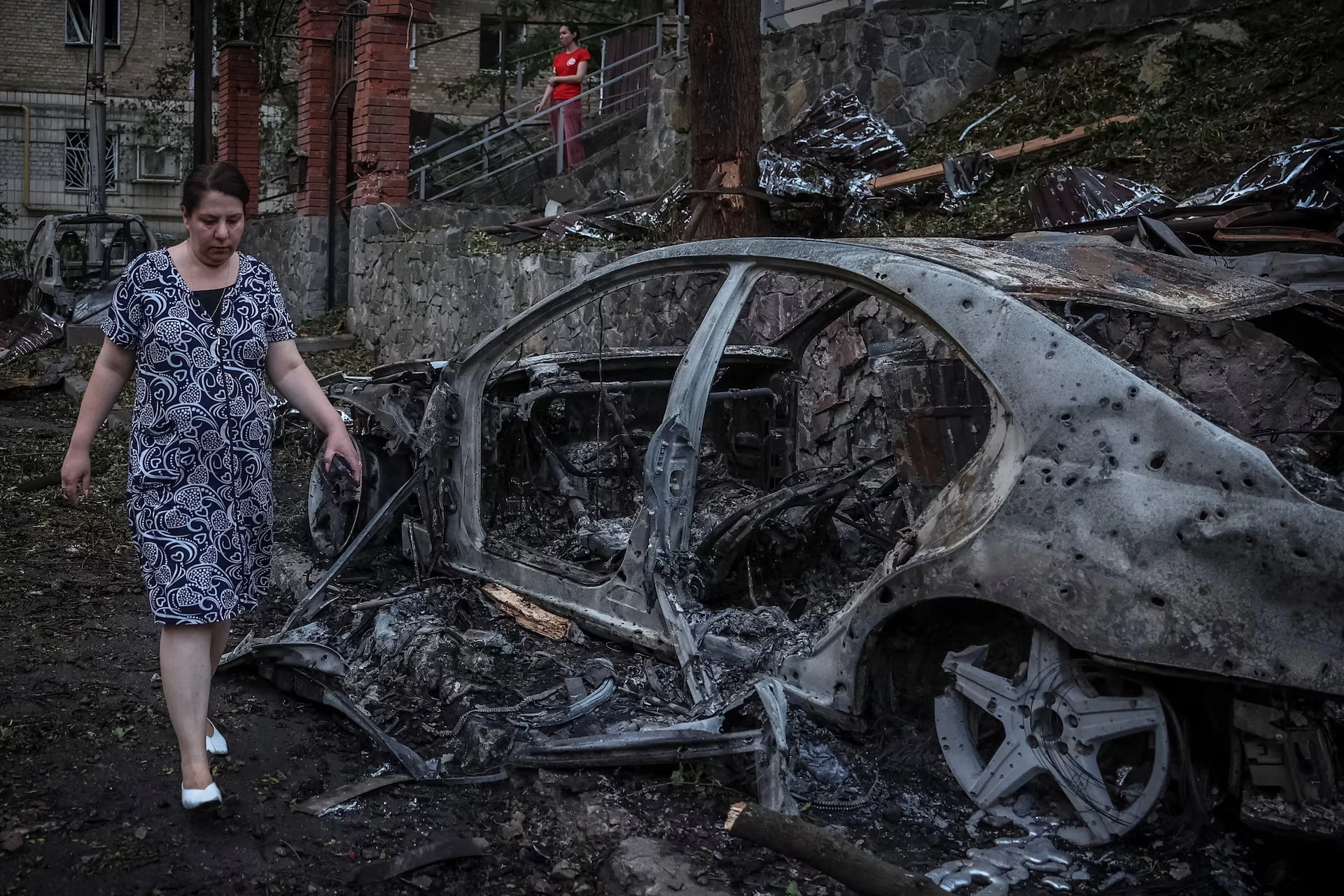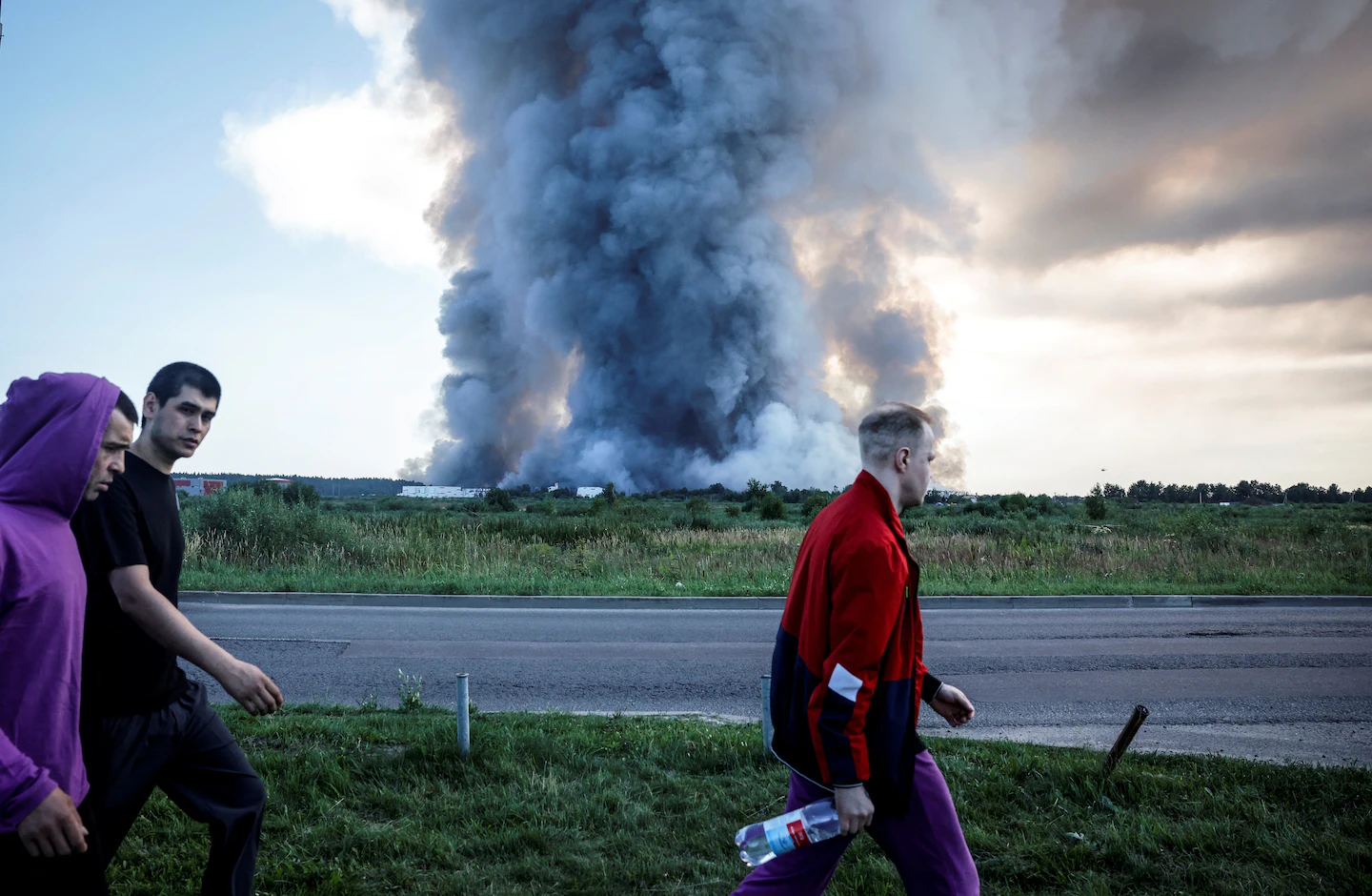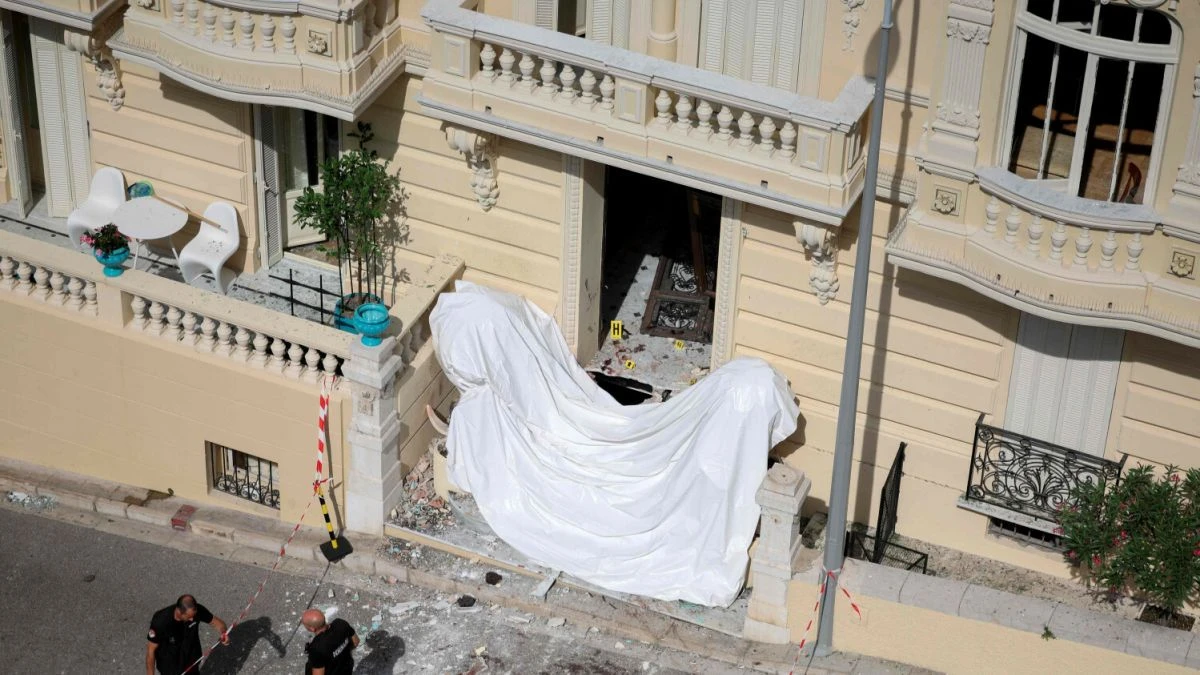


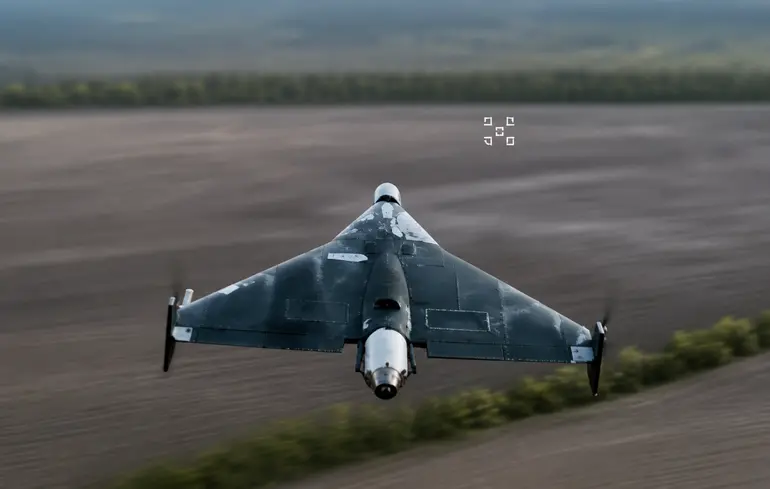


















A strike on Belgorod on August 30 killed two people and became another sign of the war reaching deeper into Russia’s rear. Acting regional governor Alexander Shuvayev said a man and a 16-year-old boy were killed. Another 16 people were injured.
Minors were among the wounded, and several casualties were reported in serious condition. Russian authorities described the attack as a missile strike and blamed Ukraine. As of the morning of August 31, the Ukrainian military had not publicly claimed responsibility for this specific attack.
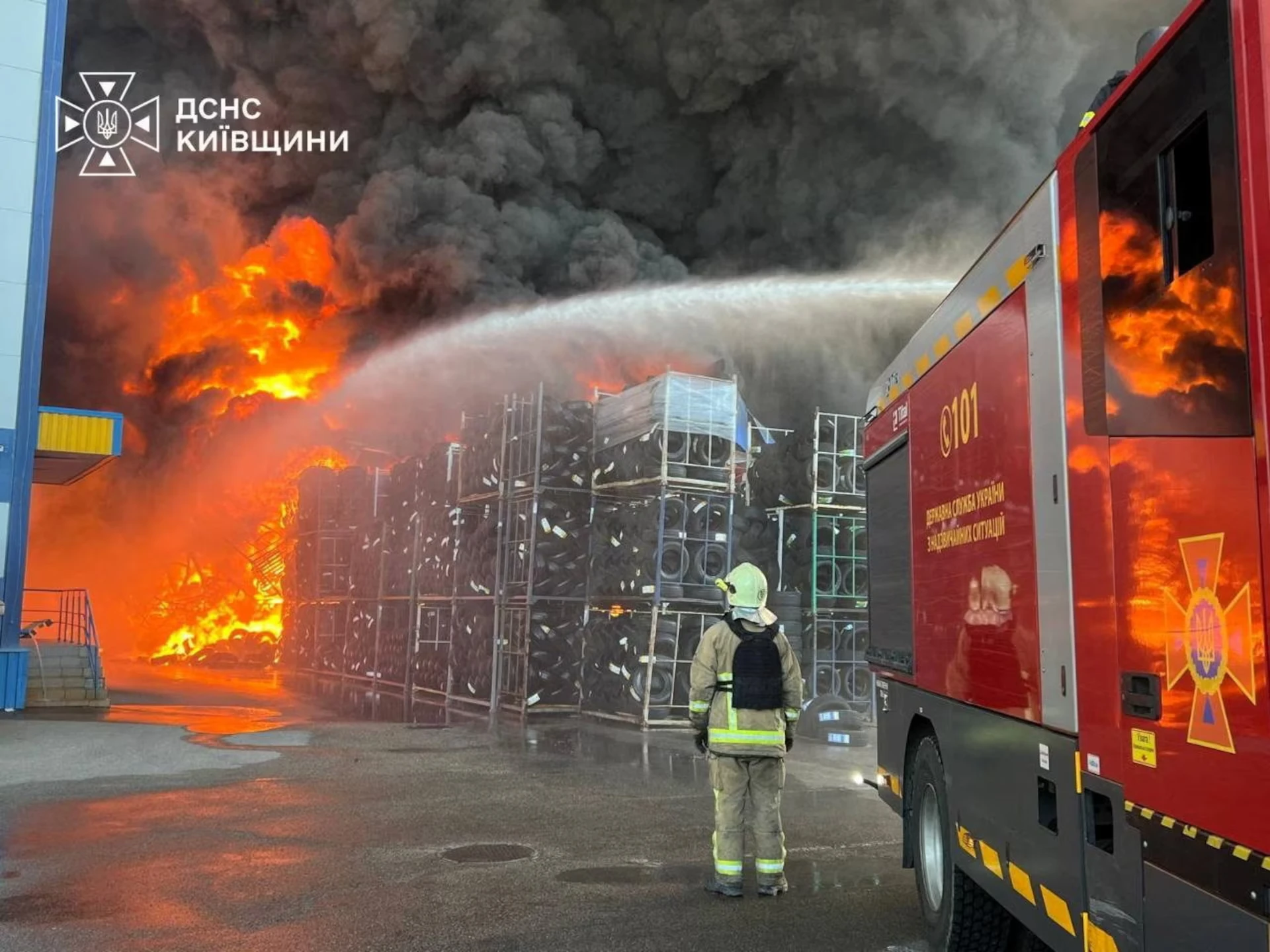
Shuvayev said fires engulfed seven warehouse buildings and that the roof of one facility collapsed. Ozon separately confirmed that its logistics hub and sorting centre in Belgorod had been hit. The company evacuated staff, reported injuries and said the fire had been brought under control.
There is not yet enough public information to conclude that all seven warehouses mentioned by regional authorities belonged to the Ozon complex. Official statements and the company’s account describe the damage separately, and the full configuration of the affected sites has not been established.
Daycom’s analysis indicates that the Belgorod strike matters not only because of the physical destruction. It exposes a new vulnerability in Russia’s rear: a major logistics hub can simultaneously be a civilian business, a critical part of regional commerce and a costly single point of failure for a much wider supply network.
The consequences for Ozon extended well beyond the damaged building. The company temporarily suspended the acceptance and delivery of orders in Belgorod and the surrounding region, while also halting inbound goods from sellers. Restoring operations depends on rerouting logistics flows.
For the marketplace, that means diverting shipments through alternative sorting centres, changing long-haul transport schedules and dealing with delayed orders. For a customer, the result may simply be a late parcel. For thousands of sellers, it can mean frozen inventory, lost turnover and difficulty servicing loans.
That second layer of disruption is increasingly important. A modern e-commerce warehouse is not merely a large building full of boxes. It receives goods from hundreds or thousands of merchants, sorts them, assembles orders, handles returns and connects an entire region to a nationwide retail network.
When such a node drops out of the system, the disruption travels in both directions. Customers do not receive their orders, while sellers may be unable to restore sales quickly even if their own businesses are hundreds of kilometres away. The concentration that makes large hubs efficient in peacetime becomes a vulnerability in war.
That weakness is particularly visible in Belgorod because of its location near the Ukrainian border. The city has long faced regular missile and drone attacks, but damage to a major sorting hub shifts the problem from a local fire to the functioning of an entire commercial distribution network.
The strike was not the first time Ozon had to halt major logistics facilities during August. Other centres in several Russian regions were temporarily shut or restricted after attacks, fires or warnings of possible strikes.
In some cases, buildings were damaged. In others, staff were evacuated even without a direct hit. From a business perspective, the difference can be smaller than it appears: an intact warehouse still stops functioning if hundreds of workers must leave and trucks cannot safely approach loading bays.
Ozon has already begun changing the way it works with sellers after such disruptions. The company has waived storage fees at affected sites, offered to move remaining inventory free of charge and redirected shipments that were already on their way to facilities forced to suspend operations.
The financial impact has become large enough to involve Russia’s banking system. Sber said it had received thousands of requests from sellers seeking loan restructuring after goods were affected at Ozon and Wildberries facilities. Around 6.8 billion rubles in loans had already been approved for restructuring.
That figure illustrates how a strike on one category of infrastructure can spread into the financial system. Many sellers buy inventory with borrowed money, hand it over to a marketplace and repay debt from sales revenue. If goods are destroyed or sales stop, the cash flow disappears but the loan remains.
The cost of logistics attacks therefore cannot be measured only by the floor space of a burned warehouse. Direct losses to buildings and inventory are compounded by compensation, rerouting, idle labour, insurance claims, additional transport and lost turnover for independent merchants.
The legal and humanitarian dimension remains equally important. Belgorod authorities reported two deaths at a commercial site, and minors were among the wounded. The economic or logistical significance of a facility does not by itself remove protections owed to civilians.
There is not enough publicly available information to determine which site was the intended target of each weapon used on August 30 or whether specific damaged warehouses were being used for military purposes. It would therefore be premature to classify the entire complex as a military target without additional evidence.
That distinction matters amid Ukraine’s broader campaign against Russian economic infrastructure. Kyiv has repeatedly targeted oil refineries, fuel depots, industrial plants and logistics sites in an effort to raise the economic cost of Russia’s invasion and complicate support for the war effort.
Warehouses belonging to major marketplaces fall into a much more complicated category. Unlike an oil refinery or a weapons factory, their primary function is civilian commerce. Large retail networks can move dual-use goods, but that requires specific evidence when assessing an individual facility.
Russia also faces a practical problem: an e-commerce network cannot be protected like a single defence plant. Hundreds of large and medium-sized hubs sit near transport junctions, industrial zones and major cities. Providing dedicated air defence to each one is effectively impossible.
Dispersal has limits as well. Marketplaces became efficient precisely because large centres allow automation and scale to process vast numbers of orders quickly. Breaking the system into many smaller warehouses would increase delivery costs and reduce productivity.
Companies therefore have to find a balance between efficiency and resilience. Inventory can be spread across more sites, backup routes can be created and sorting capacity duplicated. But every layer of redundancy requires more staff, vehicles, equipment and real estate.
Insurance is also becoming part of the wartime economy. After the August attacks, Ozon began giving sellers specific guidance on compensation under policies that include damage caused by drone strikes. The very existence of such procedures shows how normalized this risk has become.
For Belgorod, the strike carries another meaning. The border city has lived with the consequences of war for far longer than most Russian metropolitan areas, but military risk is now reaching deeper into ordinary economic activity — from retail and warehouse work to employment and the delivery of everyday goods.
Regional authorities regularly report attacks on businesses, vehicles and residential areas. That means even after a particular hub is repaired, companies must treat another strike as a continuing operational risk rather than a one-off emergency.
Ozon’s practical response is already clear: resume service by rebuilding routes around the damage. That formula effectively captures the new model of Russian wartime logistics — not preventing every strike, but building a network able to keep functioning after the loss of an individual node.
The more often routes have to be rebuilt, however, the more expensive that resilience becomes. Instead of taking the shortest path, a truck is diverted through another centre, goods spend longer in transit, inventories accumulate elsewhere and sellers wait longer to receive payment. War gradually enters the price of an ordinary parcel.
In that sense, attacks on marketplaces differ from strikes on a single large factory. Their effects are dispersed across tens of thousands of small economic decisions: a delayed order, a restructured loan, an extra truck journey, an insurance claim or merchandise that never reaches the buyer.
The Belgorod strike also underlines the human cost of pushing warfare deeper into economic infrastructure. Two dead and 16 injured are not an abstract part of logistics statistics. The farther combat reaches into commercial networks, the harder it becomes to keep civilian life outside the risk zone.
The Belgorod hub can be repaired, goods can be rerouted and loans can be restructured. What is harder to restore is a system in which a major commercial warehouse does not need a contingency plan for missile alerts. That broader shift is the real consequence of the strike: Russia’s rear increasingly looks less like a rear at all.