



















The air war reached one of Russia’s most heavily protected regions again overnight on August 18. Authorities in Moscow said 620 drones had been launched toward the capital and surrounding region, with 180 of them intercepted over the Moscow area itself.
The operation extended far beyond the capital. Large numbers of drones were also reported over other Russian regions, the Black and Azov seas and occupied Crimea, suggesting a distributed attack designed to force air defences to respond across several widely separated areas at the same time.
At least three people were reported injured in the Moscow region, including a 10-year-old girl. Falling debris and drone impacts damaged residential, commercial and logistical sites in several districts. No deaths were initially reported from the overnight attack on the capital region.
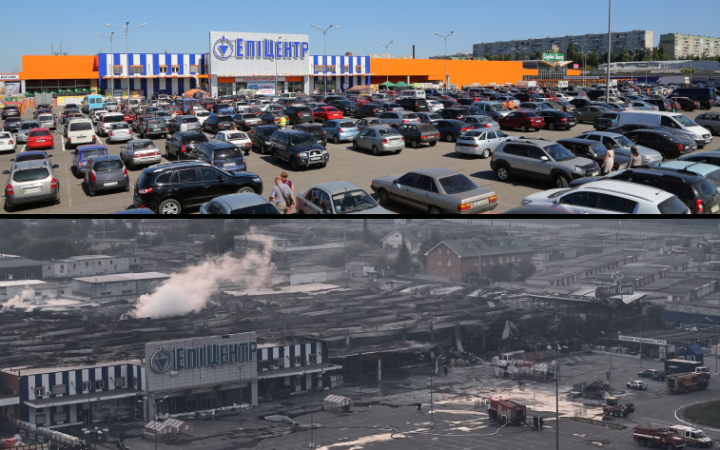
One of the most visible incidents involved a warehouse operated by Wildberries, one of Russia’s largest e-commerce companies. Drone debris struck a wall of the facility and caused limited damage, once again drawing attention to the vulnerability of large logistics hubs around Moscow.
Daycom’s analysis indicates that the significance of the drone attack on Moscow lies not only in the headline figure of 620 aircraft. More important is the increasing frequency of mass waves involving hundreds of drones, which can place sustained pressure on Russian air defences across a vast area.
Only days earlier, Russia had reported another exceptionally large Ukrainian drone attack involving hundreds of aircraft across the country. When operations of this scale recur within a short period, air defence is no longer dealing primarily with isolated penetrations but with repeated saturation-style threats.
The figure of 620 also requires careful interpretation. It does not mean that 620 drones struck Moscow or even reached the Moscow region. It represents the number Russian officials said had been directed toward the capital area, while only a portion were reported intercepted directly over the region.
The broader overnight campaign appears to have involved multiple routes and objectives. Drones were reported over different parts of Russia, over maritime approaches and above occupied Crimea, meaning Moscow was only the most politically prominent element of a geographically dispersed operation.
Scale creates a particular challenge for air defence. The task is not merely to detect and destroy one incoming aircraft, but to track large numbers of targets, determine their likely routes and allocate interceptors while simultaneously protecting cities, industrial facilities, airfields and energy infrastructure.
Even a high interception rate cannot eliminate the risk of damage. A destroyed drone can still scatter debris over populated areas, while only a small number of aircraft getting through may be enough to trigger fires, emergency responses and disruption across several districts.
The August 18 attack illustrated that problem. Damage was reported at more than one location in the Moscow region, with injuries and localized incidents spread across different areas rather than concentrated at a single target. Moscow itself did not report destruction on a comparable scale.
That geographic spread matters. The larger the zone in which drones may appear around a metropolitan area of more than 20 million people, the more demanding the defensive problem becomes. Radar coverage, electronic warfare systems and interceptors must all be distributed across a broad perimeter.
There is an economic dimension as well. Major logistics centres are not simply individual buildings but nodes in complex distribution networks. Even limited damage or temporary shutdowns can affect sorting, deliveries, freight routes and the movement of goods through interconnected warehouses.
The consequences of a strike therefore cannot be measured only by the size of a hole in a wall or the duration of a fire. The more important question is how quickly operations resume, whether access routes remain open and whether capacity has to be transferred to other facilities.
Occupied Crimea faced a different form of disruption during the same night. Drone attacks were followed by fresh power outages, with several settlements losing electricity and difficult supply conditions reported in parts of the peninsula’s northwest, east and south.
Energy disruptions in Crimea carry particular significance because the peninsula’s infrastructure supports both civilian life and a dense network of military, transport and logistical facilities. Repeated strikes can place pressure on the grid even when damaged components are restored relatively quickly.
Moscow and Crimea therefore play different roles in Ukraine’s long-range strike campaign. The capital region has extraordinary political, administrative and economic importance, so even limited incidents attract national attention. Crimea remains central to Russian military and logistical operations in the south.
Targeting such distant areas during the same overnight wave forces Russia to distribute defensive resources across hundreds of kilometres. That is one of the central advantages of large numbers of relatively inexpensive long-range drones: they can impose costs well beyond the price of any single aircraft.
The number of drones launched, however, is not by itself a measure of military success. A proper assessment requires confirmed information about the targets struck, the proportion of aircraft that reached them, the severity of damage and the time needed to return affected facilities to normal operation.
Interception figures also deserve caution. In wartime, the parties themselves provide most of the immediate numbers on drones launched and destroyed, while independently verifying hundreds of individual engagements in real time is rarely possible.
The broader trend is nonetheless clear. Ukraine has steadily expanded the scale of its long-range drone operations against Russian territory, using unmanned systems not only to hit individual targets but also to test the density, endurance and response capacity of Russia’s air-defence network.
For Russia, that creates a growing requirement to keep substantial defensive resources far from the front. Every additional region requiring protection means more radar coverage, electronic warfare equipment, mobile fire units and interceptors must be deployed away from other possible missions.
At the same time, Russia continues its own large-scale campaign of missiles and drones against Ukraine. Ukrainian cities, energy infrastructure and other targets remain exposed to repeated long-range strikes, meaning the war is increasingly being fought simultaneously at the front and deep behind it.
This has become one of the defining features of the conflict in 2026. Large ground breakthroughs remain difficult and costly, but long-range weapons allow both sides to impose pressure hundreds of kilometres beyond the contact line without first having to seize new territory.
For Ukraine, drones have become a way to offset some of the limitations imposed by smaller stocks of conventional missiles and the restricted reach of traditional air power. Mass launches can divide defensive attention, complicate detection and force the expenditure of resources even when many aircraft never reach their targets.
That is why the August 18 drone attack on Moscow matters beyond the size of a single overnight barrage. It illustrates how long-range warfare is shifting from occasional raids toward repeated mass operations capable of affecting the capital region, other parts of Russia and occupied Crimea at once.
The reported 620 drones do not mean 620 successful strikes, nor do they by themselves prove that Russian air defences were overwhelmed. But when attacks involving hundreds of aircraft recur within days, the central question changes: it becomes less about the outcome of one night and more about how long an air-defence system can sustain that tempo.