



















Burned-out cars stand among the remains of shattered buildings, artillery echoes through deserted streets, and the sound of a gun is increasingly followed by the distinctive buzz of a drone. This is Druzhkivka at the end of August, with Russian forces now roughly 15 kilometres away.
The city is not yet on the immediate line of ground combat, but the distinction between front and rear has nearly disappeared. Russian FPV drones hunt vehicles, guided aerial bombs destroy neighbourhoods, and artillery has become part of daily life. Even a civilian evacuation increasingly resembles a military operation.
Druzhkivka matters to Russia not only as a city in its own right. It forms part of a chain with Kostiantynivka, Kramatorsk and Sloviansk — a large urban defensive system often described as the “fortress belt” of Donetsk region. Breaking it would bring Moscow closer to controlling a much larger part of the area.
By late August, Russian forces were continuing efforts to advance toward Kostiantynivka and Druzhkivka while intensifying strikes on roads and urban infrastructure. The aim is not merely to gain ground, but to make Ukrainian logistics progressively harder even before any larger assault on the cities themselves.
Daycom’s analysis indicates that the battle for Druzhkivka effectively began long before Russian infantry reached its outskirts. Modern warfare allows a city to be gradually isolated by drones, glide bombs and attacks on roads, pushing civilians out while making every Ukrainian movement more dangerous and expensive.
The transformation is especially visible in evacuation operations. Ukrainian police have warned that the density of Russian drones is now so high in some areas that ambulances or evacuation vehicles cannot simply drive to an address. Routes have to be chosen with drone detectors and constant changes in risk.
Some evacuation teams have had to cover parts of their route on foot through areas saturated with strike drones. Others have been exposed to repeated guided-bomb attacks, mine risks and fresh drone threats even after reaching their vehicles for the return journey.
By the end of August, such episodes were no longer exceptional. Police and emergency teams increasingly described drones as actively hunting vehicles and people. Only a limited number of crews are able to enter the most dangerous areas, turning every rescue run into a carefully managed operation.
Drones have changed even the most basic logic of moving through the city. Iryna Litovchenko, 56, barely reacts to the sound of nearby artillery but stops when she hears the softer buzz overhead. After her home was destroyed, strangers took her in.
“My home is gone, as if it never existed,” she says amid broken glass and debris. Her words capture what is happening to Druzhkivka: the city is not disappearing in a single overwhelming strike, but piece by piece — one home, one shop and one block at a time.
Zoya, 63, still sells basic food beside a burned market stall. She understands that another bomb or drone could kill her, but does not want to leave the place where she was born and has spent her life. Looking at the destruction, she says simply: “Our city is gone.”
The decision to stay can be difficult to understand from far away. But for an older resident, evacuation means more than physical safety. It can mean abandoning an apartment, neighbours, possessions, familiar streets and the last tangible connection to the life that existed before the war.
Conditions for those who remain are deteriorating quickly. Druzhkivka has faced serious disruption to electricity, water and gas. Residents rely on emergency support points to charge phones, obtain basic assistance and, sometimes, simply tell relatives that they are still alive.
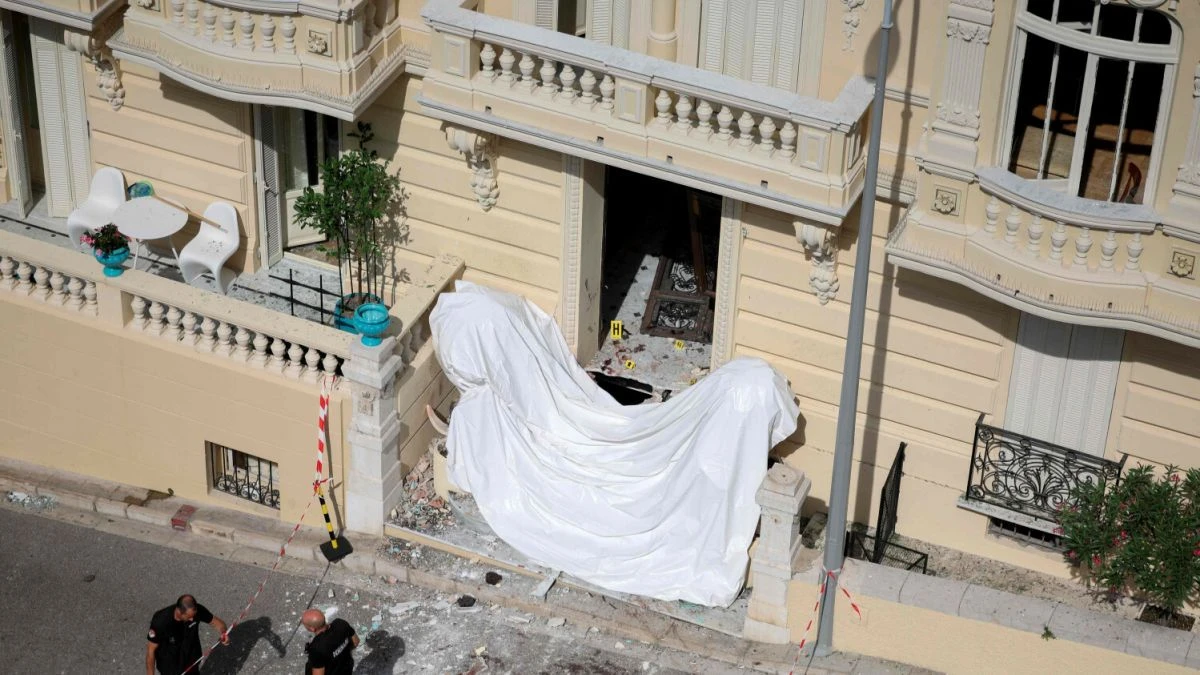
In some courtyards, people now cook outdoors. Damaged façades and shattered windows have become ordinary features of the urban landscape, while trees and fences are tangled with thin fibre-optic cable left by FPV drones designed to remain effective despite conventional radio-electronic jamming.
The roads are changing too. Anti-drone netting has been installed over some routes in an attempt to disrupt the final approach of FPV aircraft toward vehicles. It is not complete protection, but even a few extra seconds or a physical obstacle can determine whether a vehicle gets through.
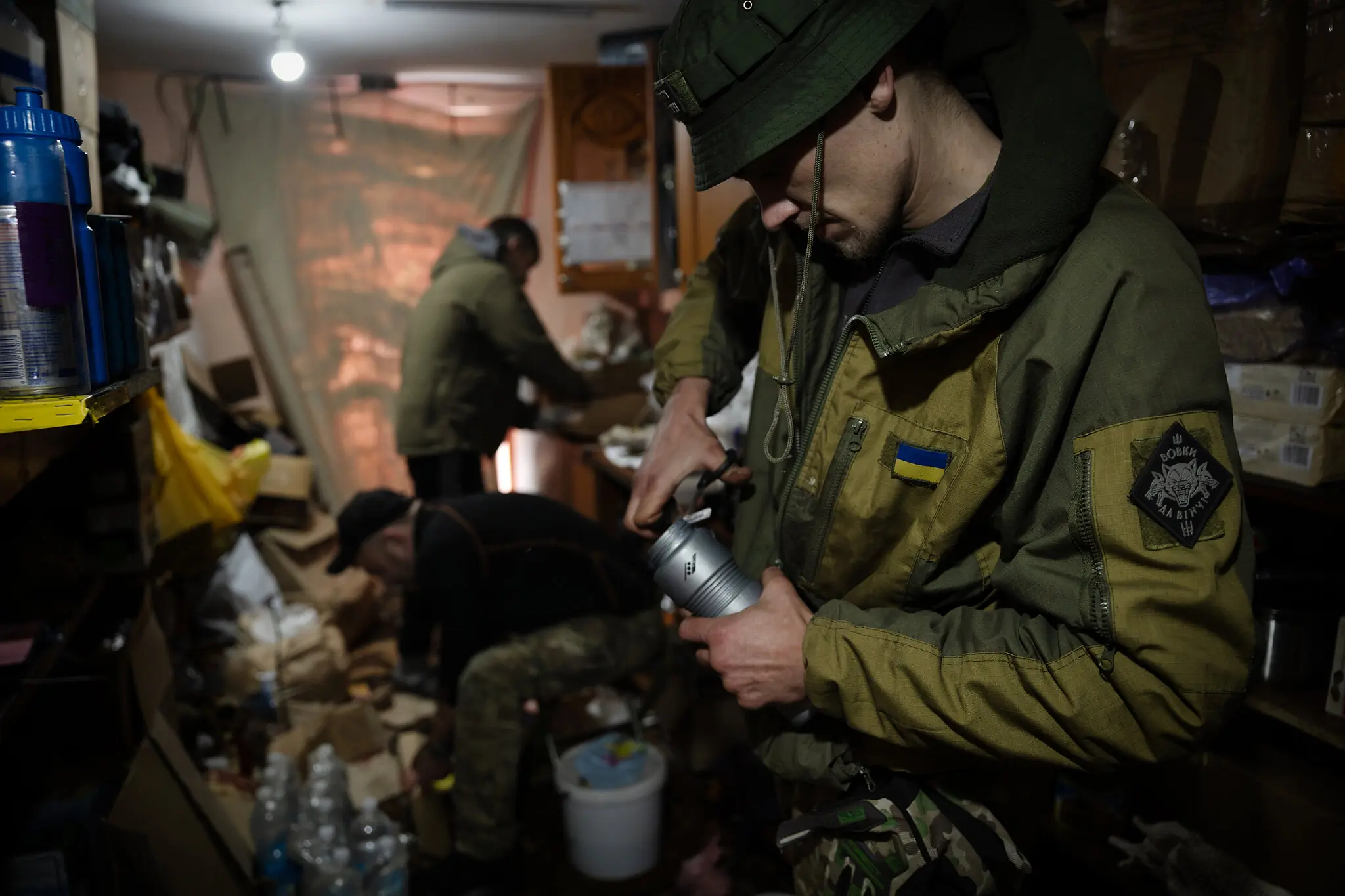
More tasks are also being handed to unmanned ground vehicles. Small robotic systems can carry ammunition, water and other supplies to frontline positions or evacuate wounded soldiers, reducing the number of people who must travel along roads under persistent drone observation.
For Ukrainian forces, these machines are becoming less of a technological experiment and more of a way to sustain logistics where conventional vehicles are too exposed. The closer Russian drone teams move their launch points, the deeper the danger zone extends into what was once considered the rear.
That is one of the defining changes in the war in Donbas. Russian forces do not need to physically control a road to sharply reduce its usefulness. Persistent surveillance combined with strike drones may be enough to make movement along it prohibitively risky.
This is why Russia’s approach to Druzhkivka cannot be measured only in kilometres. Fifteen kilometres remains a significant distance for infantry. For a modern FPV drone, a guided bomb or long-range artillery, it is already well within the operational battlespace.
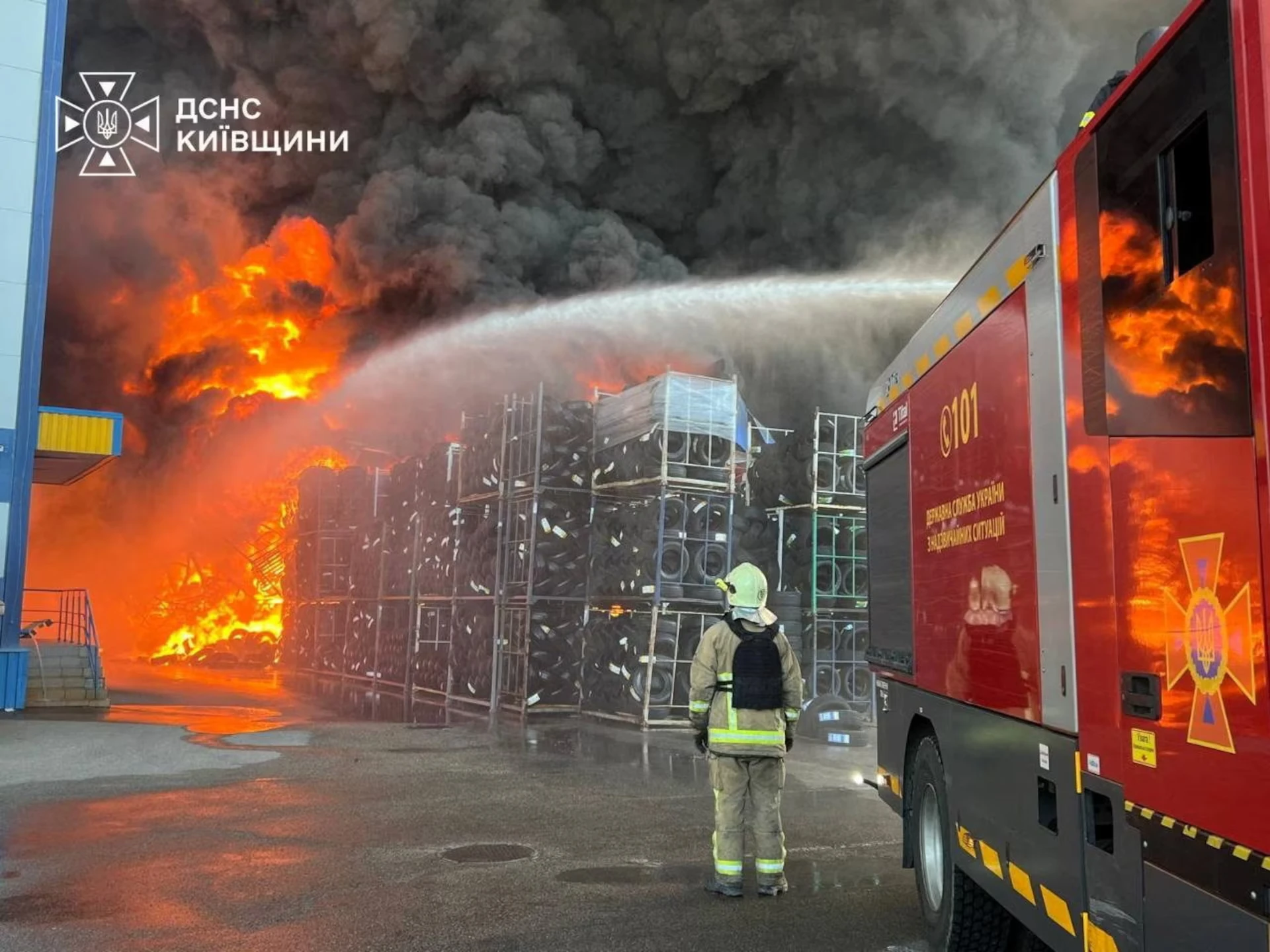
Throughout the summer, Russian forces intensified aerial attacks across the entire fortress belt. Sloviansk, Kramatorsk, Druzhkivka and Kostiantynivka have repeatedly been struck by drones and guided bombs, while the roads linking them have increasingly become targets in their own right.
The logic is to shape the battlefield before a major ground assault begins. If roads and bridges are damaged, warehouses are pushed farther back, vehicle movements are constrained and civilians continue to leave, holding the wider urban area becomes more difficult even without a sudden Russian breakthrough.
Ukrainian forces are still containing the pressure. By late August, there was no clear sign of an operational Russian breakthrough directly toward Druzhkivka. Russian units have relied on small assault and infiltration groups, but progress has remained slow and not always secure.
That distinction matters. The front moving closer does not mean Druzhkivka is certain to fall soon. Russian forces have repeatedly spent months or years trying to seize fortified cities in Donetsk region, while dense urban terrain can create significant advantages for defenders.
For civilians, however, the moment when fighting reaches the streets is no longer the main threshold of danger. A city can become effectively unlivable long before the first Russian assault group reaches its outskirts.
The evacuation of families with children began well before the current phase of the fighting. Authorities have repeatedly urged residents to leave, and by the summer of 2026 requests for evacuation were arriving daily, including from people who had previously refused to go.
For some residents, leaving without assistance is no longer possible. Elderly and mobility-impaired people have to be collected by specialist teams, sometimes moved on improvised carts to a point where an armoured vehicle can still reach them. The final few hundred metres can be the most dangerous part of the journey.
Such details show why the phrase “front line” increasingly fails to describe reality. On a military map, Druzhkivka is still under Ukrainian control and lies behind the foremost positions. In practical terms, its residents already live inside a zone of constant combat effects.
Russia’s larger objective is to break the cohesion of the entire urban belt. Kostiantynivka guards the approaches from the south, Druzhkivka lies farther north, while Kramatorsk and Sloviansk form the largest Ukrainian-controlled urban hub in this part of Donetsk region.
If Russia cannot break through quickly, it can still try to make the area progressively more expensive to defend. Guided bombs destroy major structures, FPV drones restrict movement, long-range systems attack logistics and persistent pressure accelerates the civilian exodus.
Ukraine’s task is the reverse: preserve not only the frontline positions but the entire support system behind them. Anti-drone nets, ground robots, dispersed warehouses, alternative routes and mobile air-defence teams are increasingly parts of one defensive architecture.
Druzhkivka therefore matters as more than another town on the map of Donbas. It shows how modern warfare can move the front toward a city before a ground assault begins — first through the air, then through roads, logistics and the destruction of normal civilian life.
For those who remain, that military logic reduces to much simpler questions: where to find water, when it is safe to leave shelter, whether crossing a street is worth the risk and whether today is the day to accept evacuation.
Druzhkivka has not been captured and is not encircled. Ukrainian forces continue to hold the line, and Russia’s advance remains slow. But the city already illustrates another form of defeat that can precede a military one: a place may remain under state control while ordinary urban life steadily disappears.
That is why Zoya’s words — “our city is gone” — carry a meaning beyond personal grief. Across Donbas, Russia has repeatedly advanced through cities it first reduced to ruins. Druzhkivka now faces the same danger: preserving the line on the map while losing the city that once stood behind it.