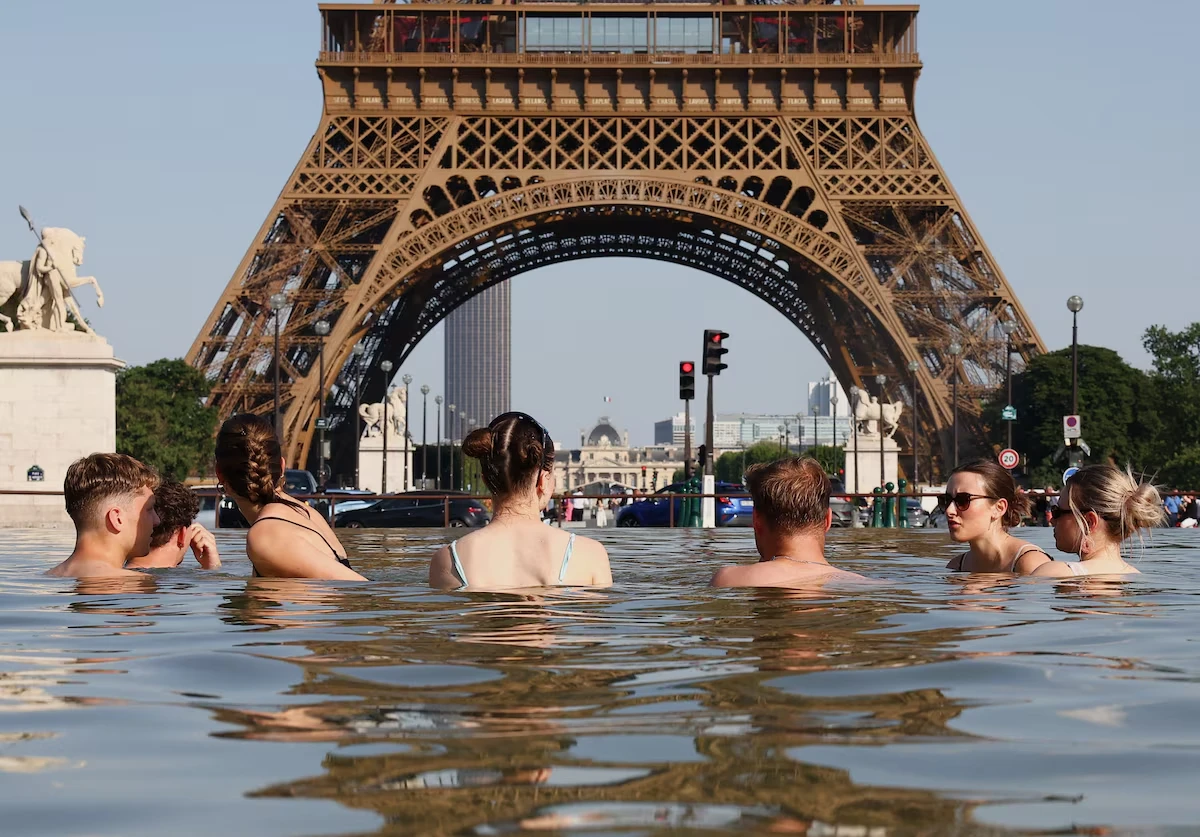






Europe’s river cruises, sold as one of the easiest ways to travel — one cabin, multiple cities and no repeated hotel changes — have increasingly turned into bus tours this summer. Prolonged heat and drought have pushed parts of the Rhine and Danube to critically low levels, disrupting hundreds of itineraries.
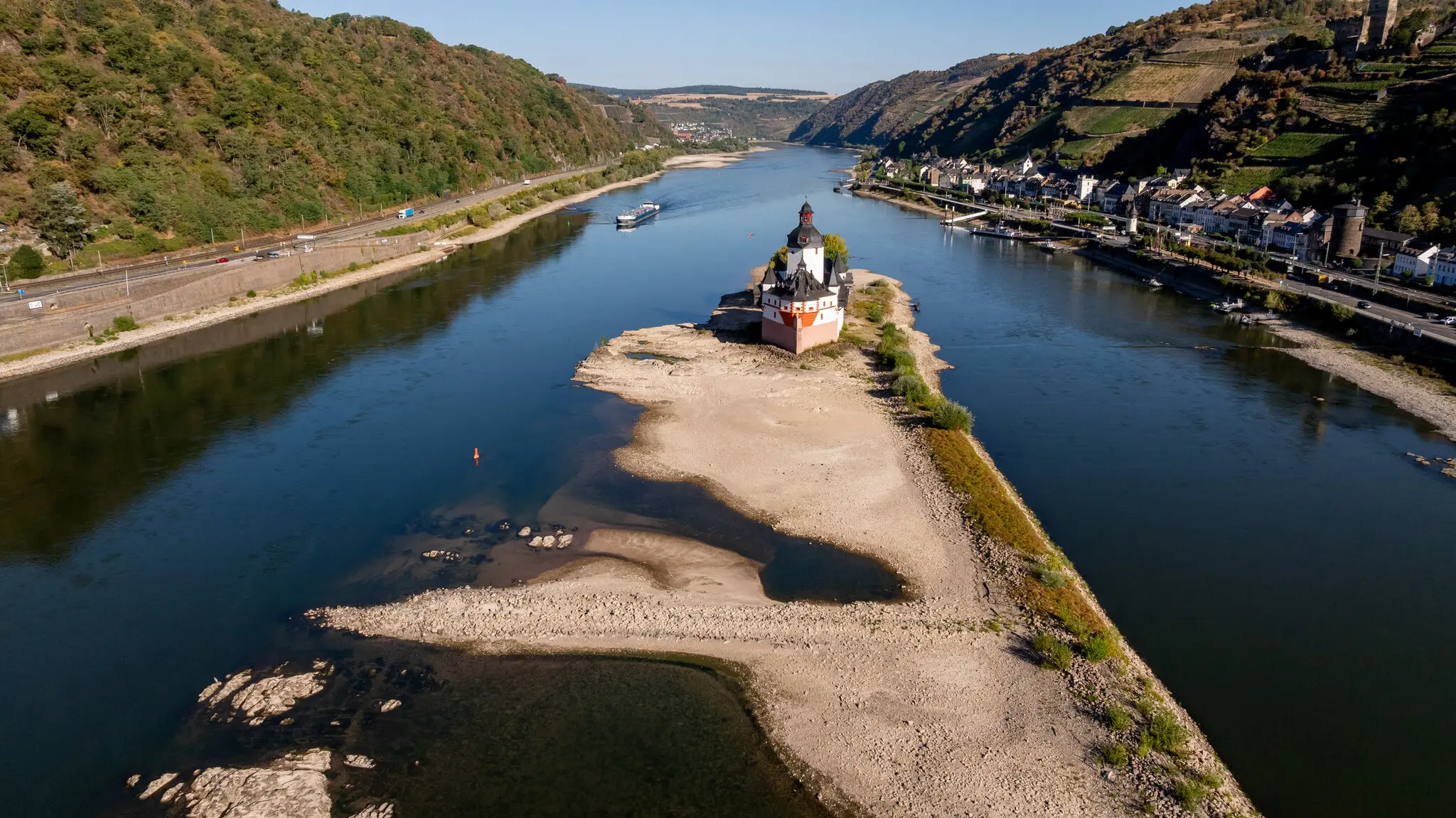
The problem is not confined to one narrow section of river. During July, unusually weak flows affected large parts of western, central and eastern Europe. The Rhine and Danube fell to record or near-record lows in several areas, while drought conditions remained severe across much of the Danube basin into August.
On the Rhine, Kaub has become one of the clearest indicators of the crisis. The German gauge is closely watched because it helps determine whether vessels can pass through one of the river’s most sensitive stretches. In late July, readings fell to just a few dozen centimetres, sharply restricting navigation.
Conditions on the Danube have been equally serious. Water levels fell to exceptionally low levels in Hungary, Romania and Serbia, forcing authorities to intensify monitoring of shipping, water supplies, agriculture and energy systems that depend on the river.
Daycom’s analysis indicates that the crisis facing Europe’s river cruises is no longer simply a seasonal inconvenience. The industry expanded on a promise of predictability, but increasingly has to operate a product whose viability can depend on only a few dozen centimetres of water.
For major operators, one of the main ways to preserve itineraries has been the ship swap. When a vessel cannot cross a shallow section, passengers are transferred overland to another ship waiting on the opposite side of the affected stretch.
Under ideal conditions, the process is designed to be almost invisible. Guests leave for an excursion while their luggage is moved to an identical or near-identical vessel, where they return to the same cabin category and continue the journey.
But that model works only when an operator has a sufficiently large fleet, the right ships positioned in the right places and access to suitable ports. If low water affects several sections at once, a seamless transfer can quickly become a long bus journey, a shortened excursion or a night in a hotel.
One of the industry’s largest operators told investors that low water affected more than half of its European river-cruise operating days during part of July and August. On disrupted itineraries, a notable share of customers cancelled, while others accepted credits or revised schedules.
Yet the industry has not experienced a financial collapse. Demand remains strong, revenues at leading operators are still growing and a substantial share of 2027 capacity has already been booked. That helps explain why companies usually prefer to redesign a trip rather than cancel it altogether.
A full refund is expensive. A coach transfer, one hotel night or a switch to another vessel allows a company to preserve much of the holiday even when the original cruise no longer operates exactly as sold.
For passengers, however, the difference can be fundamental. A river cruise is not purchased only for stops in Vienna, Budapest, Cologne or Strasbourg. The slow movement between cities, the view from the deck and the absence of constant transfers are part of the product itself.
When a large section of the journey takes place on a motorway, that advantage starts to disappear. Passengers who expected to spend their days watching castles and vineyards from the water may instead face hours on coaches and repeatedly revised schedules.
Long-haul travellers are especially vulnerable to such disruption. Visitors from North America and Australia often book European river cruises many months in advance, buy international flights and add hotel stays before or after the sailing.
For them, moving the trip to another week is far more complicated than it is for a passenger living within a few hours of the departure port. Those same long-haul customers are also among the industry’s most valuable, typically spending more per trip.
The European river-cruise market has grown significantly in recent years, carrying roughly 1.5 million passengers annually and generating several billion euros in revenue. The strongest financial contribution comes from overseas markets, where average spending is considerably higher.
That means drought is hitting the sector at a moment of expansion. Companies are ordering new vessels, adding routes and competing for affluent travellers who are willing to pay a premium for a convenient, highly organised form of travel.
But the physical limits of Europe’s rivers are increasingly colliding with that growth. On Portugal’s Douro, operators already face capacity constraints linked not only to water levels but also to locks and navigation infrastructure, limiting how many additional vessels the river can absorb.
Low water creates a different but equally rigid limit: draft. River cruise vessels are designed with relatively shallow hulls, but they still need a minimum amount of water beneath them. As river levels fall, fewer sections remain safely navigable.
Passenger ships also have less flexibility than cargo barges. A freight vessel can sometimes reduce its load to sit higher in the water. A cruise ship has already sold its cabins and must carry passengers, supplies, fuel and water while keeping to a schedule tied to locks, docks and excursions.
What made the summer of 2026 particularly difficult was the simultaneous pressure across several major river basins. Exceptionally low flows were recorded not just on the Rhine and Danube, but on other European waterways as well.
The causes include prolonged rainfall deficits and repeated heat waves. For the tourism industry, however, the practical problem is forecasting. A river can rise quickly after rain upstream, making conditions difficult to predict several weeks in advance.
As a result, a cruise company may be unable to confirm the final departure point or passage through a sensitive stretch until shortly before sailing. Passengers can discover only a day before departure that they will board elsewhere, travel by bus or change vessels.
For a traveller who has crossed an ocean expecting a carefully planned itinerary, that degree of uncertainty can transform a holiday into a logistics exercise.
Operators can adapt technologically. One option is to build vessels with even shallower drafts. Another is to station sister ships on opposite sides of known bottlenecks and expand contracts with coach companies and hotels.
They can also design alternative excursion programmes in advance. But every layer of redundancy increases costs. The more often a company has to rescue a trip with extra ships, buses, hotels and staff, the more expensive it becomes to maintain the promise that the cruise will continue under almost any conditions.
Seasonal assumptions are changing as well. Spring and early summer generally bring a lower risk of extreme low water, but they can produce the opposite problem: flooding and levels that are too high for vessels to pass under bridges.
Late summer and early autumn have traditionally been popular for cooler weather and stable conditions. In dry years, however, that is precisely when some rivers can reach their lowest levels.
Climate risk is therefore becoming harder to hide in the small print. If extreme low-water episodes become more frequent, passengers will increasingly compare not just cabins, food and excursions, but also compensation rules, rebooking policies and each operator’s ability to manage disruption.
That could reshape competition within the industry. A large fleet provides an advantage because it makes ship swaps easier, but maintaining such redundancy requires enormous capital investment.
Smaller operators may struggle to provide the same backup capacity, although they can respond by offering shorter or more local itineraries that are easier to redesign when one section of river becomes impassable.
Climate risk is gradually becoming part of the business model rather than an exceptional event. Companies now have to plan not only where vessels should sail, but also for the possibility that part of a summer route may become physically unavailable.
Travellers are adjusting too. Some passengers who endured disrupted or unusually hot summer cruises say they would consider trying again, but at a cooler time of year.
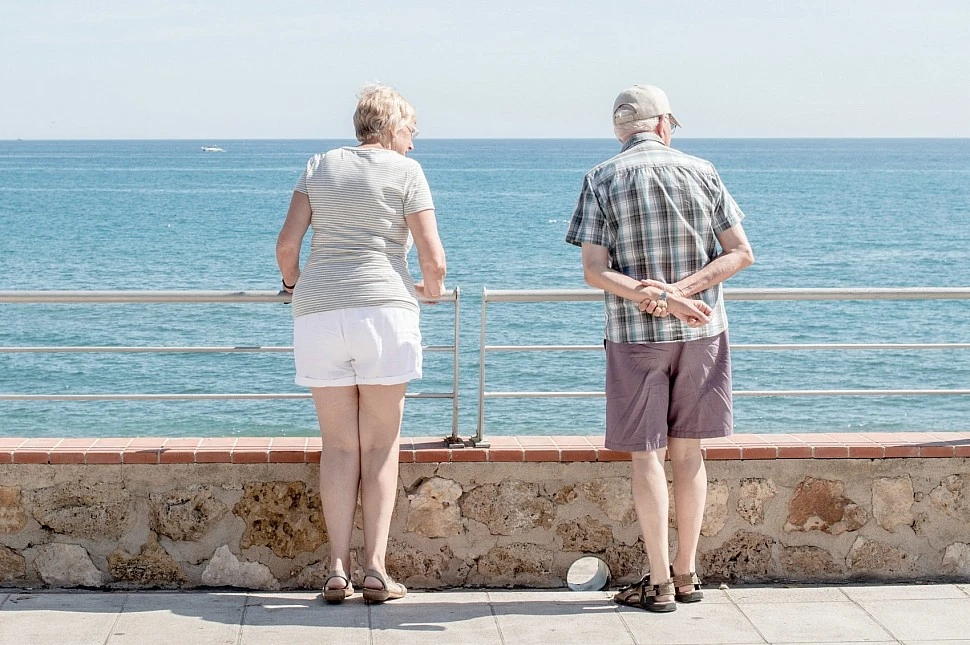
Heat has become a separate problem even where ships can keep moving. Passengers who expected to spend hours on open decks sometimes found the temperatures unbearable. Excursions also had to be shortened in some cases, particularly for older travellers who make up a large share of the river-cruise market.
The industry is therefore dealing with two connected climate pressures. Low water can stop a vessel from moving, while extreme heat can make the experience less enjoyable even when navigation remains technically possible.
None of this means the end of river cruising in Europe. Demand remains high, and advance bookings suggest many customers are still willing to return even after a difficult season.
But the product itself is changing. Instead of selling a completely fixed itinerary, operators are increasingly selling a main route backed by several contingency plans. When water levels are normal, passengers may never notice them. During drought, the quality of those backup plans becomes central to the holiday.
The summer of 2026 has challenged one of the basic assumptions on which European river cruising was built: that the river would always be where the map says it is, with enough water for the ship to pass.
The Rhine and Danube have shown that even one of tourism’s most carefully choreographed products remains dependent on something no cruise company can reschedule — the weather.