


















Russia’s late-August air campaign against Ukraine has taken on an increasingly economic character. The targets are no longer limited to energy facilities and industry, but include supermarket warehouses, sorting hubs, hypermarkets and other nodes that move goods from producers to store shelves.
The most striking estimate came on August 28 from Agriculture Minister Taras Vysotskyi. He said Russian attacks had destroyed roughly 90% of the food logistics used by major retail chains. He immediately stressed, however, that this did not mean Ukrainians would be left without food.
That figure needs to be read carefully. It does not mean 90% of Ukraine’s food has been destroyed, 90% of shops have disappeared or that 90% of all national warehouse capacity has been independently verified as lost. It is a government estimate of damage to the modern storage and distribution infrastructure used by large retailers.
The immediate consequence, therefore, may be disruption rather than physical scarcity. Vysotskyi warned that some stores could temporarily carry a narrower range of goods and that companies may increasingly rely on alternative systems, including direct deliveries that bypass large central distribution hubs.
Daycom’s analysis indicates that Russia’s strikes on Ukrainian logistics are targeting one of the least visible but most important foundations of urban life. A warehouse does not produce food, but without it a network loses speed, redundancy and predictability, making every delivery slower, costlier and more vulnerable.
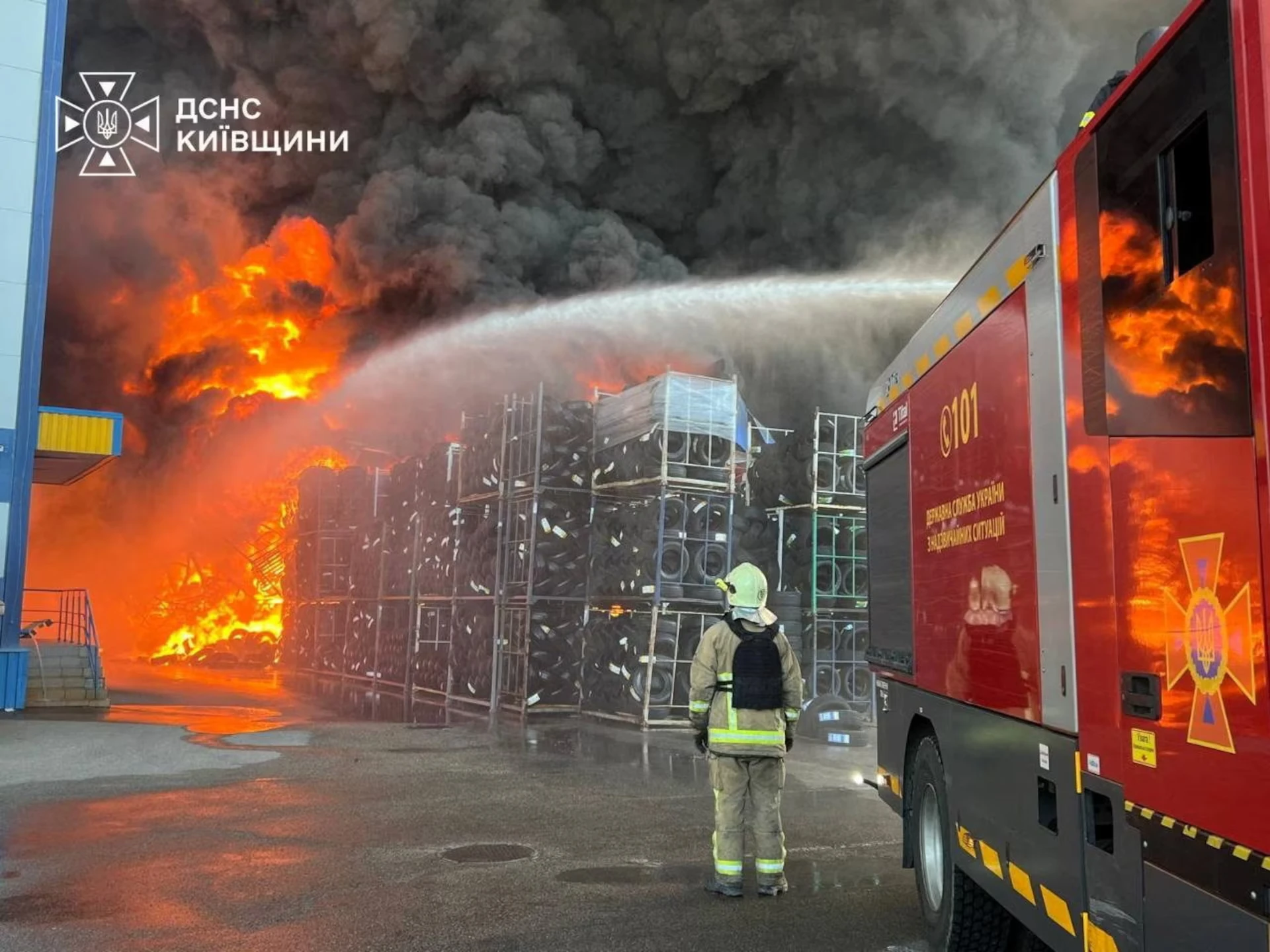
The scale of the problem became especially clear after strikes on the Kyiv region on August 27. Warehousing and distribution facilities used by Roshen, Fora, Comfy, Budynok Ihrashok, Aurora and other companies were damaged or destroyed, forcing businesses to begin rerouting goods almost immediately.
The case of food retailer Fora is particularly revealing. The company said it had started using one damaged warehouse only days before the strike. It was already the third August attack on logistics infrastructure serving the chain, even though its stores continued operating.
That illustrates the problem of redundancy. When one hub is lost, a retailer shifts operations elsewhere. If the backup facility is then hit as well, the room for manoeuvre shrinks quickly, forcing companies to split inventories across less efficient locations or deliver goods more frequently and directly to stores.
Roshen said after the destruction of its warehouse in Chubynske that it was redistributing stock and using alternative storage capacity. The site had been used to hold and dispatch finished products, while employees survived because they had moved into shelter before the strike.
The campaign continued the following day. Russian attacks destroyed Nova Poshta sorting centres near Kyiv and in Sumy, while more than a dozen warehouse premises were damaged across the Kyiv region. Interior Minister Ivan Vyhivskyi specifically listed food warehouses and postal terminals among the facilities struck.
In Sviatopetrivske, further attacks hit the Nova Poshta warehouse zone while firefighters were still working after the first impact. Local authorities said emergency crews had managed to move to a safer location. Nearby industrial facilities were also affected.
A postal operator is not a food retailer, but its role in this story is important. Courier hubs carry goods for small businesses, spare parts, equipment and online orders. Damage to one major sorting centre can create delays far beyond the district where the explosion occurs.
Retail itself was also hit directly. On August 28, a Russian drone damaged a FOZZY hypermarket in Vyshneve. The company said no one was hurt, but the store suspended operations while the extent of the damage was assessed.
The same day, a drone struck an Epicenter store in Zaporizhzhia, wounding at least four people. A shopping centre in Kharkiv was also attacked, the second such strike there in two days. Warehouses, sorting nodes and final points of sale were all affected in the same campaign.
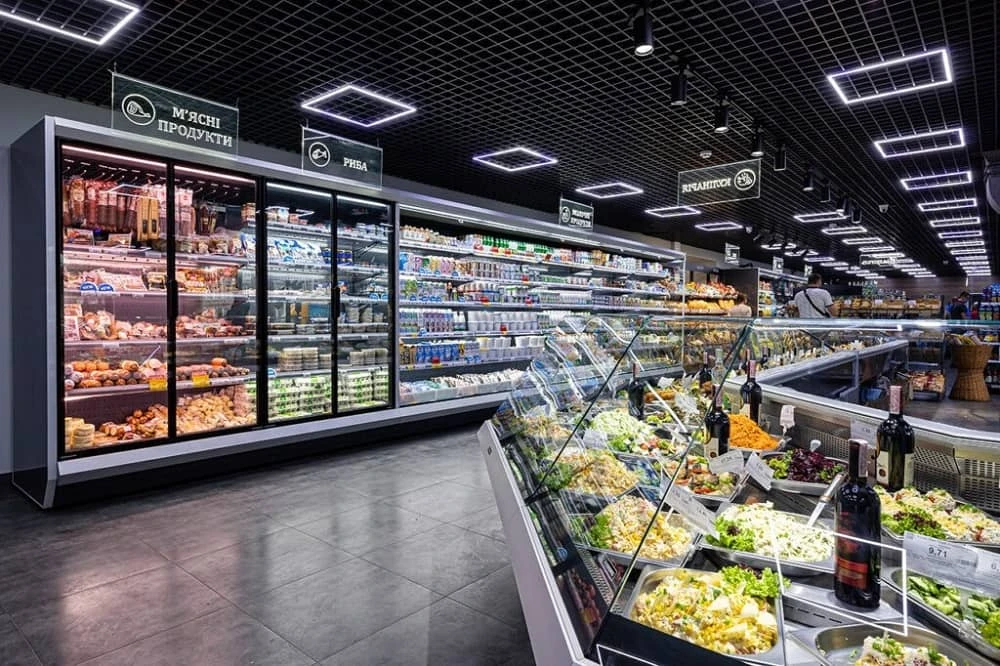
The first effects have already been visible to shoppers. Reuters reported that fresh fruit and vegetables, sugar, dairy products and other foods had occasionally disappeared from shelves in some Kyiv supermarkets in recent weeks. These were local disruptions, not a nationwide shortage.
On August 29, the ATB supermarket chain introduced temporary limits on purchases of some socially important goods, restricting customers to six units per item. The company cited both attacks on logistics capacity and cases of speculative bulk buying that were placing additional strain on supply.
That is not food rationing in the traditional sense. The purpose is not to distribute exhausted stocks, but to prevent panic or speculative buying from emptying shelves faster than a damaged supply system can replenish them.
Large retail chains still have one major advantage: scale. They can move trucks between regions, use backup depots and negotiate direct deliveries. But every such adjustment increases mileage, fuel costs, transport requirements and the number of workers needed to maintain the same volume of sales.
Fresh food is especially vulnerable. Dairy products, meat, fruit and vegetables have limited shelf lives and often require refrigerated storage. If a central cold-storage hub is destroyed, it cannot simply be replaced by an empty warehouse or open yard.
That means the longer-term effect may emerge through prices. Even if food remains physically available, more expensive transport, additional handling, lost inventories, newly rented facilities and higher insurance costs gradually raise the cost of getting each item onto a shelf.
There is still no basis for predicting famine or a nationwide food crisis. Ukraine remains a major producer of grain, vegetable oil and other agricultural products, while the immediate problem concerns domestic storage and distribution. Vysotskyi himself stressed that food would remain available, even if the system supplying it changes.
Domestic logistics are only one part of a broader problem. Ukraine’s agricultural exports are also facing severe constraints. From August 1 to August 26, the country exported 1.423 million tonnes of agricultural products, roughly one-third of its potential volume for that period.
As pressure on Black Sea ports increased, more cargo shifted toward the Danube. But bottlenecks formed there as well, with dozens of vessels waiting near the Sulina Channel while air alerts interrupted port operations and limited capacity pushed transport costs higher.
Pressure is therefore building at both ends of the chain. Inside Ukraine, strikes are damaging warehouses and distribution centres. On the export side, attacks and port restrictions are slowing the movement of agricultural goods abroad.
The campaign did not end on August 28. On the morning of August 30, authorities in the Odesa region reported another Russian strike on warehouses storing food for civilians. At least three people were wounded and a large fire broke out after the attack.
The sequence makes it increasingly difficult to describe the overall pattern as accidental, although the military status of each individual site still requires separate verification. Ukrainian authorities describe the strikes as a campaign against civilian businesses and logistics.
Moscow, meanwhile, says it targets facilities connected to Ukraine’s war economy. No independent evidence has been publicly presented showing that the food warehouses, hypermarkets or most of the other civilian facilities damaged in this series were legitimate military targets.
The escalation also has a reciprocal economic dimension. Ukraine has intensified attacks on Russian refineries, ports and large logistics centres belonging to Ozon and Wildberries. Significant warehouse space used by the two Russian online retailers has been damaged since mid-July.
The difference lies in the stated justification. Kyiv says its strikes are aimed at Russian infrastructure linked to financing and sustaining the war. Russia, in turn, has broadened its own campaign across Ukrainian commercial and logistics assets.
In practice, the economic rear is becoming less of a rear at all. Warehouses, sorting centres, retail platforms, fuel infrastructure and ports are increasingly part of a war of attrition in which success is measured not only by destroyed military equipment, but by the cost of keeping an economy functioning normally.
For Ukrainian retailers, the likely answer will be further decentralisation. Instead of relying on a small number of large hubs that are efficient in peacetime, companies will need to spread stock across more locations, maintain backup routes and build additional transport capacity.
That is a less efficient model in conventional economic terms, but a more resilient one in wartime. A large automated warehouse lowers costs by concentrating stock, but it also creates a major single point of failure. A network of smaller warehouses costs more, but one strike cannot paralyse the entire flow.
The state faces the same problem in air-defence priorities. It is impossible to protect power stations, factories, rail junctions, hospitals, cities and thousands of commercial warehouses equally well. Economic resilience therefore depends not only on intercepting drones, but on keeping networks functioning after strikes get through.
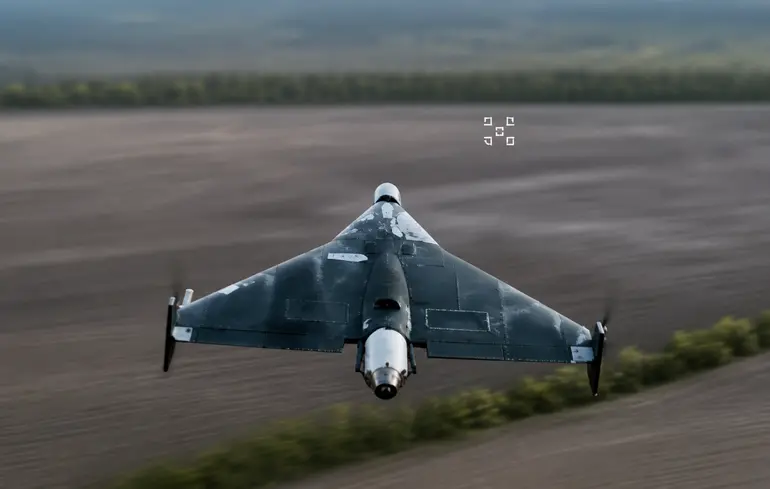
Russia’s increasing use of jet-powered drones adds another layer of pressure. In late August, small waves of fast UAVs repeatedly kept Kyiv and its surrounding region under threat, forcing businesses to stop work, interrupting transport and stretching air-defence readiness over long periods.
Such attacks have an economic effect even without a direct hit. When a warehouse pauses sorting because of an air alert, trucks wait, stores receive goods later and the next shift begins behind schedule. In logistics, a few lost hours can create disruption lasting several days.
The transport consequences of the August 27–28 strikes were similarly revealing. Some passenger trains were delayed by more than 14 or 15 hours because of the effects of the attacks. Even as traffic gradually recovered, delays continued to cascade from one route to another.
In that system, the 90% figure matters less as a forecast of food catastrophe than as a warning that the old model of supply is being dismantled. Ukrainian stores may remain open and stocked, but behind that appearance of normality will sit a more expensive network of backup warehouses, longer routes and emergency decisions.
The real test in the coming weeks is therefore not whether Ukraine runs out of food. It is whether retailers, producers and transport operators can maintain regular supplies without panic buying, sharp price increases or prolonged gaps on shelves if attacks on logistics continue.
Russia is striking a system designed for maximum efficiency in peacetime. Ukraine is being forced to rebuild it for survival: more decentralised, more expensive, with redundant routes and spare capacity. In this war, a fully stocked supermarket shelf is increasingly not a routine detail of daily life, but a measure of national resilience.