



















The air war between Ukraine and Russia is moving into a domain where military strikes are beginning to affect international civil aviation directly. After another series of Ukrainian long-range attacks, Kyiv has urged airlines and insurers to account for the growing risks of operating in or over Russian airspace.
President Volodymyr Zelensky said on September 1 that Russian airspace would in practice become increasingly difficult for civilian aviation to use as Ukrainian drones and missiles reach deeper into the country. He also stressed that Ukraine does not regard civilian aircraft as legitimate targets.
A day later, Kyiv moved that warning from political rhetoric into the aviation sphere. Foreign Minister Andrii Sybiha said Ukraine had formally notified the International Civil Aviation Organization about risks in Russian airspace and had urged carriers to take the changing threat environment into account.
Moscow responded with the opposite message. Russian transport authorities said civil aviation would continue operating and that safety procedures were being strengthened in coordination with military and security agencies. The government insists it can prevent any major disruption to passenger and cargo traffic.
Daycom’s analysis indicates that the argument over Russian airspace has already moved beyond an information contest between Kyiv and Moscow. The most consequential judgments will increasingly be made by airlines and insurers assessing the risk of civilian aircraft encountering drones, missiles or active air-defence systems.
The first practical signs are already visible. Turkish carrier Pegasus cancelled some overnight services to Russia between September 1 and 2, citing technical and operational reasons. The airline said other flights were continuing according to schedule.
Gulf carriers are also watching conditions closely. Flydubai warned that some services could face delays, rerouting or diversion depending on the operational picture. There has so far been no broad withdrawal from the Russian market.
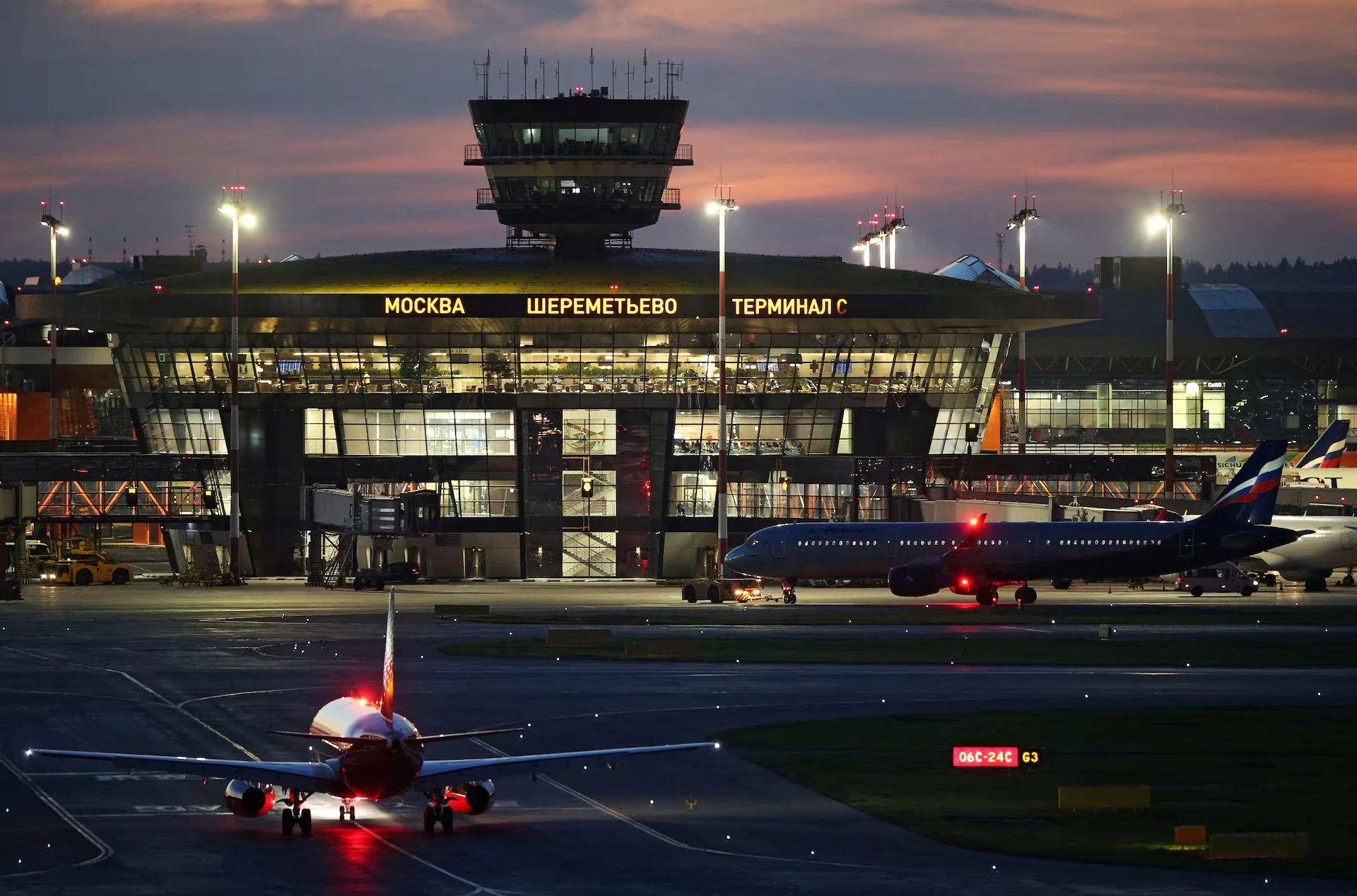
Moscow’s aviation hub nevertheless experienced significant disruption on September 2. Hundreds of flights were delayed and dozens were cancelled at the capital’s major airports, including Sheremetyevo and Vnukovo.
Not every delay can automatically be attributed to Ukrainian strikes. Weather, technical restrictions and airline scheduling decisions also affect operations. But temporary airport closures during drone alerts have become a recurring feature of Russia’s aviation system.
That is the main difference between the current phase of the war and its earlier years. Ukrainian long-range weapons are increasingly capable of reaching the Moscow and St Petersburg regions as well as other large transport centres, pushing aviation risk far beyond areas close to the Ukrainian border.
Zelensky explicitly addressed airlines, insurers and governments whose carriers continue to use Russian routes. His message was that periods of predictable safety in Russian skies would become less frequent as Ukraine continued striking military targets and infrastructure supporting the war.
At the same time, he drew an important distinction. Ukraine, he said, does not intend to threaten civilian aircraft and is prepared to take account of international requests where temporary pauses or safe operating windows are required.
According to Zelensky, Ukraine had already refrained from striking Moscow and St Petersburg for a period in late August following a request from the United States. Kyiv also agreed to a pause involving another Russian direction after an appeal from an international partner.
That illustrates the balancing act Ukraine is attempting. Kyiv wants Russian military logistics and war-supporting infrastructure to remain under pressure while reassuring international aviation that its campaign is not designed to target passenger aircraft.
For an airline, however, intention is only one part of the calculation. A civilian jet can face danger not because it is deliberately targeted, but because of the path of an incoming drone, debris from an interception, an air-defence missile or a misidentified aerial object.
Civil aviation is therefore especially sensitive to conflict zones. International aviation rules require states to provide timely information about risks to civilian flights, while airlines and national regulators carry out their own independent threat assessments.
Ukraine’s notification to ICAO does not, by itself, legally “close” Russian airspace. Under the Chicago Convention, sovereignty over national airspace belongs to the state beneath it. Russia therefore retains the legal authority to restrict or close its own airspace.
Kyiv can do something different: disseminate risk information, warn foreign governments, airlines and insurers, and explain why particular routes may have become more dangerous. Individual carriers and regulators then decide whether to continue flying.
That legal distinction helps explain Moscow’s response. Russian aviation authorities rejected Kyiv’s warning as lacking legal force over Russian operations and said airports and ground infrastructure continued to handle both domestic and foreign flights.
But legal force and commercial impact are not the same thing. Airlines can change or abandon routes without a formal airspace closure if their security teams, regulators or insurance providers decide that the risk has become unacceptable.
Insurance may ultimately become the decisive factor. Flying through an area exposed to recurring military activity can mean higher premiums, narrower coverage or, in extreme circumstances, an insurer refusing to underwrite a particular route.
Even without a complete suspension of services, that can make flights more expensive. Detours increase flying time, fuel consumption and crew requirements, while unexpected airport closures create further costs through holding patterns, diversions and missed connections.
This matters particularly because of the way international aviation to and through Russia has changed since 2022. US and most European carriers no longer use Russian airspace, but airlines from China, Turkey, the United Arab Emirates and other parts of Asia and the Gulf still do.
Those carriers now sit at the centre of the new calculation. Russian airspace can offer them a commercial advantage on some routes between Europe and Asia because it allows shorter flight paths than those available to competitors forced to detour around Russia.
If larger parts of that airspace begin closing regularly because of drone threats, that advantage diminishes. Even short disruptions can affect aircraft utilisation, crew schedules, connections and airport slot management — the operational foundations of long-haul aviation economics.
For Russian airlines, the consequences are more direct. They cannot simply avoid their own national airspace, so they must adapt in real time to temporary restrictions around airports and flight corridors.
Russian Transport Minister Andrei Nikitin has said authorities are working closely with the Defence Ministry and National Guard and have procedures intended to prevent major disruption to civil aviation. The real test of that promise will be the frequency and depth of future Ukrainian attacks.
The more drones enter the vicinity of major cities at the same time, the harder it becomes to maintain normal airport operations. Even if a drone is heading toward a refinery or military installation dozens of kilometres from a runway, controllers cannot safely assume its path will remain unchanged.
Air defence creates an additional layer of complexity. Civilian aircraft fly with transponders, follow approved routes and remain under air-traffic control, but military systems responding to mass raids may simultaneously track and engage dozens of other targets.
The history of civil aviation has repeatedly shown how dangerous the combination of commercial air traffic and active military systems can be. International mechanisms for sharing conflict-zone risk information have been strengthened precisely because such environments can produce catastrophic misjudgments.
Ukraine’s campaign against Russian military and energy infrastructure therefore has a strategic side effect that extends beyond physical damage. It forces Russia to spend more resources not only on air defence, but also on maintaining the predictability of its civilian transport system.
An airport closed for two hours because of a drone warning may never be struck. Yet dozens of flights can still be delayed, crews can fall out of rotation, passengers can miss onward connections and airlines can incur significant extra costs. The economic effect begins before any weapon hits a target.
For Kyiv, that logic fits into a broader strategy of shifting part of the cost of the war back onto Russian territory. Zelensky has directly linked deteriorating conditions in Russian airspace to Moscow’s intensifying attacks on Ukrainian cities and infrastructure.
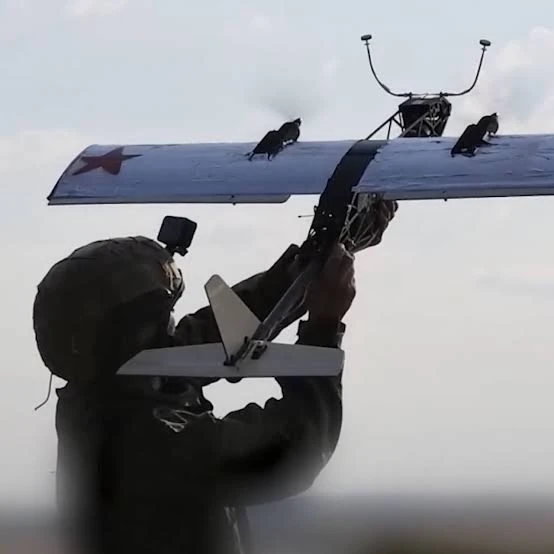
Russia has in recent weeks stepped up aerial attacks on Kyiv, Odesa and other cities, using large waves of drones including faster jet-powered variants. Ukraine has responded with increasingly frequent long-range strikes against targets inside Russia.
For Ukraine, however, it is essential that pressure on the Russian aviation system does not turn into danger for third countries. Any incident involving a civilian airliner could have severe human and diplomatic consequences, particularly if the aircraft belonged to a partner state.
The decision to notify ICAO and foreign carriers can therefore also be seen as an attempt to internationalise the risk before a serious incident occurs. Kyiv is effectively arguing that military activity over Russia will intensify and that civilian aviation must incorporate that reality into flight planning.
Moscow, by contrast, argues that it can keep the two systems separate: defend against Ukrainian drones while preserving normal passenger and cargo operations. Russian airports are still functioning, but repeated delays and closures show the operational cost of maintaining that balance.
The decisive factor will not be one day of cancellations but whether the pattern persists. If restrictions around Moscow, St Petersburg and other major hubs remain occasional, international airlines may absorb them as another operational complication.
If closures begin occurring several times a week, the calculation changes. Insurers may raise prices, airlines may redesign schedules, and national aviation authorities may begin recommending or requiring avoidance of the most exposed parts of Russian airspace.
Zelensky’s warning that the war is “closing Russian skies” therefore does not yet mean the literal end of civilian aviation over Russia. Moscow retains legal control of its airspace, foreign carriers are still flying, and some cancellations continue to be attributed officially to operational reasons.
What has changed is the nature of the risk. A few years ago, the main question for an international carrier was whether it was legally or politically permitted to use a Russian route. Increasingly, the more important question is whether that route will remain open and safe for the entire flight.
That is the wider strategic effect of Ukraine’s long-range drone campaign, and it cannot be measured only in damaged refineries or military depots. The strikes are gradually turning Russia’s rear into an environment where even civilian aviation must continuously account for the war.
Moscow says major disruption will be avoided. Kyiv says dangerous days will become more frequent. In practice, the final decision will increasingly rest not with presidents or ministers, but with dispatchers, airline security teams and insurers asking one operational question before every flight: is it still worth entering Russian airspace today?