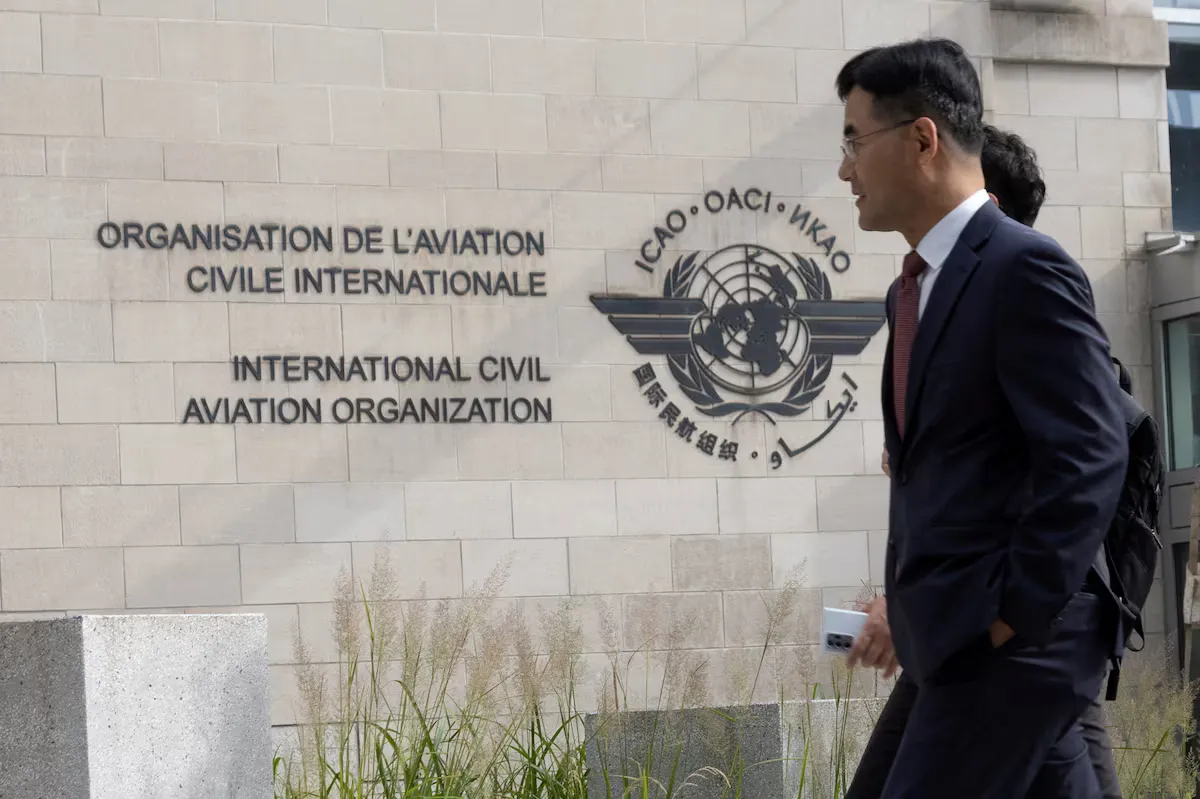






















Ukraine is trying to turn a battlefield development into an international aviation policy. Kyiv has formally asked the International Civil Aviation Organization to encourage its member states to stop civilian aircraft from operating in Russian airspace as long-range drone attacks become increasingly frequent.
The request followed a warning from President Volodymyr Zelensky that Russia’s skies were becoming “completely unsafe.” He stressed that Ukrainian forces were not targeting passenger aircraft, but said airlines and insurers could no longer ignore the growing number of Ukrainian drones flying over Russian territory.
Infrastructure Minister Mykola Kalashnyk put that argument into a letter to ICAO leadership. Ukraine asked the U.N. aviation body to encourage regulators and carriers to safeguard civilian aviation, including by facilitating a complete prohibition on civil operations inside Russian airspace.
The proposal would matter far beyond Russia and Ukraine. European and U.S. airlines have largely avoided Russian skies since the full-scale invasion began in 2022, but carriers from China, Turkey, the United Arab Emirates and other Gulf states continue to use routes across the country.
According to Daycom’s analysis of verified public reporting, the argument is shifting from politics to risk management. The central question is no longer whether Ukraine intends to hit an airliner. It is whether civilian flights can be considered acceptably safe in airspace where drones, missiles and air-defence systems may operate with little warning.
ICAO itself moved in the same direction without endorsing Ukraine’s specific demand. The Montreal-based agency said it was observing heightened risks of civilian aircraft being targeted or caught in crossfire and urged stronger commitments by governments to protect aviation from conflict-zone threats.
That formulation is important because a deliberate attack on a passenger jet is only one possible danger. A civilian aircraft can also be struck after being misidentified, damaged by an interceptor launched at a drone, hit by fragments from an engagement or sent into danger by a rapidly changing military situation.
Modern conflict adds further layers of uncertainty. Long-range unmanned aircraft can cross hundreds of kilometres, while ground-based air defences may be activated near major cities, airports and industrial sites with little notice. Navigation interference and temporary airspace restrictions can complicate an already unstable operating environment.
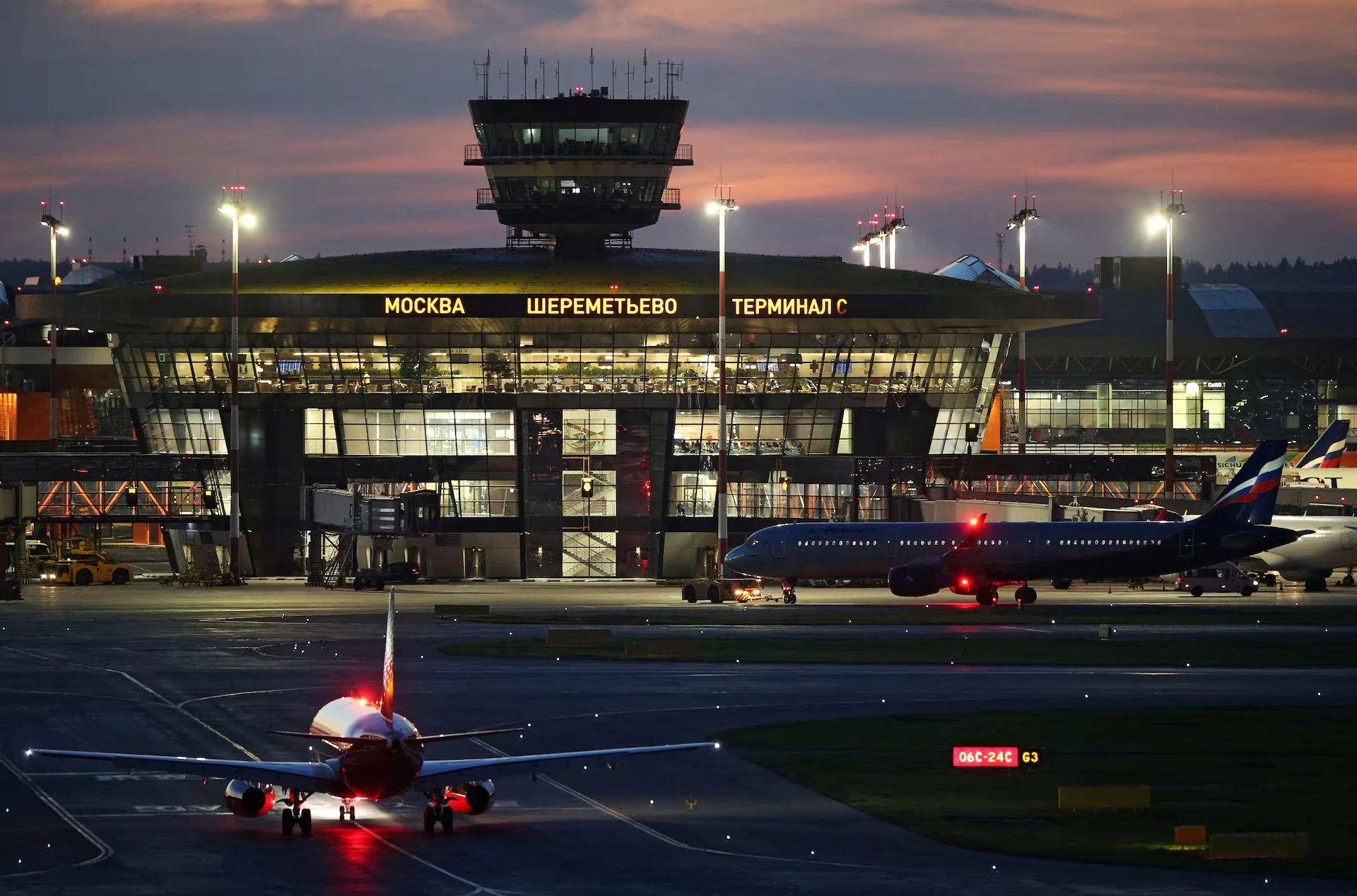
That is increasingly the reality over Russia. Ukrainian drones have demonstrated the ability to reach deep into the country, forcing repeated airport closures and flight disruptions. Aviation-risk consultancy Osprey Flight Solutions expects strikes beyond the border regions, including around Moscow and St Petersburg, to remain a recurring feature through 2026.
For an airline, this is different from managing bad weather or a technical fault. The carrier cannot know precisely where Russian air defences will be active during the next attack, which airport will suddenly suspend operations or whether the flight path will intersect with a military response already under way.
Moscow rejects the suggestion that its skies have become unmanageable. Russian officials say they are strengthening coordination between civilian aviation authorities, the military and security agencies, while insisting that domestic and international flights continue to operate under established safety procedures.
But normal operation has already become punctuated by significant disruption. Flight-tracking data cited by Reuters showed large numbers of delays and cancellations at Moscow airports during recent alerts, while foreign carriers including Pegasus and flydubai have had to adjust operations amid the uncertainty.
Not every cancellation can be attributed directly to a Ukrainian drone. Airlines frequently cite technical or operational reasons, and temporary restrictions can be precautionary. Yet a pattern of repeated closures matters because aviation safety depends heavily on predictability long before an actual collision or shoot-down occurs.
Kyiv’s case is therefore fundamentally preventive. It argues that regulators should not require another air disaster before deciding that a route has become too dangerous. Commercial aviation normally treats a low-probability event with catastrophic consequences very differently from an ordinary operational inconvenience.
The most powerful recent precedent is Azerbaijan Airlines Flight J2-8243. The Embraer passenger jet was flying from Baku to Grozny in December 2024 when it was damaged over Russia, diverted across the Caspian Sea and crash-landed near Aktau in Kazakhstan. Thirty-eight people were killed and 29 survived.
At first, Moscow stopped short of accepting direct responsibility. Azerbaijan said the aircraft had suffered external interference, while preliminary findings showed puncture damage and foreign metal objects in parts of the plane. Russian air defences had been active against Ukrainian drones in the region at the time.
Putin later told Azerbaijan’s leadership that two Russian missiles had detonated beside the aircraft after Ukrainian drones entered Russian airspace. The episode became a near-textbook example of the risk now at the centre of the ICAO debate: a civilian flight endangered during an air-defence response to unmanned aircraft.
The history extends further back. Malaysia Airlines Flight MH17 was shot down over eastern Ukraine in July 2014, killing all 298 people aboard. In May 2025, the ICAO Council formally found that Russia had failed to uphold its obligations under international aviation law in connection with the disaster.
The ruling centred on Article 3 bis of the Chicago Convention, which requires states to refrain from using weapons against civil aircraft in flight. It was the first time ICAO’s Council had ruled on the merits of a dispute between member states under the organisation’s formal settlement mechanism.
Those precedents explain why intent alone is an inadequate safety standard. A state can insist it has no intention of attacking passenger jets and still operate weapons in circumstances where misidentification, incomplete information or technical failure creates a lethal risk for civilian traffic.
ICAO, however, cannot simply close Russian airspace by decree. Its 193 member states use the organisation to develop global standards and coordinate aviation safety, but national authorities retain control over their own operators and airspace policies. ICAO guidance can influence decisions without functioning as a universal enforcement order.
That limitation makes Ukraine’s request more subtle than the phrase “ICAO ban” suggests. Kyiv is effectively seeking an international safety signal strong enough to influence regulators, insurance companies and airline boards, each of which can restrict or abandon Russian routes independently.
The commercial stakes are considerable. Russia spans much of northern Eurasia, and access to its airspace allows airlines on some Europe-Asia routes to save substantial time and fuel. U.S. carriers have argued that competitors still using Russian skies enjoy a cost advantage because they can fly more direct routes.
A broader withdrawal would therefore affect airlines unevenly. Chinese, Turkish and Gulf carriers could face longer routes, higher fuel burn, more complicated crew scheduling and potentially lower payloads on some long-haul services. Those additional costs would ultimately feed into ticket prices and network decisions.
This explains why some carriers continue flying despite the war. The decision is not necessarily a political endorsement of Moscow; it is a calculation that the route remains commercially valuable and that existing precautions keep the risk within an acceptable range.
Ukraine is trying to change that calculation. It does not need every government to adopt an identical legal prohibition if insurance premiums rise, regulators issue stronger warnings and enough airlines conclude that the saving in fuel and time no longer compensates for the exposure.
Insurance could become particularly powerful. Aviation companies operate with extremely low tolerance for catastrophic liability. If underwriters reassess Russian airspace as a conflict-zone risk, the economics of a route can deteriorate even before a government orders its airlines to stop using it.
Zelensky’s warning was therefore directed as much toward boardrooms and insurers as toward governments. Ukraine cannot legally close Russian skies to foreign aircraft. It can, however, argue that its growing ability to operate drones deep inside Russia has changed the factual basis on which carriers make safety decisions.
Putin has characterised the Ukrainian message as “state terrorism,” portraying it as a threat to civilian aviation. Kyiv rejects that interpretation and says its attacks are directed at military facilities rather than passenger aircraft. The political accusations do not resolve the underlying aviation problem.
Civilian safety depends not only on what the attacker intends to hit but also on what the defender does in response. A drone heading toward a military target can trigger surface-to-air missiles near an airport, force controllers to close airspace or create debris patterns that endanger aircraft far from the intended target.
Satellite navigation is another concern. ICAO has separately condemned recurring Global Navigation Satellite System interference originating from Russian territory as a breach of international aviation obligations. Such interference can add another layer of uncertainty for aircraft operating near conflict zones.
Modern airliners have redundant navigation systems, so GNSS interference does not automatically make a flight impossible. But aviation safety is built on layers of protection. Jamming, sudden restrictions, drone activity and active air defence become more serious when they occur together rather than as isolated events.
Ukraine’s own policy illustrates the opposite approach. Kyiv closed its national airspace to regular civilian traffic when Russia launched its full-scale invasion in February 2022. Ukrainian airports have remained closed, and surviving carriers have had to operate from neighbouring countries.
Russia can point to that closure as evidence of the war’s broader aviation consequences, but it also highlights the difference in risk tolerance. Ukraine formally accepted that wartime conditions made ordinary passenger operations impossible; Moscow continues to maintain extensive civilian traffic while combat activity increasingly reaches its own skies.
The Ukrainian campaign seeks to make that distinction harder to sustain. Its argument is that distance from the land front no longer guarantees safety when relatively inexpensive drones can travel hundreds of kilometres and force sophisticated air-defence systems into action around major population centres.
For ICAO, the policy challenge is delicate. The organisation is designed to protect international aviation rather than function as an economic sanctioning body. A recommendation aimed specifically at Russian airspace would therefore need to be grounded in demonstrable safety risk rather than simply opposition to Moscow’s war.
Its September statement shows that the broader concern is already established. ICAO said rerouting allows airlines to continue operating during conflicts but does not remove the underlying security threat, a formulation that places responsibility on states to do more than simply react after danger appears.
Even without a global prohibition, pressure can accumulate through dozens of smaller decisions. A national regulator can advise against overflight, an insurer can change coverage, an airline can reroute a particular service, and an airport can become commercially unattractive after repeated closures.
If enough of those decisions occur, Russian airspace could become progressively isolated without a single worldwide order. That outcome would also remove part of the competitive advantage enjoyed by carriers that have continued using routes unavailable to European and American airlines.
For Kyiv, such isolation would extend the consequences of the war further into Russia’s economy. Ukrainian drone attacks have already forced temporary airport shutdowns. The ICAO initiative seeks to convert those operational disruptions into a broader reassessment by the international aviation industry.
That strategy also imposes obligations on Ukraine. As long-range attacks increase, target selection, flight paths and measures designed to reduce risks to civilian aviation become more important. A warning that airspace is dangerous does not remove the responsibility of combatants to minimise danger to civilians.
This is why ICAO’s language remains universal rather than Ukrainian or Russian. It calls on all states to protect civil aircraft, share timely threat information and ensure coordination between military and civilian authorities. Aviation safety cannot depend on the political identity of the side launching or intercepting a weapon.
MH17 and the Azerbaijan Airlines crash make that principle more than theoretical. Both demonstrate how quickly an ordinary passenger flight can become entangled in a military engagement its crew did not initiate and may not even have been fully aware was taking place around it.
The decisive question, then, is not whether ICAO can close Russian airspace with a vote. It cannot do so on its own. The question is whether regulators, airlines and insurers now judge that Russia’s air-defence environment has crossed a threshold where the commercial value of the shortcut no longer justifies the risk.
If they reach that conclusion, Russian skies may empty gradually rather than dramatically — flight by flight, insurer by insurer and regulator by regulator. That is the outcome Ukraine is seeking: to have Russian airspace treated not as an ordinary international corridor, but as airspace increasingly shaped by an active war.
For global aviation, that may ultimately be the more important change. Once crews and passengers depend on military forces successfully distinguishing drones from civilian aircraft during repeated attacks, the issue is no longer whether a route remains technically open. It is whether keeping it open still satisfies aviation’s basic obligation to prevent the next catastrophe.