
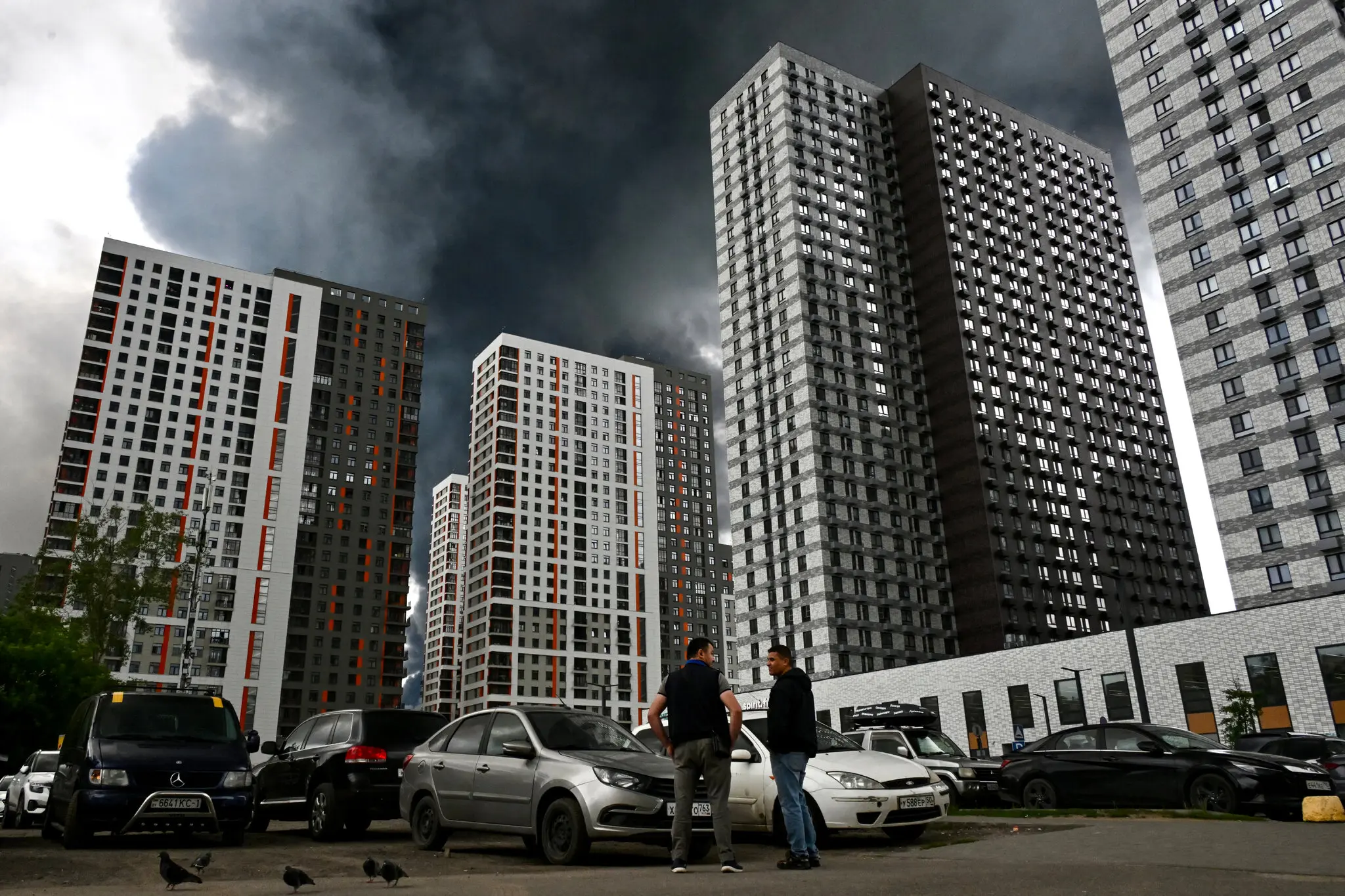


















Kyiv woke on August 20 to fires, shattered apartments and emergency crews working through damaged buildings. At least 12 people were killed and more than 30 wounded in the Russian missile attack, according to Ukrainian authorities. Residential, medical, educational and commercial sites were damaged across several districts.
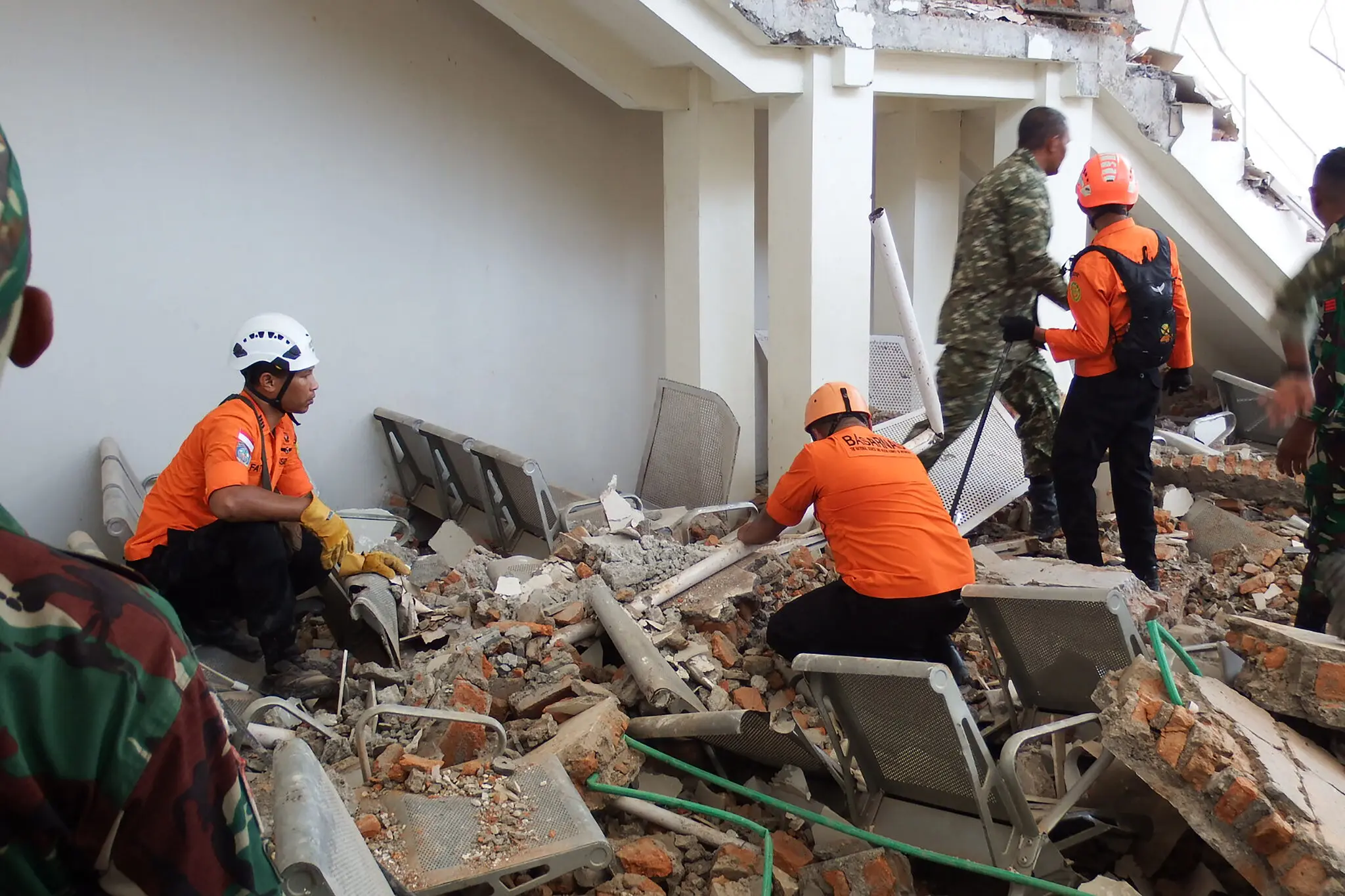
The worst destruction was reported in the Solomianskyi district, where fire broke out after an impact at a nine-storey residential building and the upper floors were torn apart. Mayor Vitali Klitschko said seven people were killed at that location alone as rescue teams continued searching damaged sections of the structure.
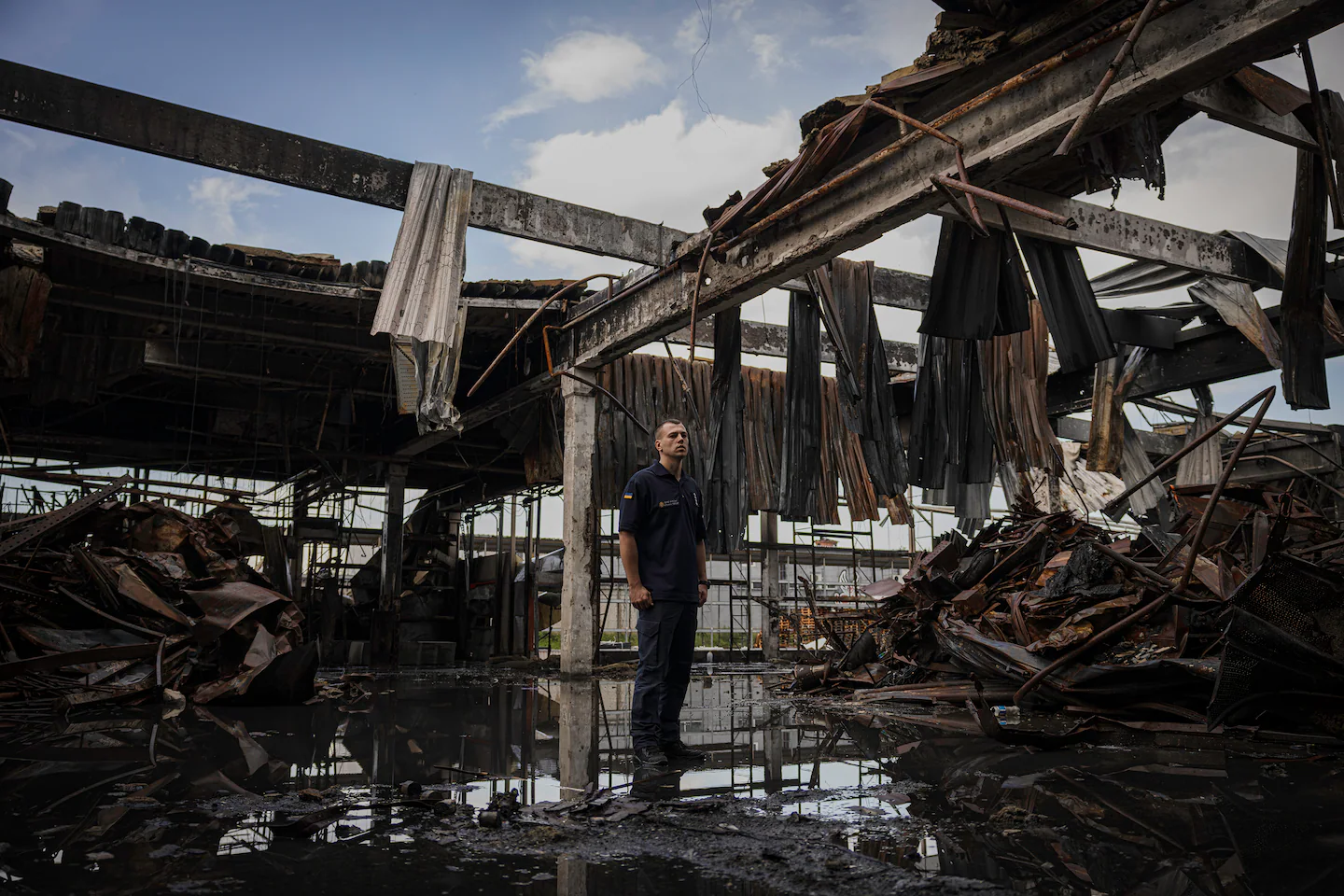
Other parts of the capital were also hit. Authorities reported damage to warehouses, non-residential buildings, a school and a children’s hospital. Ukraine’s emergency service released footage of firefighters tackling large blazes and rescuers helping people leave damaged premises while crews searched for additional casualties.
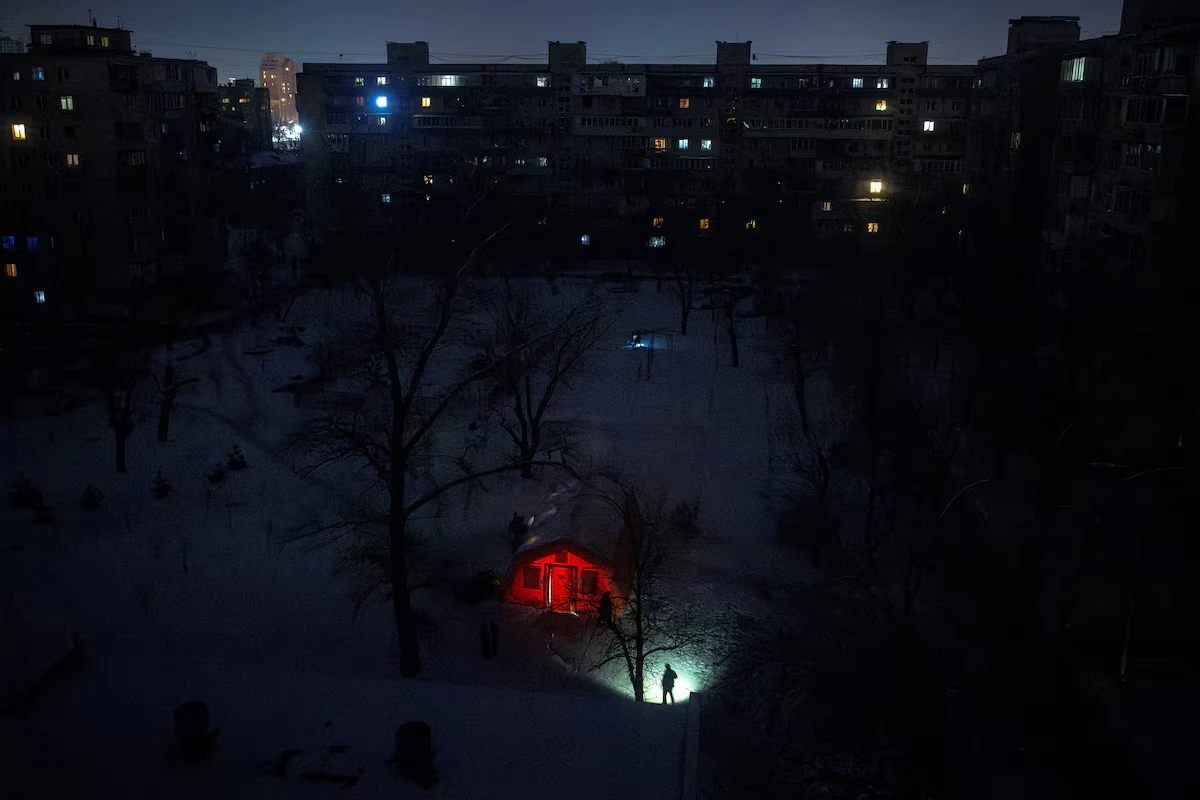
The attack also caused a major electricity disruption. Roughly 90,000 households in Kyiv lost power during the night. Energy company DTEK said electricity had been restored to more than half of those customers by morning, while repair teams continued working on damaged distribution infrastructure across the capital.
According to Daycom’s analysis of verified public information, the Russian missile strike on Kyiv is significant not only because of the death toll. It again exposes one of Ukraine’s most dangerous military vulnerabilities: a limited stock of interceptors capable of stopping fast ballistic missiles when Russia launches them in concentrated waves.
Ukrainian officials said ballistic missiles were used during the assault, while a Reuters witness reported hearing more than a dozen explosions. The complete number and types of missiles and drones involved were still being assessed in the first hours after the attack, making early battlefield figures necessarily provisional.
The consequences extended beyond the capital itself. Officials in Kyiv region reported at least one additional death outside the city. That means the overall casualty count from the overnight attack may differ from the figures recorded inside Kyiv as emergency services and regional authorities complete assessments of individual strike sites.
Russia’s Defence Ministry said its forces had targeted facilities producing drone components, a military storage site, a logistics hub and other objectives in Kyiv and the surrounding region. Moscow did not provide independent evidence confirming all of those claims, while extensive damage to civilian buildings was documented by Ukrainian authorities.
That distinction is essential. Russia says its strikes are directed against military and defence-related infrastructure, but the August 20 attack also killed people in a residential building and damaged a children’s hospital, a school and civilian energy networks. The declared target set does not erase the documented consequences on the ground.
The assault continues a particularly damaging summer for the Ukrainian capital. Kyiv has faced repeated waves of missiles and drones, with several attacks causing heavy civilian casualties and widespread structural damage. The frequency of such strikes has placed emergency services and air-defence crews under sustained pressure.
The wider national trend is similarly severe. United Nations figures showed that July 2026 produced one of the highest monthly civilian casualty totals since the early phase of Russia’s full-scale invasion, with hundreds of people killed and thousands wounded across Ukraine.
Long-range weapons have become an increasingly important part of those losses. Russian missiles and drones allow attacks far beyond the immediate front line, reaching densely populated cities, energy facilities and industrial centres hundreds of kilometres from active ground combat.
Only two days before the Kyiv strike, a Russian missile attack on Pechenihy in Kharkiv region killed 10 people and wounded at least 18. Residential buildings, shops, vehicles and other civilian facilities were damaged, adding to a series of August incidents in which long-range weapons caused substantial casualties.
The most difficult part of this threat remains ballistic missiles. Their speed and flight profile sharply reduce the time available for detection, tracking and interception compared with many cruise missiles or attack drones. Effective defence therefore depends on highly specialised systems and a sufficient supply of compatible interceptor missiles.
Ukraine relies heavily on systems such as Patriot for protection against the most demanding ballistic threats. President Volodymyr Zelenskyy has repeatedly asked the United States and other partners to accelerate deliveries of interceptor missiles, warning that Russian strike intensity is placing existing stocks under increasing strain.
The problem is not simply the number of launchers Ukraine possesses. Even an advanced air-defence battery becomes less useful if its stock of interceptors is depleted. In a prolonged campaign, production capacity and the speed at which missiles can be replenished become nearly as important as the number of systems deployed.
Russia appears to be exploiting that arithmetic. By maintaining pressure across several regions, Moscow forces Ukraine to divide scarce high-end air-defence resources among Kyiv, industrial centres, ports, power facilities, military installations and other targets considered essential to national resilience.
That creates a permanent allocation dilemma. Reinforcing Kyiv can leave other regions more exposed; distributing systems more widely can weaken protection over the capital. Every large Russian salvo therefore tests not only individual air-defence batteries, but the balance of Ukraine’s entire national interception network.
The August 20 assault also produced consequences beyond Ukraine’s borders. Romanian authorities said a drone crashed on Romanian territory during the Russian attack, while Moldova reported that another aerial object crossed its airspace. Both incidents underlined the regional risks created by large-scale missile and drone operations.
Such episodes have become increasingly important for neighbouring states. When large numbers of weapons operate close to NATO and European Union borders, the danger extends to navigational errors, falling debris and accidental airspace violations, requiring nearby countries to increase surveillance and readiness.
Ukraine, meanwhile, has expanded its own long-range strike campaign against Russian territory. Kyiv has targeted oil refineries, logistics infrastructure, military facilities and other sites it says contribute directly to Moscow’s ability to finance and sustain the war.
The growing exchange of deep strikes is taking place alongside continuing diplomatic efforts. Zelenskyy said Ukraine had provided American negotiators Steve Witkoff and Jared Kushner with proposals intended to support a possible path towards ending the war, but those contacts have not yet produced a durable ceasefire.
Russia has said it has not received specific new proposals for meetings with the American mediators, although Moscow says it remains prepared to arrange talks on short notice. Negotiations and military escalation are therefore proceeding in parallel rather than replacing one another.
That contrast has become one of the defining features of the current phase of the war. Diplomats continue discussing possible frameworks for negotiations while Russia launches large-scale missile and drone attacks and Ukraine increases pressure on infrastructure inside Russia.
Klitschko said Friday would be observed as a day of mourning in Kyiv for those killed in the overnight strike. Emergency crews, meanwhile, continued working at damaged sites, meaning the full extent of destruction and the final number of casualties could still change as search operations progressed.
For that reason, the figure of 12 dead should be treated as an operational count rather than a final total. After major structural damage, casualty numbers often change as debris is removed, missing residents are accounted for and hospitals update information about patients brought in during the night.
The Russian missile strike on Kyiv therefore returns the war to a question that cannot be measured simply by counting air-defence batteries. What increasingly matters is how many interceptors Ukraine has, how rapidly they can be replaced and whether allied production can keep pace with repeated Russian ballistic attacks.
For residents of the capital, that strategic calculation has an immediate human meaning. An available interceptor can mean a ballistic missile destroyed before impact; a shortage can mean a residential block struck within seconds. On August 20, that gap was visible in ruined apartments, dozens of wounded people and another day of mourning in Kyiv.