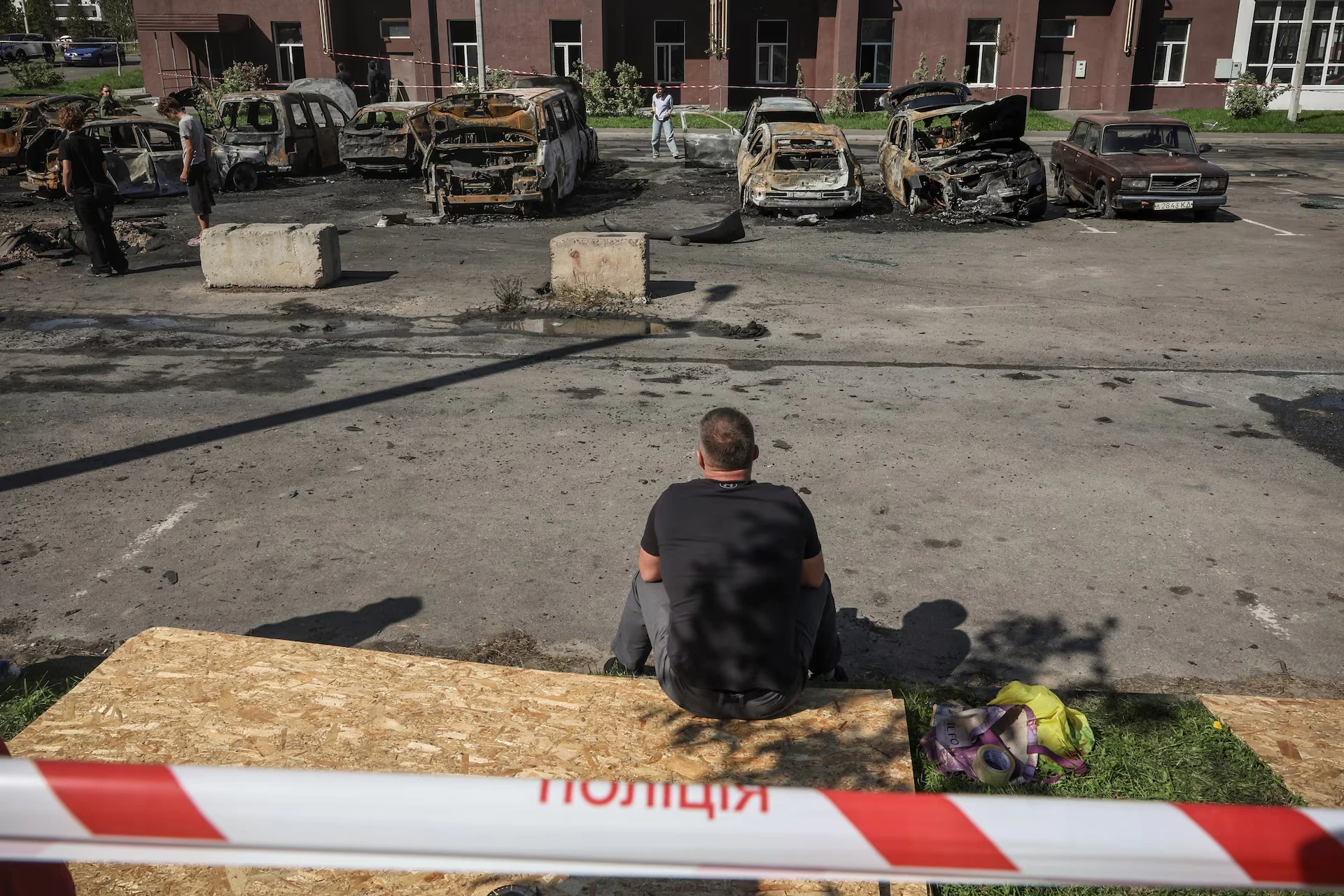



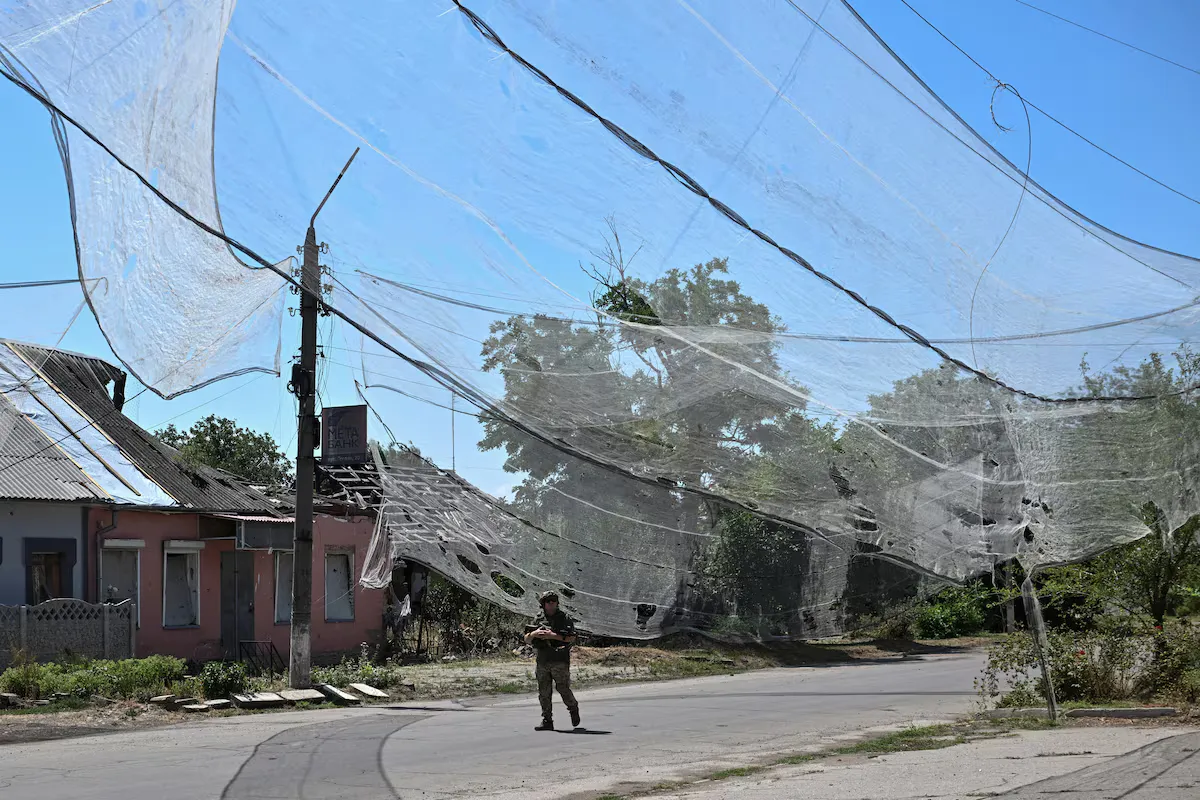



















A Russian drone strike outside Kyiv has produced one of Ukraine’s deadliest single incidents in months, after a warehouse hit in the village of Myla erupted in a chain of explosions. At least 37 people were killed, dozens were injured and hundreds were evacuated as emergency crews searched the devastated site.
The blast occurred late on August 28 in the Bucha district west of the capital. More than 370 people were moved from the surrounding area, while nearby homes and other infrastructure suffered extensive damage. A facility caring for elderly people was among the buildings affected by the explosions.
The death toll climbed rapidly as rescuers worked through the wreckage. President Volodymyr Zelenskiy said those responsible for decisions that allowed ammunition to be stored close to residential areas would face consequences, adding that existing safety regulations explicitly prohibit such arrangements.
The distinction is crucial. The event began with a Russian attack, but the scale of the subsequent destruction has opened a separate Ukrainian investigation into whether official negligence magnified its consequences. Criminal proceedings have already been launched, according to Ukrainian authorities.
According to Daycom’s analysis of publicly available and verified reporting, the Myla disaster therefore carries two lines of accountability that should not be conflated. Russia launched the strike; Ukrainian investigators must now establish whether failures in ammunition storage turned one impact into a far larger catastrophe.
The sequence also exposes one of the most difficult problems facing a country fighting a long war under persistent aerial attack. Military stocks and logistics facilities remain necessary, yet anything concentrated near civilian neighbourhoods can become a multiplier of destruction if it is detected and struck by the enemy.
Ukraine rarely provides detailed public information about damage to military facilities, and the precise nature of the storage site has not been fully disclosed. What Zelenskiy did make clear was that ammunition should not have been positioned close to homes and that officials who permitted the situation would be investigated.
That makes the location of the warehouse central to the inquiry. Investigators will need to determine who authorised the storage arrangements, which regulations applied, whether risk assessments were conducted and whether previous orders to move dangerous military stocks away from densely inhabited areas had been followed.
The questions are especially serious because Myla is not an isolated case. A similar strike-related detonation occurred in Vyshneve, another community in the Kyiv region, in July. Ten people were killed and hundreds of homes were damaged after an attack triggered secondary explosions there.
Ukraine’s leadership had already demanded lessons from that incident. The recurrence less than two months later raises a broader institutional question: whether wartime safety rules exist primarily on paper or are being enforced consistently across military depots, state enterprises and logistics facilities around major population centres.
Prime Minister Sergiy Koretskyi, who visited the latest disaster site, said Ukraine could not permit tragedies such as Vyshneve and Myla to keep recurring in the fifth year of the full-scale war. His statement placed the issue firmly inside the government’s own system of wartime accountability.
None of that alters the immediate cause of the emergency. The warehouse did not detonate spontaneously; Russian forces struck it during another wave of attacks against the Kyiv region. But a country subjected to repeated missile and drone raids must design its rear-area infrastructure on the assumption that military facilities will eventually be found and targeted.
Myla was hit as Kyiv entered a third consecutive day of heavy Russian aerial pressure. Air-raid sirens sounded again on Saturday morning as new waves of drones approached, while air-defence fire was heard across the capital. Zelenskiy said nine other Ukrainian regions had also been targeted overnight.
The pattern reflects a broader intensification of Russia’s air campaign. Moscow has increased its use of ballistic missiles and faster drones, including systems that are harder for Ukrainian air defences to intercept. The result is greater pressure not only on military targets but also on the infrastructure that keeps major cities functioning.
The same morning brought further civilian deaths. A 14-year-old girl was killed in a drone strike in the Boryspil district of the Kyiv region, according to regional authorities. In Kyiv itself, a two-year-old girl died after being struck during another drone attack, city officials said.
The attacks followed two days in which warehouses and homes in and around the capital had already been damaged. Ukrainian officials have described the recent sequence as an effort to disrupt or “paralyse” the city by attacking logistics, storage facilities and the networks on which millions of residents depend.
Russia’s targeting of logistics has become increasingly significant. Warehouses, distribution centres and transport nodes may appear less dramatic than power plants or military bases, but destroying them can interrupt food deliveries, retail supply chains, postal operations and industrial production across an entire metropolitan area.
Recent Russian strikes have caused severe damage to Ukrainian food and commercial logistics, forcing companies to reroute shipments and contributing to temporary shortages of some products in Kyiv. The campaign demonstrates how attacks on apparently mundane infrastructure can create consequences far beyond the buildings directly hit.
Myla illustrates the reverse danger with even greater force. When a logistics or storage site also contains explosive military material, the destructive potential of an incoming weapon can be multiplied many times over. The secondary blasts, rather than the initial drone alone, can determine the eventual radius of death and damage.
That is why the investigation cannot end with identifying a single official or warehouse manager. Authorities will need to examine whether ammunition-storage policy across the Kyiv region reflects the realities of a battlefield in which Russia possesses persistent reconnaissance capabilities and can strike far behind the front.
Dispersal is one obvious answer, but it comes with costs. Smaller storage sites are harder to destroy in a single attack but more difficult to secure and manage. Greater distance from cities improves civilian safety but can complicate transport. Wartime logistics is therefore a balance between military efficiency, concealment and protection of the population.
What is not defensible, however, is treating civilian proximity as a secondary issue. The experience of both Vyshneve and Myla suggests that a successful strike on improperly placed ammunition can transform a limited military loss into a mass-casualty event affecting people who have no connection to the target.
The Russian campaign will make that challenge more urgent rather than less. Moscow is increasingly using long-range systems against Ukraine’s economic, military and logistical rear, while Kyiv’s air defences cannot guarantee interception of every missile or drone. Physical planning must therefore provide a second layer of protection when interception fails.
This is the wider significance of the Russian strike on Kyiv region. Stronger air defence remains essential, but survival also depends on reducing what a successful attack can destroy. Ammunition depots, military production and dangerous stockpiles must be organised so that one penetration of the air-defence shield does not become a catastrophe for an entire community.
After at least 37 deaths in Myla, the issue is no longer an abstract matter of regulation. Russia bears responsibility for launching the strike, but Ukraine now faces a test of whether it can confront its own wartime vulnerabilities with equal seriousness — and prevent an enemy attack from exploiting the same preventable weakness for a third time.