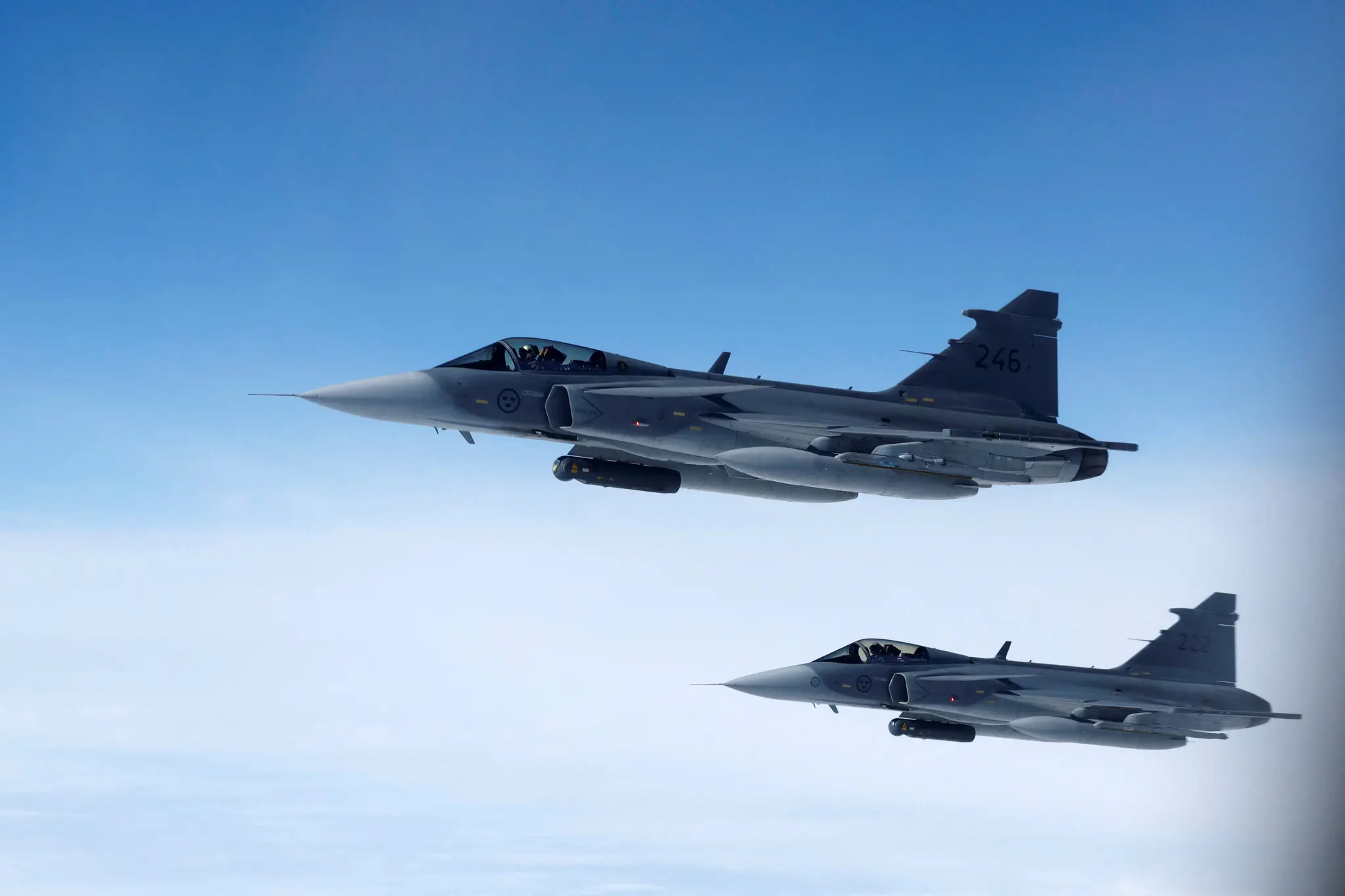



















Sweden is taking its military cooperation with Finland to a new level. Its JAS 39 Gripen fighters and a corvette will take part not only in joint exercises, but in the actual surveillance and protection of Finnish territory at least through the end of 2026.
Under Helsinki’s plan, the Swedish aircraft will primarily reinforce air surveillance. That will allow Finland to free up more of its own forces to respond to border violations, unidentified drones and other incidents that could require rapid military intervention.
Swedish Defence Minister Pal Jonson said Stockholm was responding to a Finnish request to strengthen air defence because of the deteriorating security environment. If necessary, Swedish forces could also help Finland directly repel violations of its territory.
That wording matters more than the simple presence of several aircraft on a neighbouring base. It amounts to one NATO member preparing to use its own combat assets to protect another ally before a major crisis requires a separate decision by the alliance as a whole.
Daycom’s analysis indicates that the Gripen deployment reflects Northern Europe’s shift from joint training toward more permanent integrated defence. The boundary between national militaries matters less when allies are expected to defend a shared air and maritime space.
Finland has about 1,340 kilometres of land border with Russia, the longest frontier between Russia and any NATO country. Since Helsinki joined the alliance in April 2023, that stretch has become one of the most important northern lines in NATO’s collective defence.
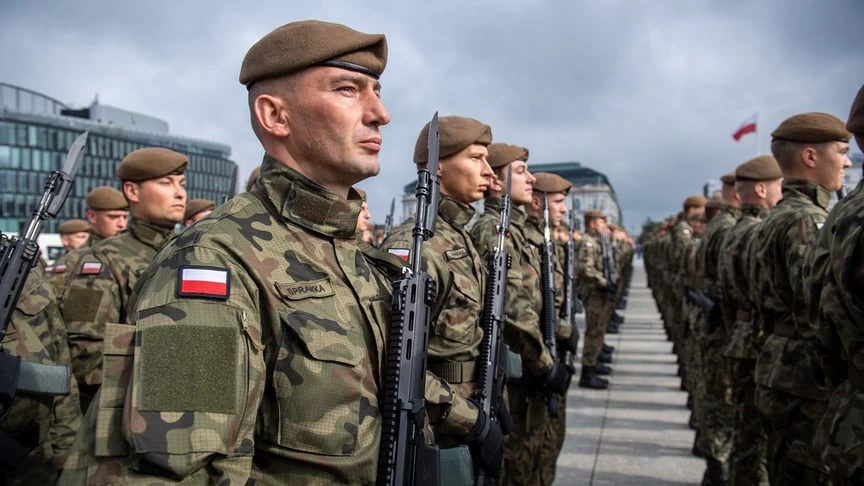
Sweden joined NATO on March 7, 2024, completing a strategic transformation of the Nordic region. Both countries applied for membership after Russia’s full-scale invasion of Ukraine, abandoning decades of military non-alignment.
Long before NATO membership, Finnish and Swedish forces had spent years training together. Their air forces regularly practised using each other’s bases, sharing information and operating within the same airspace. That interoperability is now moving from exercises into operational use.
Gripen is particularly well suited to that model. The Swedish fighter was designed for rapid dispersal, operations from smaller bases and quick servicing, qualities that matter in a region where large permanent airfields could become priority targets during a crisis.
Swedish aircraft also allow Finland to avoid using all of its own aviation capacity for continuous patrol missions. Finnish forces must simultaneously monitor the Russian border, the Baltic Sea, air routes and a growing number of unmanned aerial threats.
The maritime element follows the same logic. A Swedish corvette will reinforce surveillance in the Baltic, where the war in Ukraine has sharply increased attention to ports, undersea cables, pipelines, shipping routes and the movements of both military and civilian vessels.
Jonson said Sweden could contribute more than fighters and warships equipped with counter-drone capabilities. Ground-based anti-drone systems could also be sent to Finland if needed, underlining how central unmanned threats have become to the new defence posture.
Drones repeatedly caused security alerts around NATO’s northern and Baltic borders during August. One of the most notable incidents came on August 14, when an Italian Eurofighter operating on an alliance mission shot down an unidentified drone in Latvian airspace.
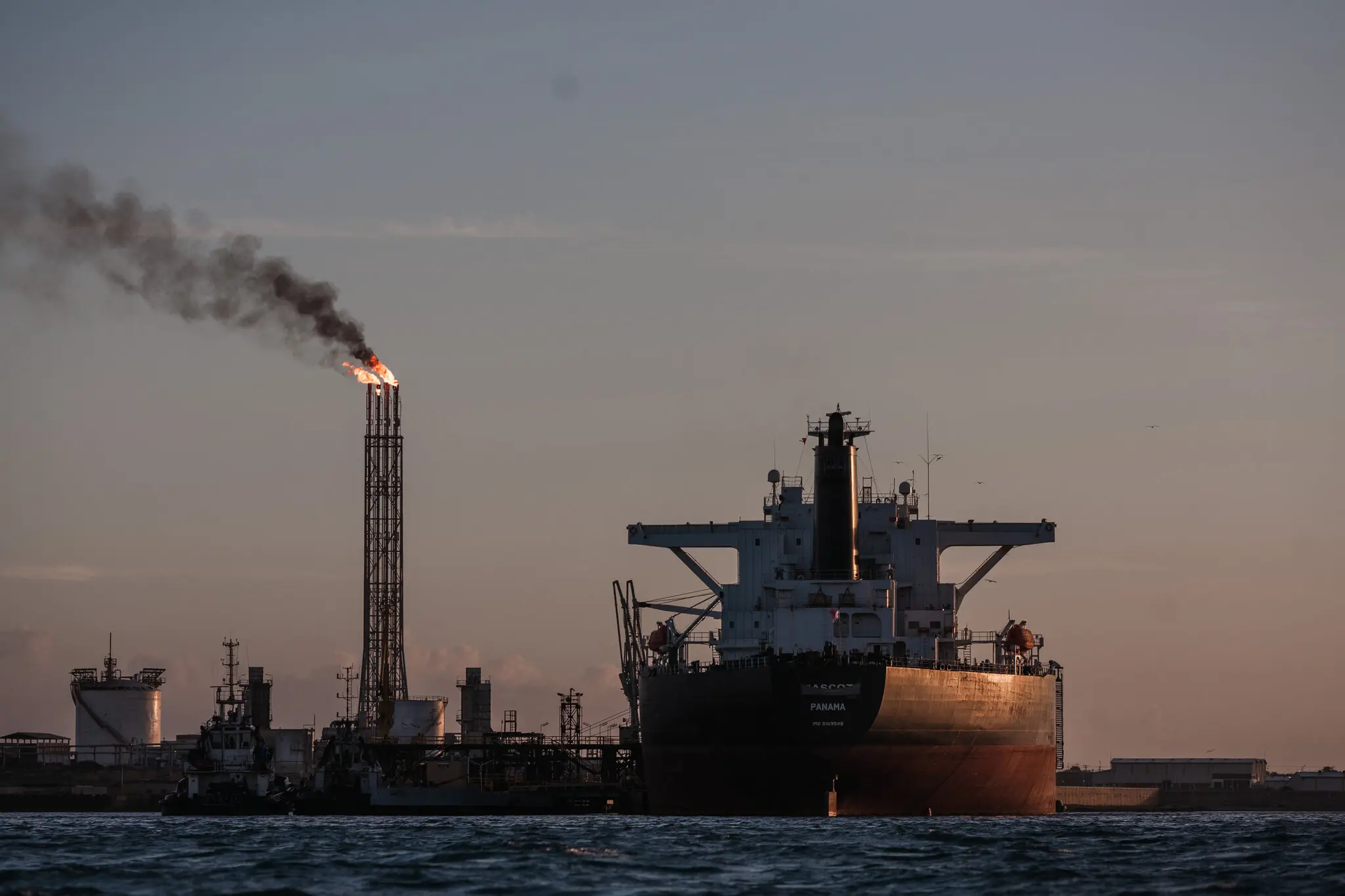
That same day, Finland restricted part of the airspace over the eastern Gulf of Finland as a precaution. The incidents came amid Ukrainian strikes on Russian oil ports near St Petersburg, while the origin of some of the drones remained uncertain.
That uncertainty is one of the central problems. Not every drone that crosses into NATO airspace is necessarily part of an intentional Russian attack. Some may stray from course, be affected by electronic warfare or originate from Ukrainian operations against targets in Russia.
For an air-defence system, however, the origin of an aircraft matters less during the first minutes than its trajectory, speed, potential payload and the site it is approaching. That is why Baltic-region states need more radars, alert fighters and lower-cost interception systems.
The problem is already broader than Swedish-Finnish cooperation. Germany said on August 28 that eight NATO countries around the Baltic Sea were preparing a joint task force to counter drones and hybrid threats while accelerating the exchange of information.
A layered security structure is therefore emerging. NATO provides collective deterrence, regional states are building common mechanisms against drones, and close partners such as Sweden and Finland are integrating specific aircraft, ships and ground systems directly into day-to-day defence.
It is also significant that Finland announced a new order for Saab’s RBS 70 NG air-defence systems at the same time as the Swedish deployment. The initial contract is worth 1.2 billion Swedish crowns, about $126 million at the exchange rate cited in the announcement.
RBS 70 NG is a short-range, laser-guided air-defence system. Saab says the latest version features automatic target tracking, night capability and a guidance method that is resistant to conventional radio-frequency jamming.
Finland has operated an earlier version of RBS 70 since 2008, so the purchase does not introduce an entirely new category of weapon. The more important point is the scale of modernisation as Helsinki adds another lower layer to a system increasingly required to deal with small airborne threats.
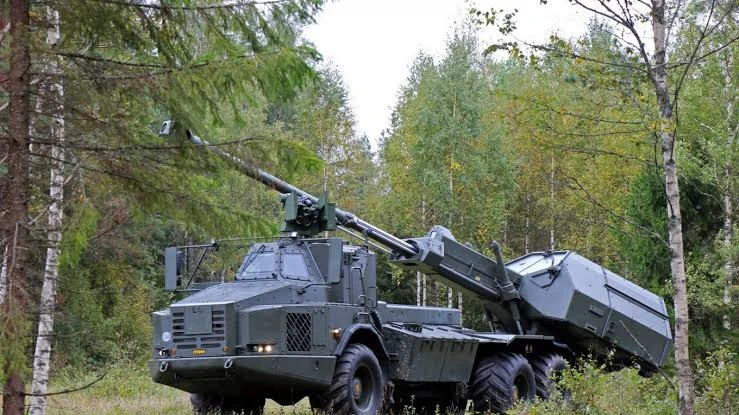
That matters in drone defence. Using an expensive fighter or a large surface-to-air missile against every small unmanned aircraft is economically inefficient. Modern air defence therefore relies on layers ranging from electronic warfare and mobile units to portable missiles, fighters and long-range systems.
Swedish assistance gives Finland another layer of outside capacity. If Gripens take over part of the patrol burden, Finnish aircraft and other assets can remain available for more complex incidents or be concentrated where the threat is highest at a particular moment.
The same principle applies at sea. The Baltic has become an environment in which forces must simultaneously monitor Russia’s navy, oil shipping, subsea infrastructure, drones, aircraft and civilian traffic. No single service or weapons system can cover all those risks.
Sweden’s decision also illustrates how much the strategic meaning of its NATO membership has changed the region. Before 2024, Finland was in NATO while Sweden remained formally non-aligned. Now both are part of the same collective-defence structure.
That simplifies logistics among Norway, Sweden and Finland, as well as planning for the High North and the Baltic Sea. In military terms, the area is increasingly treated as one theatre in which airfields, ports, radars and land routes can support neighbouring states.
The Gripen deployment does not mean Finland or NATO expects an imminent Russian attack. The official explanation is more specific: a worsening security environment, a need for stronger air surveillance and a requirement for faster responses to violations and incidents.
That distinction is important. Strengthening defence can be a response to rising risk without assuming that a large war is close. The purpose is partly to reduce the chance of escalation by making even small provocations or accidental incursions easier to detect and contain.
For Russia, the emerging structure means the northern theatre is becoming more densely integrated. The invasion of Ukraine, intended in part to resist the expansion of Western military infrastructure, ultimately drove both Finland and Sweden into NATO.
That process is now moving from political membership into practical military integration. A Swedish fighter operating in Finnish airspace is no longer simply participating in an international exercise: under the new arrangement, it can help an allied state respond to a real violation of its territory.
For NATO, that kind of interchangeability has long-term value. Collective defence works more effectively when it does not depend on whether a particular radar, aircraft or ship happens to sit on one side or another of an internal border between allies.
The logic is especially visible around the Baltic Sea. Sweden occupies a central geographic position, Finland controls a long frontier with Russia, and the Baltic states remain the narrowest and potentially most exposed part of NATO’s northeastern flank.
Gripens, a corvette and possible ground-based counter-drone systems do not by themselves transform the balance of power. Their importance lies elsewhere: they demonstrate a model in which national military resources can be shifted quickly to the place where a gap emerges.
That flexibility is becoming essential in an era of drones and hybrid incidents. Threats can appear suddenly, remain limited in scale and be difficult to attribute. A traditional mobilisation system designed for advance warning of a major war can be too slow for such situations.
Sweden and Finland are effectively testing a different model: joint surveillance before a crisis, joint protection during an incident and the ability to turn a bilateral arrangement rapidly into part of a broader NATO response.
The deployment of several Gripens and a corvette therefore matters less for its size than for what it represents. NATO’s two newest members are turning formal alliance commitments into daily military practice, while Finland’s border with Russia is increasingly treated not as a Finnish defence line alone, but as part of a shared northern security space.