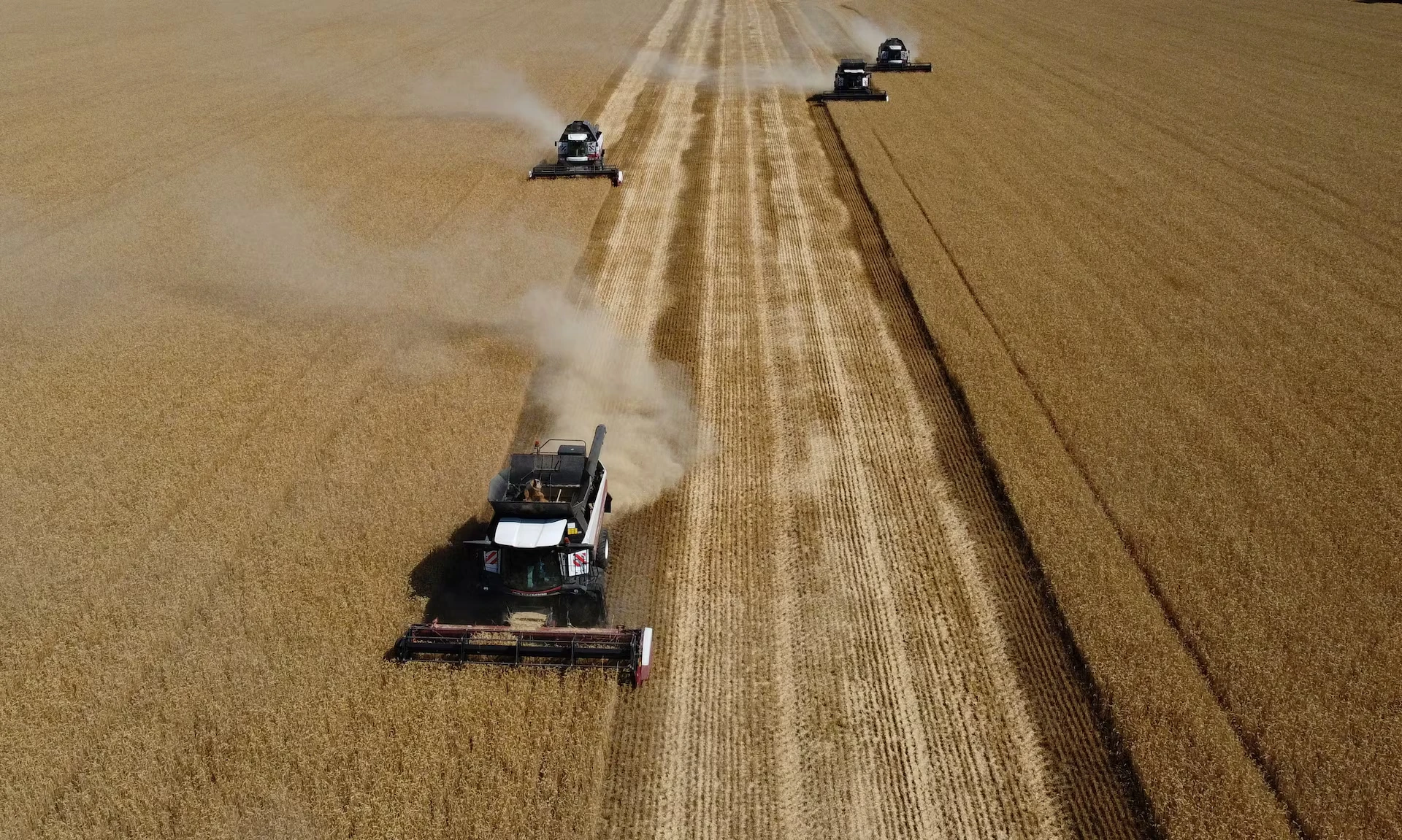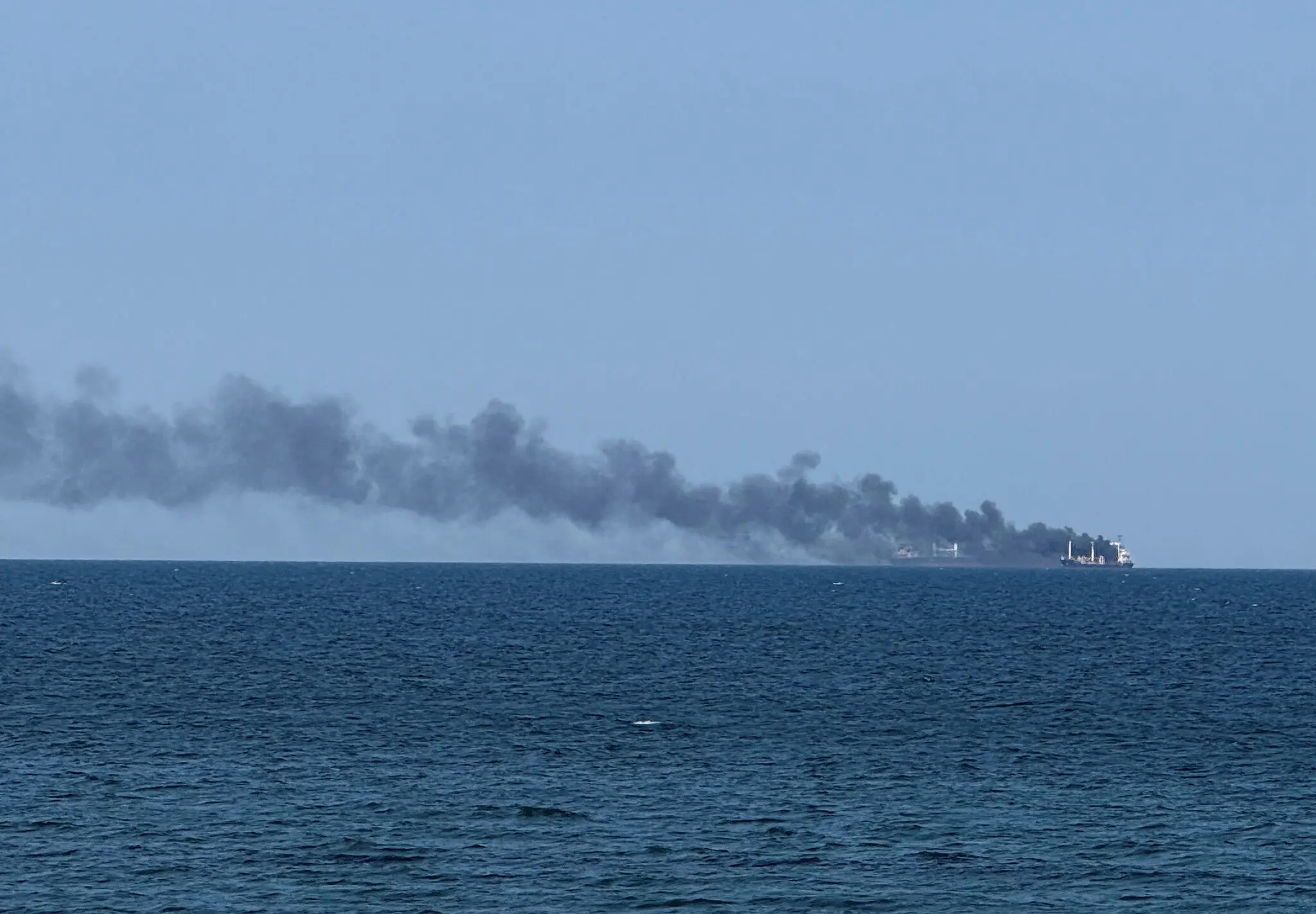
























Ukraine is entering the new grain season with a paradox: the harvest is there, but the ability to move it abroad is shrinking. By late August, farmers had already collected tens of millions of tonnes of grain, while attacks on ports and shipping had sharply narrowed the country’s main route to international markets.
For farmers in the south, that means grain is accumulating faster than it can leave the country. With another large harvest expected, permanent storage capacity is insufficient, forcing some producers to seek temporary solutions rather than sell immediately at deeply discounted prices.
The pressure is greatest on farms that have already paid for seed, fuel, fertiliser and harvesting but cannot sell their crop at an economically viable price. When export capacity contracts, domestic supply rises, local purchase prices fall and the extra cost of logistics is ultimately passed back to the producer.
In August, Ukraine shipped only a fraction of the grain it could normally export when its ports operate at full capacity. The maritime route, which allows the largest volumes to move at the lowest cost, has again become vulnerable because of repeated attacks on port infrastructure and civilian shipping.
Daycom’s analysis indicates that the central threat is not a shortage of Ukrainian grain, but the breakdown of the system that carries it to world markets. When grain is trapped inside the country, global supply tightens while Ukrainian farmers receive lower, not higher, prices.
That makes the current crisis fundamentally different from an ordinary crop failure. When supply falls because of drought or poor yields, producers often benefit from higher prices. Ukraine is facing the opposite problem: there is plenty of grain, but export restrictions turn it into a local surplus that is increasingly difficult to monetise.
A large part of Ukrainian grain production depends economically on exports. Domestic consumption is far below potential output, so even a strong harvest can become a liability if access to foreign buyers is interrupted for long.
Before the war, and during periods when the maritime corridor functioned more reliably, Ukraine’s major Black Sea ports could move millions of tonnes quickly and comparatively cheaply. Grain is a bulk commodity with relatively thin margins, making the difference between ship, rail and road transport decisive.
In 2026, that system has again come under heavy pressure. Attacks on port facilities, warehouses and civilian vessels have increased the risks for shipping companies and made regular maritime traffic more expensive and less predictable.
For cargo owners, the problem goes beyond the possibility of losing a ship or its load. Insurance premiums rise, freight rates increase, delays become longer and fewer carriers are willing to enter Ukrainian ports under elevated security risks.
Ukraine is trying to redirect more exports through the Danube, by rail and across road border crossings. But the capacity of those routes is fundamentally smaller than that of large seaports, particularly when tens of millions of tonnes of bulk cargo need to be moved.
Some agricultural exports have successfully shifted to rail and Danube terminals. Road transport has accounted for only a small share because it is the most expensive option for moving grain over long distances.
The Danube cannot absorb unlimited additional traffic either. Vessel queues, limited pilot capacity, inspections, air-raid interruptions and competing cargoes have already created bottlenecks across the system.
Drought across parts of the Danube basin has added another complication. Lower water levels restrict vessel draught and cargo loads, making even the available fleet less efficient. A route that served as an emergency alternative during earlier phases of the war is itself approaching capacity constraints.
For farmers, every additional kilometre toward the Danube or Ukraine’s western border reduces the price they can receive at the elevator. Exporters subtract rail charges, transshipment, freight, insurance and the cost of delays from the international market price.
What remains may no longer be enough to finance the next production cycle. That is why the government is increasingly warning not only about current export losses but about the possibility that farmers will reduce planting in the next season.
Storage could become particularly critical in autumn, when corn and other later crops arrive in large volumes. If elevators cannot be cleared, part of the new harvest will either have to be sold urgently or moved into temporary storage.
International partners have already supported temporary solutions, including large polymer grain bags for smaller and medium-sized farms. Such systems allow producers to postpone sales and prevent part of the harvest from being lost.
But temporary storage does not solve the main problem. Grain can be held for several months, yet farmers still need cash for the next sowing season. That money arrives only when the crop finds a buyer and physically leaves storage.
The Black Sea disruption is not affecting Ukraine alone. Strikes on Russian port and transport infrastructure have also complicated grain exports from Russia, which remains one of the world’s largest suppliers of wheat.
Russian grain exports also fell sharply in August compared with a year earlier. Moscow has been attempting to expand the use of Baltic routes, but they cannot quickly replace the volume traditionally handled through southern ports.
The result is an unusual situation in which two countries with enormous weight in global wheat trade are simultaneously facing constraints on exports from the Black Sea region.
For an international buyer, the origin of the disruption matters less than the effect. Fewer available cargoes from the region mean importers must turn to the European Union, Australia, Argentina, North America or other suppliers.
Those alternatives exist, but they can involve longer shipping routes, different grain specifications and higher freight costs. Even when there is enough grain globally, a major logistical shift can still raise the final price paid by importers.
The most vulnerable countries are those where bread is heavily subsidised or where households spend a large share of their income on food. For a wealthy economy, higher wheat prices may mean additional inflation. For a poorer one, they can become a fiscal problem or force reductions in consumption.
The world has already seen how quickly this mechanism can work. In 2022, the collapse of Ukrainian maritime exports triggered fears over supply and sent grain prices sharply higher as importers competed for available cargoes.
The current situation is not an exact repeat of 2022. Other major producers have their own harvests, and global supply chains have had years to adapt to the war. It would therefore be premature to say that another global food shock has already begun.
Recent global price indicators have shown upward pressure on cereals, but they do not yet capture the full impact of the latest shipping disruptions. For now, the more accurate description is a rising risk of another shock rather than a fully developed global crisis.
Much will depend on how long the disruption to Black Sea shipping lasts, the size of harvests elsewhere, the stockpiles held by importing countries and how quickly alternative suppliers can increase shipments.
For Ukrainian farmers, however, the risk is already tangible. If wheat is sitting under tarpaulins or filling an elevator that will soon be needed for corn, the theoretical world price offers little relief. Producers must either sell cheaply, borrow more or risk losing part of the crop.
Small and medium-sized farms are particularly exposed. Large agricultural groups usually have more storage, better access to rail contracts and larger pools of working capital. A smaller farmer may have to sell immediately after harvest simply to pay for fuel, rent and the next sowing campaign.
That is how a logistics crisis can turn into a production crisis. If thousands of farms decide to plant less next season, the problem will no longer be limited to grain that cannot be exported today. A year later, there may simply be less Ukrainian grain available.
Ukraine’s potential grain and oilseed exports are measured in tens of millions of tonnes, while alternative routes can handle only a portion of that volume. The difference cannot be eliminated simply by adding more railway wagons or a few more barges.
Safe large-scale maritime shipping remains economically irreplaceable. A single bulk carrier can move tens of thousands of tonnes in one voyage, while the same cargo would require hundreds of rail wagons or thousands of trucks.
For a commodity with a low value per tonne, that difference is decisive. A functioning sea route is therefore not merely convenient; it is the foundation of Ukraine’s agricultural export model.
There is currently no clear path back to an international grain agreement. After the previous arrangement ended, Ukraine established its own maritime corridor, which for a time restored substantial export volumes.
The latest wave of attacks has once again called the commercial viability of that model into question. A route may remain formally open, but if shipping companies consider the risk too high, it can become economically unusable in practice.
International humanitarian organisations are already discussing emergency measures with Ukrainian authorities to preserve the harvest and support farmers’ financial stability. The reason is straightforward: disruption to Ukrainian exports quickly extends beyond Ukraine’s agricultural sector.
Ukrainian food supplies remain important for countries in the Middle East, Africa and Asia, particularly those heavily dependent on imports of grain and vegetable oils. Before the full-scale war, Ukraine was one of the major suppliers to global markets.
The most dangerous scenario does not necessarily begin with one dramatic price spike. It can build gradually: fewer ships, higher insurance costs, overflowing elevators, lower farm-gate prices, smaller plantings, reduced exports and ultimately more expensive bread in importing countries.
The Black Sea is once again becoming the point where the war directly intersects with the global food system. The contradiction is especially stark: Ukrainian fields are producing enough grain, but a growing share of it risks remaining only a few hundred kilometres from the ports through which it is supposed to reach the world.
If stable maritime traffic is not restored, the main question this autumn will no longer be whether Ukraine had a good harvest. It will be how much grain the country can physically store and export — and how many farmers will still have the money to plant again next season.