






















For years, Ukraine’s air defenses operated under constant scarcity while preserving one essential advantage: the ability to protect the most threatened areas. That balance is now breaking down. During the latest waves of Russian attacks, Kyiv has increasingly found itself exposed to ballistic missiles that are among the hardest weapons to intercept.
What has changed is not only the intensity of the strikes. The arithmetic of the war has changed as well. Moscow is launching more missiles while the flow of Western interceptors to Ukraine is shrinking. Volodymyr Zelensky has said that deliveries this year are roughly three times lower than they were in 2025.
The widening gap between Russia’s missile output and the West’s production capacity is becoming one of the most dangerous imbalances of the war. Ukraine may receive additional Patriot batteries, but without sufficient stocks of PAC-3 interceptors, even the most advanced air-defense system becomes a finite asset.
As Daycom noted in its earlier analysis, this is no longer simply another dispute over the scale of military aid. Western governments are increasingly asking not how many missiles they can send to Ukraine, but how many they can afford to remove from their own inventories without weakening national defense.
That marks a fundamentally different political reality. In 2022 and 2023, the principal obstacles were fears of escalation, the challenge of training Ukrainian crews and reluctance to transfer certain classes of weapons. Today, a much harder constraint is emerging: the physical number of missiles available in Western stockpiles.
Wars and security crises across several regions have intensified competition for air and missile defense. European countries are accelerating rearmament, the United States retains global military commitments, and every Patriot interceptor is increasingly viewed not as surplus inventory but as part of a country’s own strategic reserve.
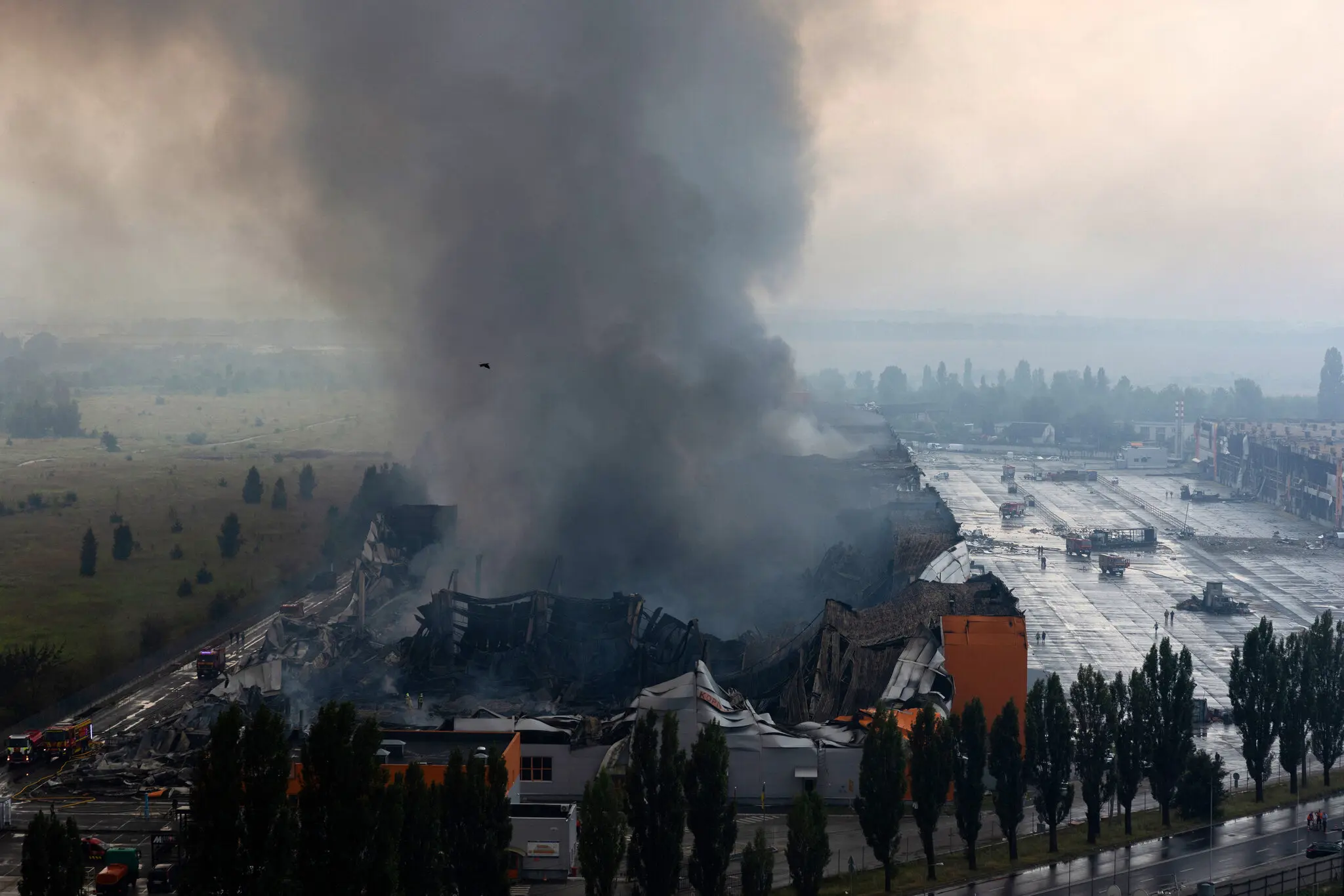
For Ukraine, the consequences are already visible. During one recent large-scale Russian barrage, Ukrainian defenses intercepted only two of 35 missiles. In the next major attack, they failed to intercept any of the 28 missiles launched. More than 25 people were killed in the two strikes. What would once have looked exceptional now risks becoming a pattern.
The situation is most acute with ballistic missiles. Their speed leaves defenders little time to react, while only a limited number of systems are capable of reliably intercepting them. For Ukraine, the Patriot system armed with advanced PAC-3 missiles remains one of the most important tools for that mission.
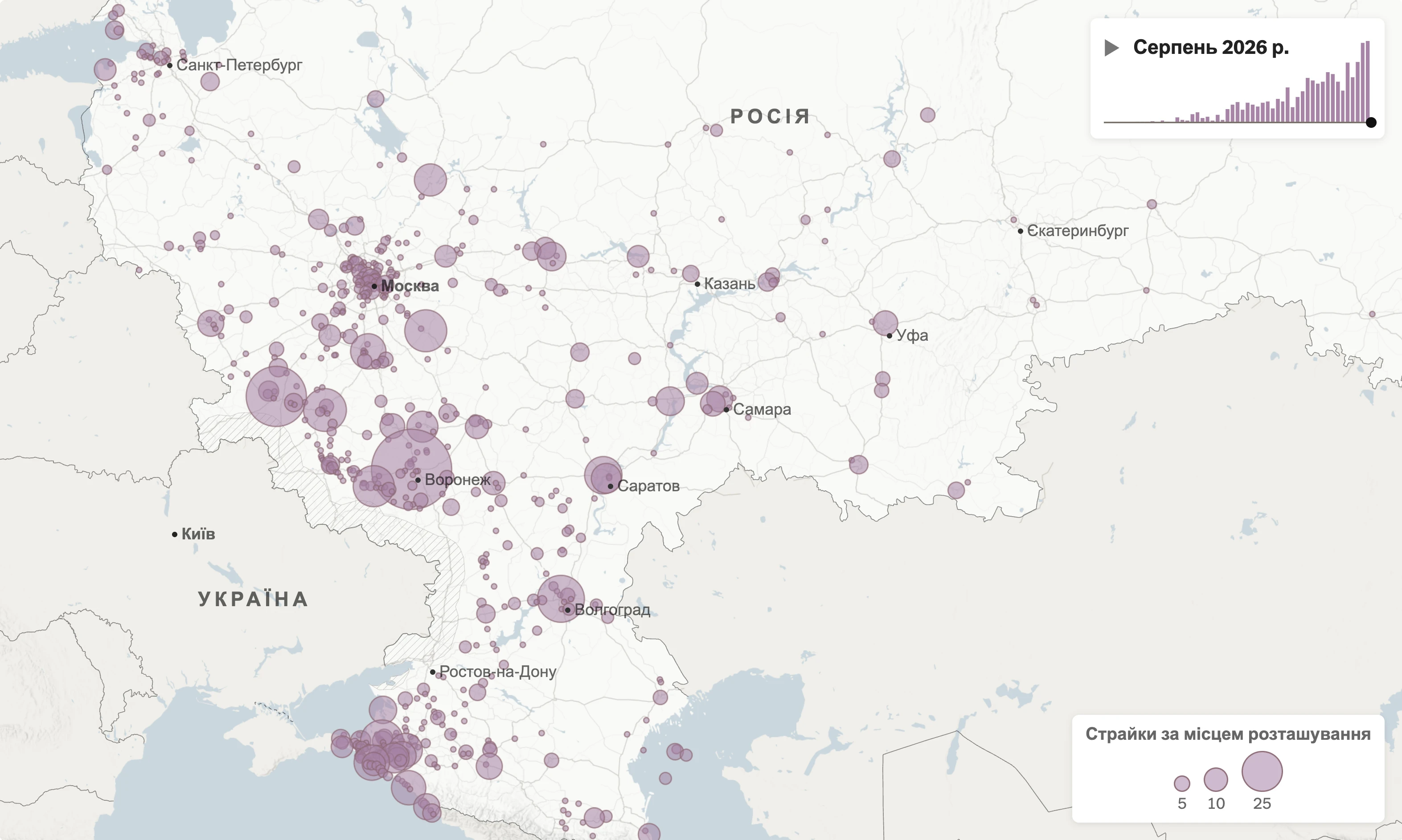
Since the beginning of 2026, Russia has fired roughly 650 ballistic missiles at Ukraine. That number exceeds the total quantity of PAC-3 interceptors delivered by their U.S. manufacturer to customers worldwide during the previous year. At that scale, the shortage can no longer be treated as a temporary supply problem.
Moscow is effectively trying to turn its advantage in missile production into strategic leverage. The objective is not merely to destroy a particular factory, power plant or logistics hub. Sustained attacks also force Ukraine to expend its most sophisticated and expensive interceptors faster than they can be replaced.
That creates a brutal allocation problem for Ukrainian commanders. Kyiv, major cities, military facilities, energy infrastructure, railways and industrial centers cannot all be defended with equal density. Every Patriot battery assigned to one sector leaves another critical area more exposed.
Russia is exploiting precisely that limitation. Strikes on industrial and logistical targets force Ukraine to stretch its air-defense network, while combinations of drones, cruise missiles and ballistic missiles are designed to overwhelm it. Even a successful defense can become disproportionately expensive when high-value interceptors must be used repeatedly.
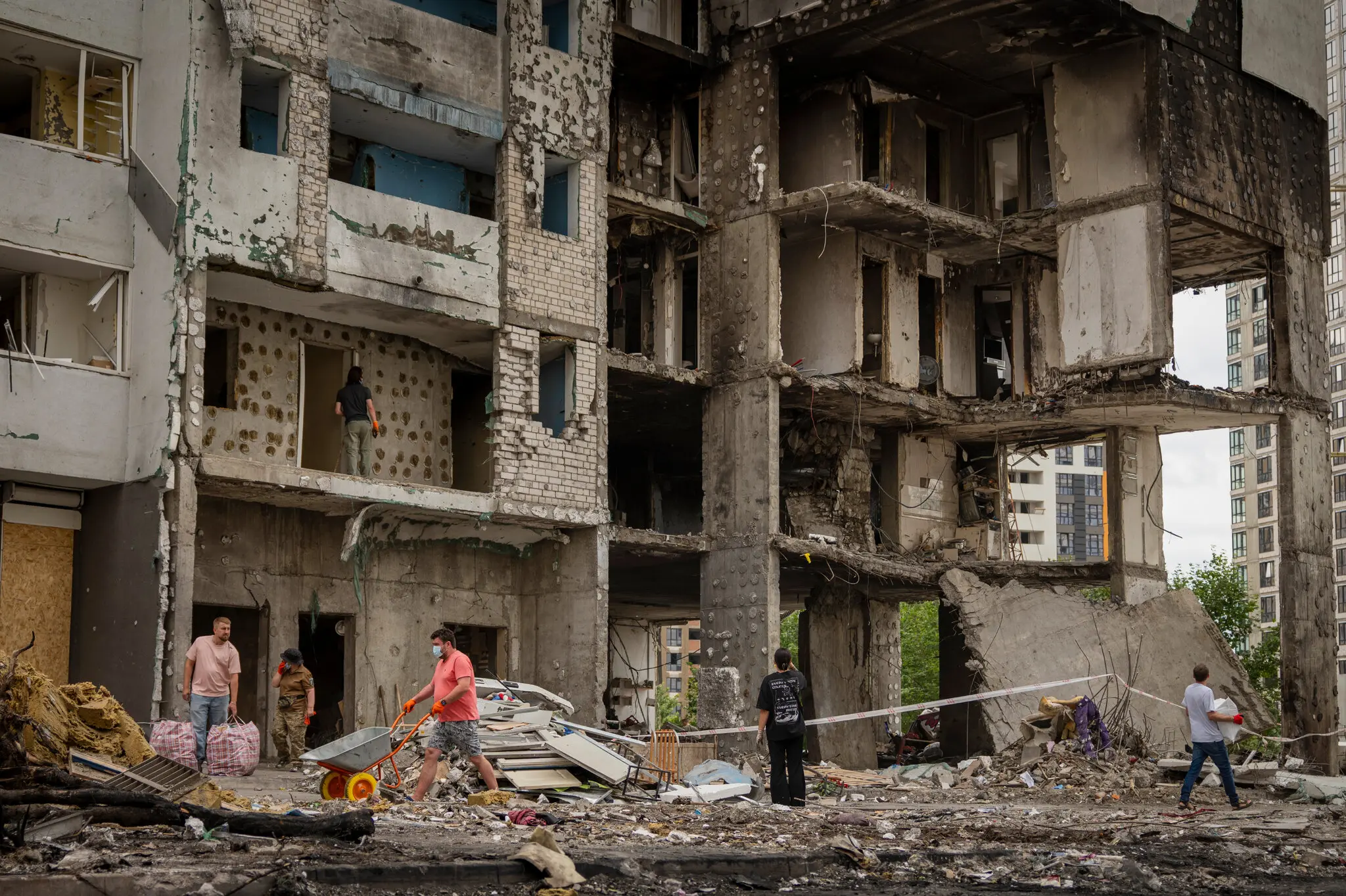
The consequences are visible beyond military statistics. In the first half of 2026, 1,396 civilians were killed in Ukraine — 37 percent more than during the same period in 2025 and more than twice the number recorded two years earlier. The rise in civilian casualties is increasingly coinciding with a thinning layer of air protection.
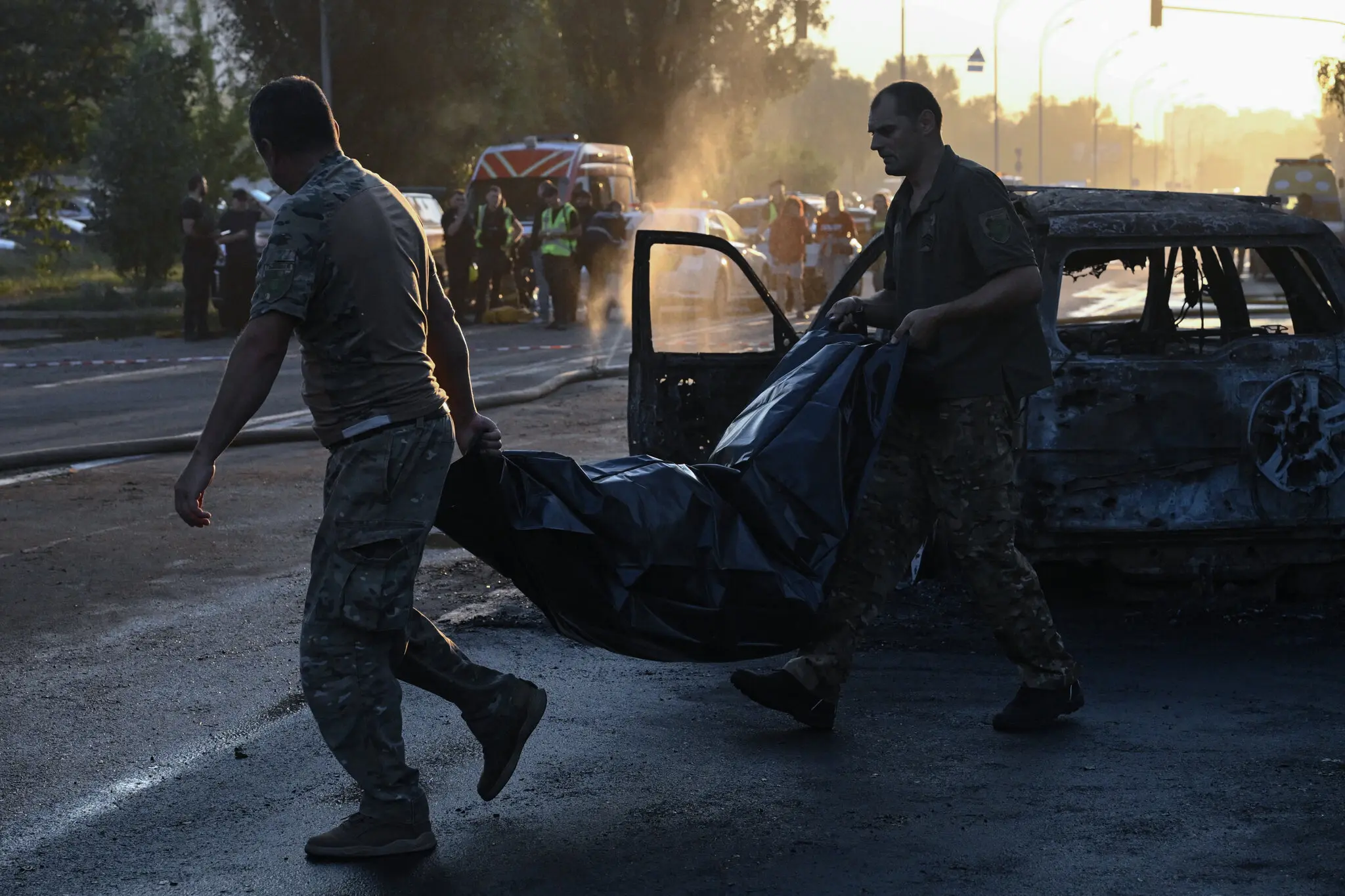 Поліцейські виводять потерпілого з місця російського нападу на Київ у суботу — Геня Савілов
A further complication is the changing model of American support. A large share of Patriot interceptors is now purchased with European money through a NATO-backed mechanism. The arrangement keeps U.S. weapons flowing, but it also shifts support from direct transfers into a more complex system of financing, contracts and production queues.
Kyiv had hoped the mechanism would fund roughly $1 billion in weapons purchases each month. Actual average contributions have been about half that level. For artillery ammunition or armored vehicles, some shortfalls can be offset through alternative suppliers. In missile defense, the range of substitutes is far narrower.
Europe is simultaneously increasing its own defense spending, yet the overall flow of military assistance to Ukraine has declined since the end of large-scale U.S. weapons donations. In 2026, Kyiv has received a little more than €2 billion in military support per month on average, compared with more than €2.5 billion in previous years.
Ukraine is trying to escape this dependency through several routes at once: long-term contracts for U.S.-made weapons, efforts to localize Patriot production and cooperation with European partners on indigenous anti-ballistic systems. None of those projects, however, can solve the immediate shortage.
Time is therefore becoming a strategic resource of its own. By winter, Russia is likely to renew systematic attacks on Ukraine’s energy infrastructure. If interceptor stocks remain near current levels, air-defense commanders will face an even harsher choice between protecting cities, power stations, substations and military installations.
The Patriot crisis is therefore no longer just another ammunition shortage. It exposes the limits of the model on which Ukraine’s missile defense has relied: the West supplies highly sophisticated weapons, but continues to manufacture many of them at peacetime scale, while Russia is waging an industrial war of attrition.
For the Kremlin, that asymmetry is useful even when many incoming missiles are intercepted. Every interceptor is costly, slow to manufacture and sought by numerous countries. Russia’s broader strategy is to impose enough continuous pressure that Ukrainian air defense becomes physically scarce and economically exhausting.
Ukraine’s allies face an increasingly difficult dilemma of their own. Sending more missiles today means reducing national reserves. Keeping those missiles in storage, however, raises the risk of greater destruction to Ukraine’s energy system, industrial base and cities — and could ultimately make the defense of Europe itself more difficult.
In the battle for Ukraine’s skies, political promises matter less and less than the number of missiles coming off production lines. Russia is already trying to turn that imbalance into strategic advantage. For Ukraine, the central question is becoming stark: can the West expand interceptor production before scarcity itself begins to shape the course of the war?