

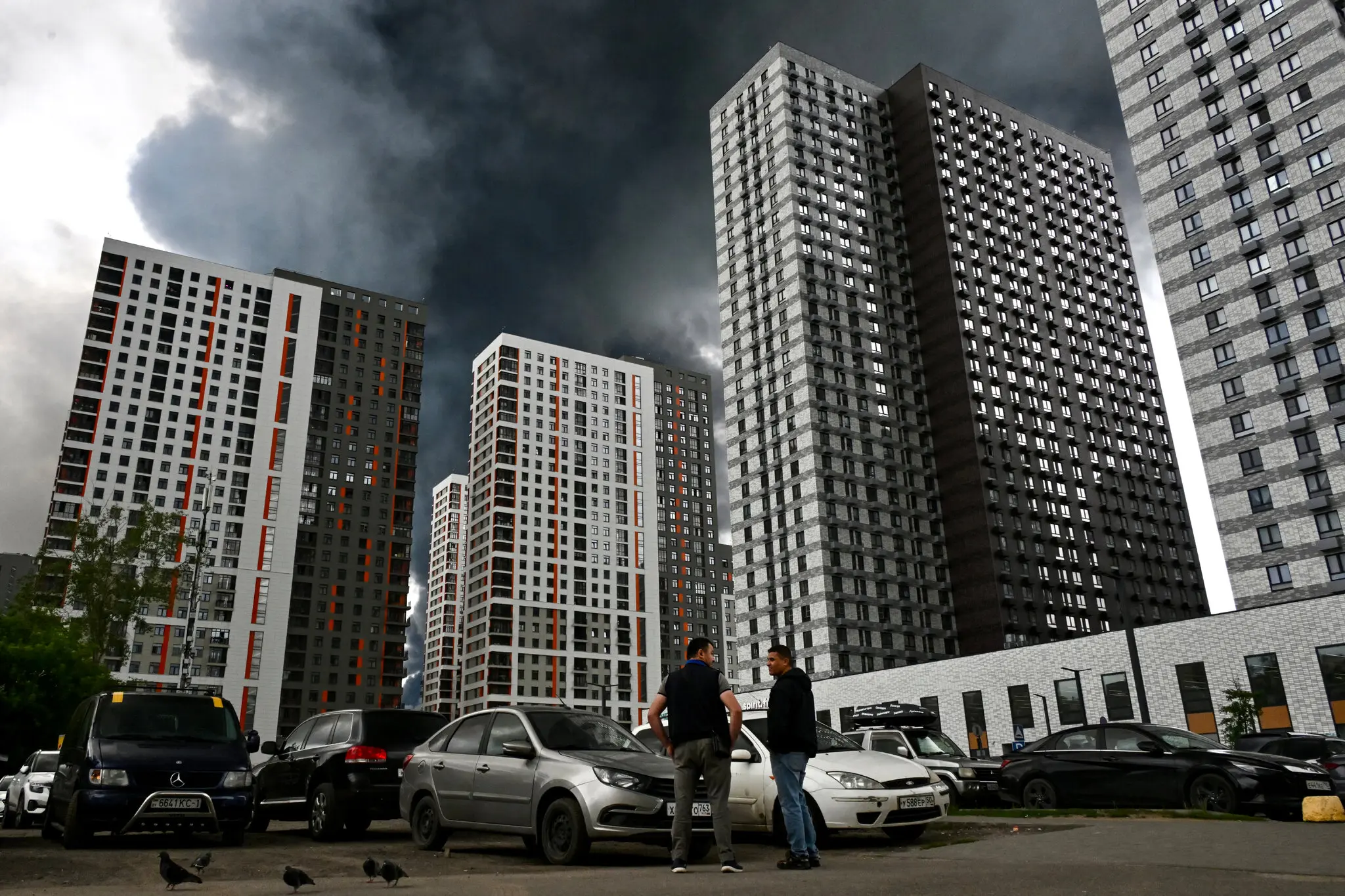

















Fuel restrictions have returned to Moscow after authorities and oil companies managed to ease an earlier wave of shortages at the start of the summer. By August 19, several major chains had confirmed purchase limits, while queues were visible at some filling stations in the Russian capital and surrounding region.
Rosneft imposed the tightest publicly confirmed restriction, limiting petrol purchases to 30 litres per vehicle at its filling stations across Russia. The country’s largest oil producer also warned customers to expect longer waiting times because of elevated demand, while diesel sales remained unrestricted.
Gazprom Neft introduced different limits depending on the type of station. At automated filling points in Moscow, customers were restricted to 40 litres of petrol or diesel. At conventional stations, petrol purchases were capped at 60 litres per vehicle, while diesel remained available without a general limit.
Tatneft told customers that petrol purchases at its filling stations were limited to 50 litres per vehicle. Lukoil also confirmed restrictions across Moscow and the surrounding region, though it did not disclose a single numerical cap and instead cited unusually strong demand and unscheduled refinery maintenance.
According to Daycom’s analysis of verified public information, the important development is not simply that queues have appeared in Moscow. The capital has long benefited from preferential supply and redistribution from other regions, so renewed restrictions suggest the Russia fuel shortage is exceeding the system’s ability to compensate internally.
The current crisis began to intensify in May and had spread across much of the country by July. Moscow initially proved better protected than many provincial regions, with authorities redirecting supplies and using additional deliveries to shield the capital. That buffer now appears significantly weaker than it was earlier in the summer.
Moscow’s fuel market normally receives priority because of its population, political importance and dense transport network. Russian authorities had redirected product from Siberia and increased deliveries from Belarus to prevent visible disruption in the capital. Those measures temporarily reduced pressure but did not remove the underlying imbalance.
A renewed series of Ukrainian attacks on Russian refineries in late July and August upset that balance again. At the same time, volumes of petrol offered on Russia’s domestic wholesale market fell, increasing competition among regions and forcing retail chains to manage demand through purchase limits rather than rely on unrestricted sales.
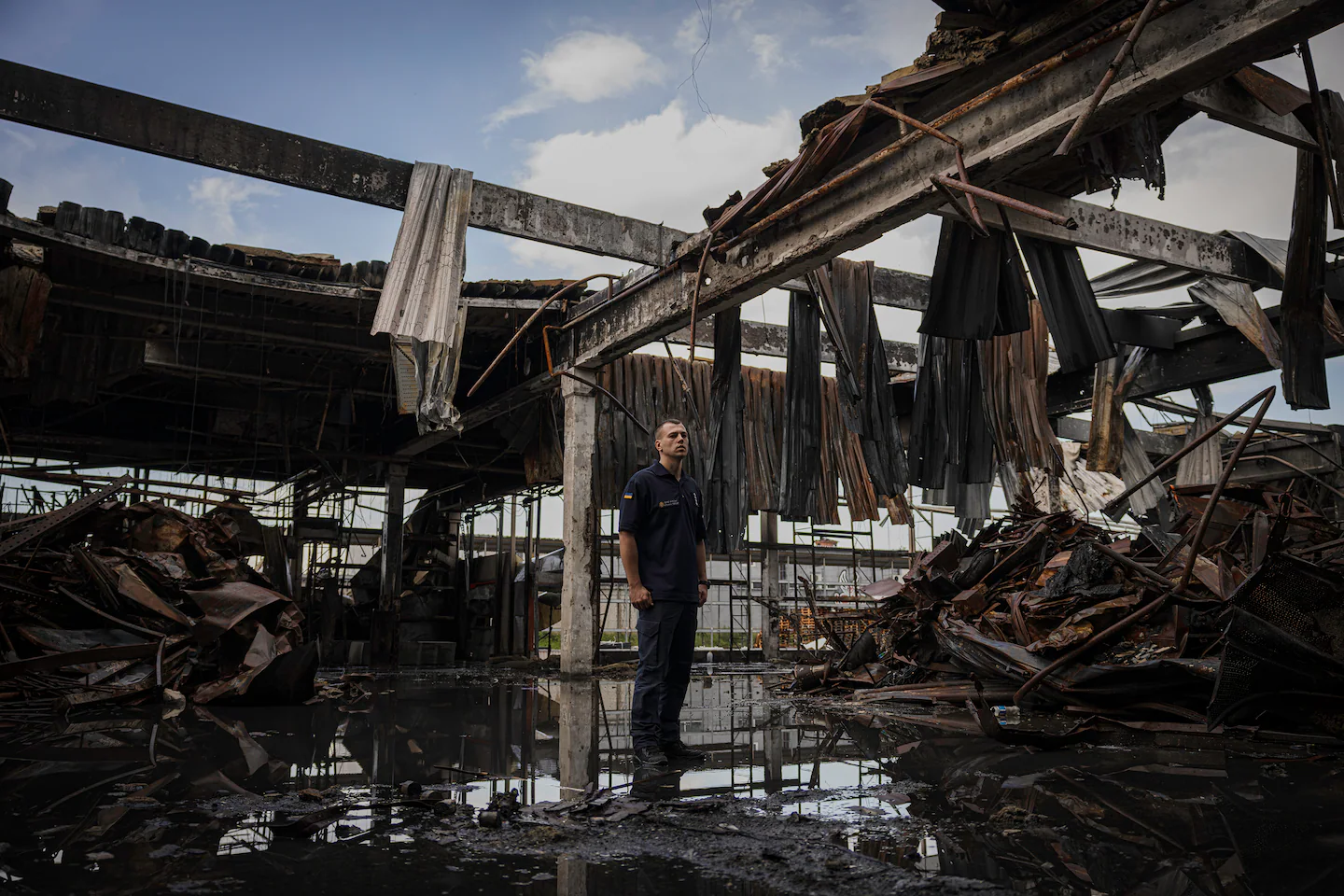
Ukraine has repeatedly targeted Russian refineries, storage facilities and fuel logistics with long-range drones. Kyiv says the campaign is designed to weaken the economic and logistical infrastructure supporting Moscow’s war effort by reducing refining capacity, increasing repair costs and complicating the movement of fuel.
It would nevertheless be misleading to attribute the entire shortage to Ukrainian strikes. August is traditionally a period of heavy road-fuel consumption, agricultural activity remains intense, and several refineries are undergoing scheduled or unscheduled maintenance. In 2026, those pressures have converged with wartime damage.
The shutdown of the Orsk refinery in Orenburg region illustrates how quickly a single industrial disruption can spread into the retail market. After a Ukrainian attack, the facility, capable of processing roughly six million tonnes of crude a year, halted operations and faced potentially lengthy repairs to damaged equipment.
Following the Orsk shutdown, only part of the regional filling-station network remained fully operational, while authorities began prioritising emergency and specialised vehicles. The episode showed how a refinery problem can rapidly become a transport and supply problem once local inventories begin falling faster than replacement fuel can arrive.
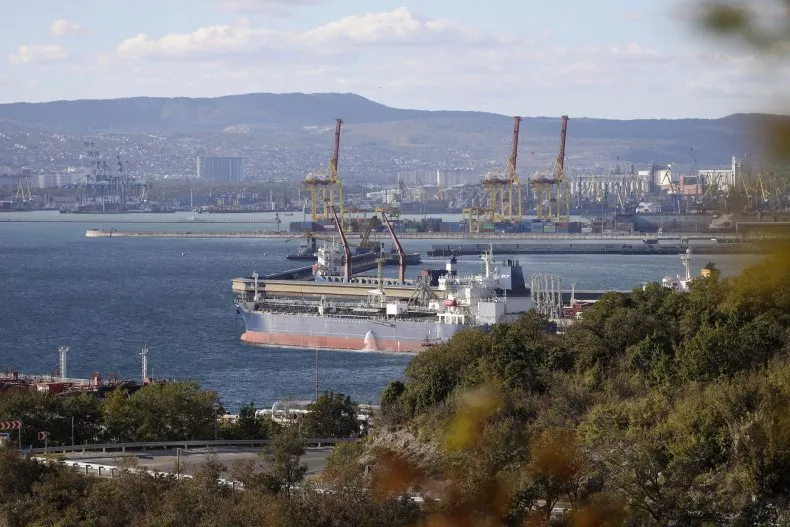
Russia’s difficulty is not a shortage of crude oil. It remains one of the world’s largest producers and continues to pump substantial volumes. The bottleneck is refining: crude cannot be poured directly into a vehicle, and damaged processing units cannot instantly be replaced by higher production at oilfields elsewhere in the country.
That explains the apparent paradox of a major oil-exporting state importing petrol. Russia may possess abundant crude while still facing shortages of finished motor fuel if enough processing equipment is offline. Refining capacity, not oil in the ground, determines whether motorists can actually buy petrol or diesel at the pump.
The strain is also visible in Russia’s foreign trade. Seaborne exports of refined petroleum products fell sharply during the summer as maintenance, refinery disruptions and government restrictions reduced available volumes. Moscow increasingly faces a choice between earning export revenue and keeping more fuel inside the domestic market.
The government has responded by tightening restrictions on fuel exports. Authorities want a larger share of domestic production to remain inside Russia even if that reduces commercial sales abroad. Politically, sustained shortages at home carry a more immediate cost for the Kremlin than the loss of some export income.
Moscow has extended restrictions on exports of petrol and diesel into early 2027, while retaining limited exemptions for producers and some intergovernmental arrangements. Such measures can redirect existing supply toward the domestic market, but they cannot replace refining capacity that has been physically damaged or taken offline.
At the same time, Russian authorities have relaxed some fuel-quality requirements and expanded imports. For a country accustomed to exporting large quantities of refined products, the need to purchase petrol and diesel from abroad is an important indication of how much pressure has developed inside the refining and distribution system.
Belarus and Kazakhstan remain convenient sources because fuel can be moved into Russia by rail. But the geography of emergency supply has broadened. During the summer, Russia also turned to maritime imports from countries that previously played little role in supplying its domestic petrol market.
In August, a large cargo of Indian-origin petrol reached the Russian market through a sea route before being transferred onward by rail. Earlier shipments had arrived from Morocco and South Korea. These imports are not large enough to replace Russian refining, but they can help cover acute regional gaps.
Imported fuel also comes at a cost. Maritime transport, transshipment, rail distribution and longer supply chains make emergency purchases more expensive than locally refined product. Their role is therefore defensive: they buy time while refineries are repaired and domestic logistics are reorganised.
The fuel shortage is no longer affecting only private motorists. Farmers in agricultural regions have reported queues, higher diesel prices and concerns about harvesting. During the seasonal peak, fuel shortages can disrupt tractors, combines, freight transport and food distribution, turning an energy problem into a broader economic one.
Russian officials have previously acknowledged that queues persist and that certain types of fuel are not always readily available. The government has placed particular emphasis on supplying the agricultural sector, because a prolonged shortage during harvest season could eventually influence food prices and regional economic activity.
The return of restrictions to Moscow therefore carries political symbolism beyond the number of litres allowed at a pump. A shortage in a distant region can be blamed on local logistics. When rationing reaches the capital, the consequences of refinery disruption become visible to the country’s most protected consumer market.
The situation should not yet be described as a collapse of Russia’s fuel system. Petrol remains available in Moscow, diesel is still largely unrestricted, and the government can move stocks between regions or buy additional supplies abroad. What Russia is experiencing is serious shortage and rationing rather than nationwide exhaustion.
What happens next will depend on several variables: the pace of Ukrainian strikes, the speed of refinery repairs, seasonal consumption and the ability of authorities to redistribute fuel. If new damage occurs faster than plants can be restored, export restrictions and emergency imports will provide progressively less relief.
Sanctions add another complication because modern refineries depend on specialised equipment and components that are not always easy to replace domestically. Damage to one critical processing unit can therefore result in months rather than days of reduced output, particularly when replacement parts are difficult to source.
For Ukraine, the campaign follows an asymmetric economic logic. A relatively inexpensive long-range drone can damage industrial equipment worth vastly more, forcing Russia to spend on repairs, air defence, imported fuel and additional protection. The exact effect of each individual strike, however, is often difficult to verify independently.
For the Kremlin, the problem runs in the opposite direction. Russia can continue producing and exporting crude while still struggling to supply finished fuel across its enormous territory. The more petrol and diesel it must keep at home, the less flexibility remains for profitable exports of refined petroleum products.
Russia’s fuel shortage has therefore evolved from a series of regional disruptions into a broader test of the country’s refining and logistics system. Queues in Moscow do not mean Russia is running out of fuel, but they show that even the capital can no longer be fully insulated from damage elsewhere in the energy chain.
The most revealing sign is not any single queue outside a filling station, but the combination of state responses: export bans, relaxed fuel standards, redirected supplies and petrol imports from abroad. For one of the world’s largest oil producers, the war is becoming increasingly visible in the most ordinary place — the petrol pump.