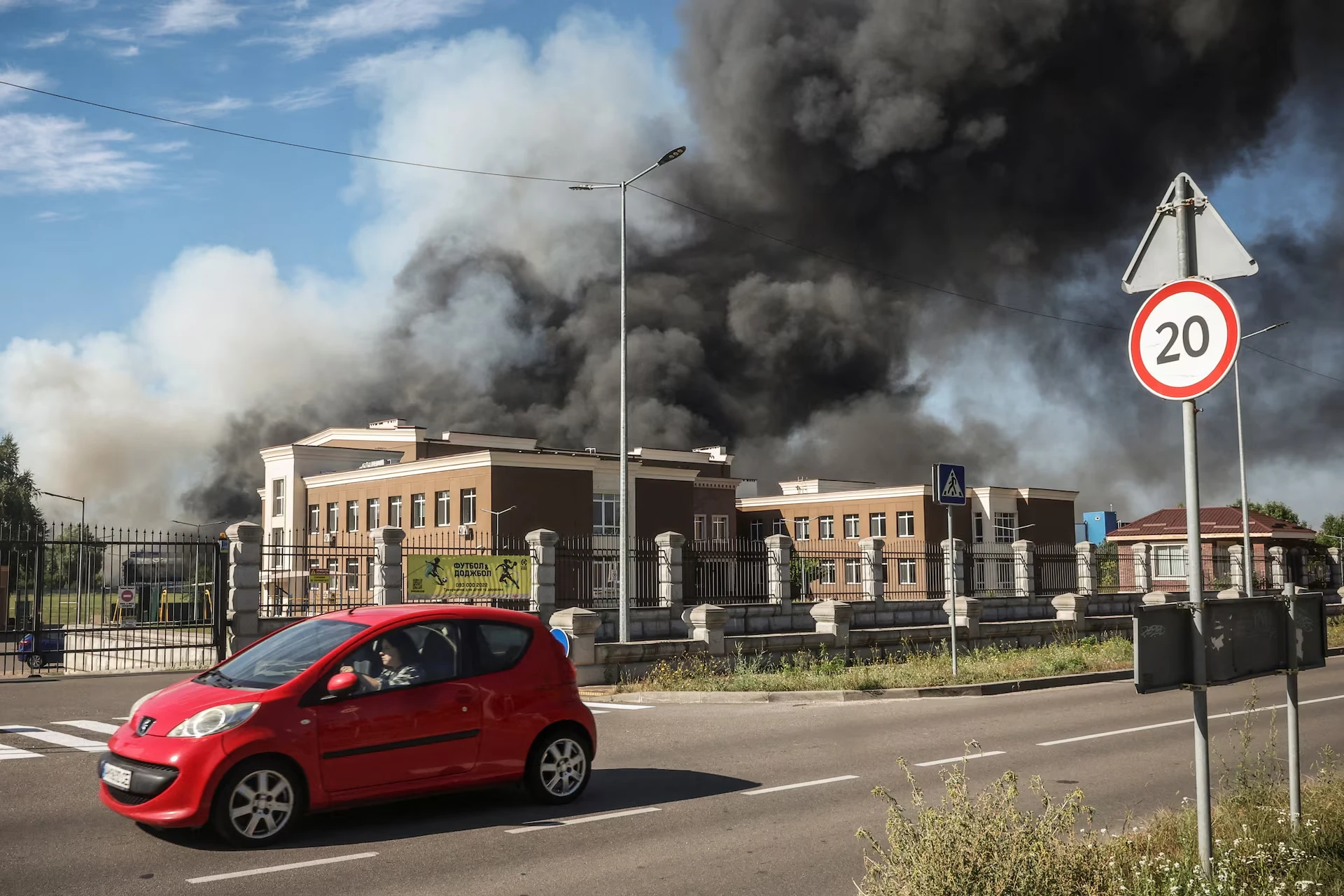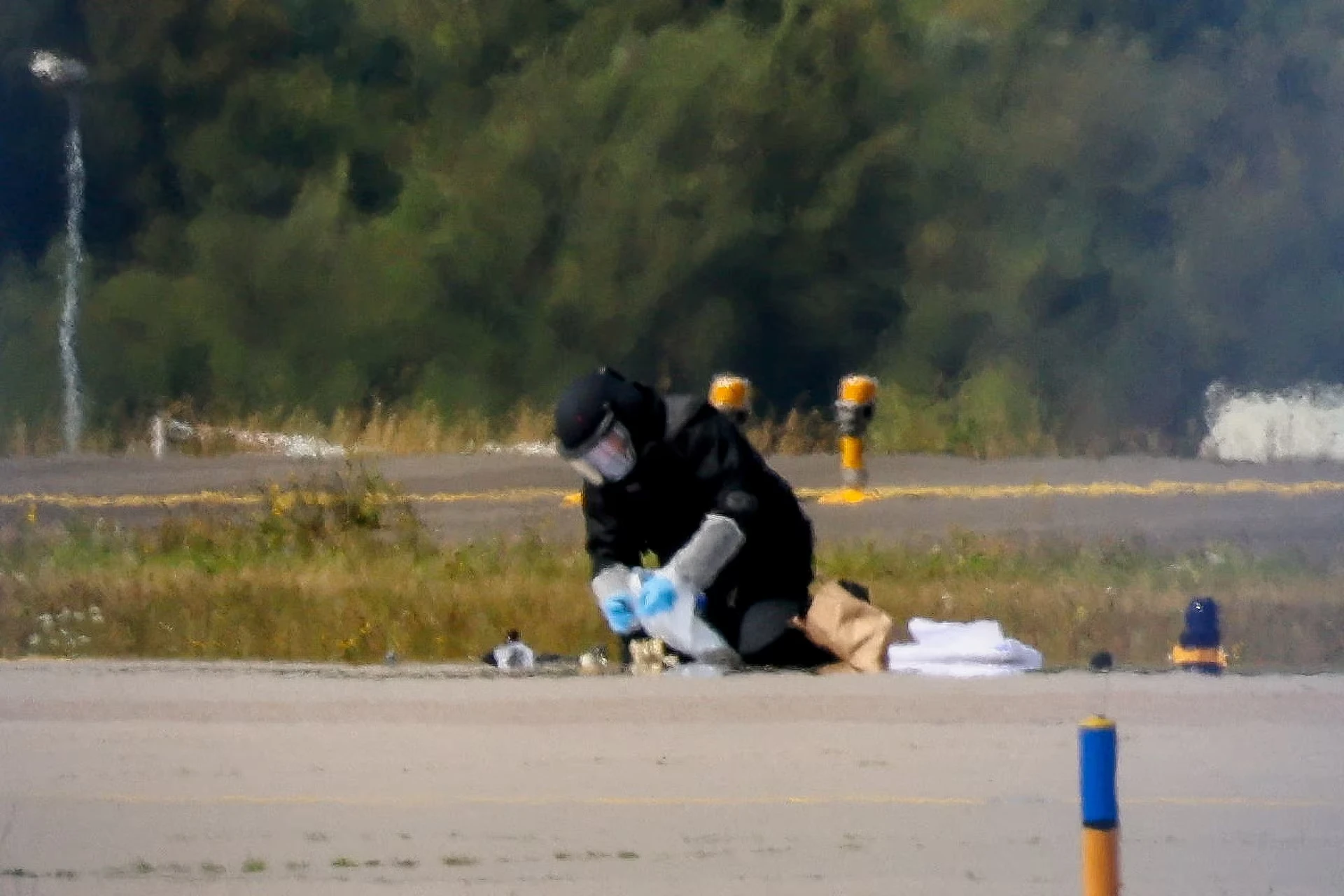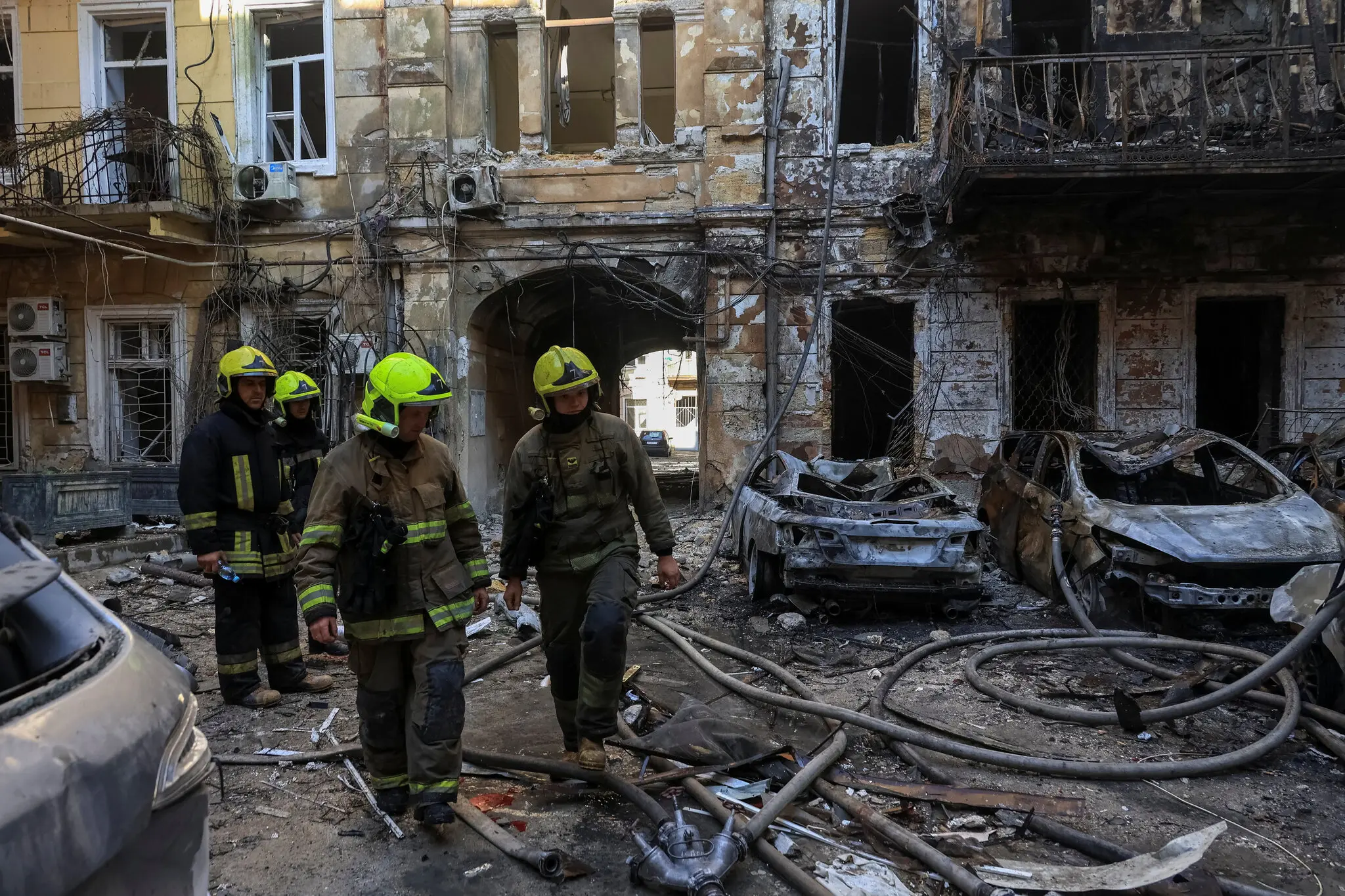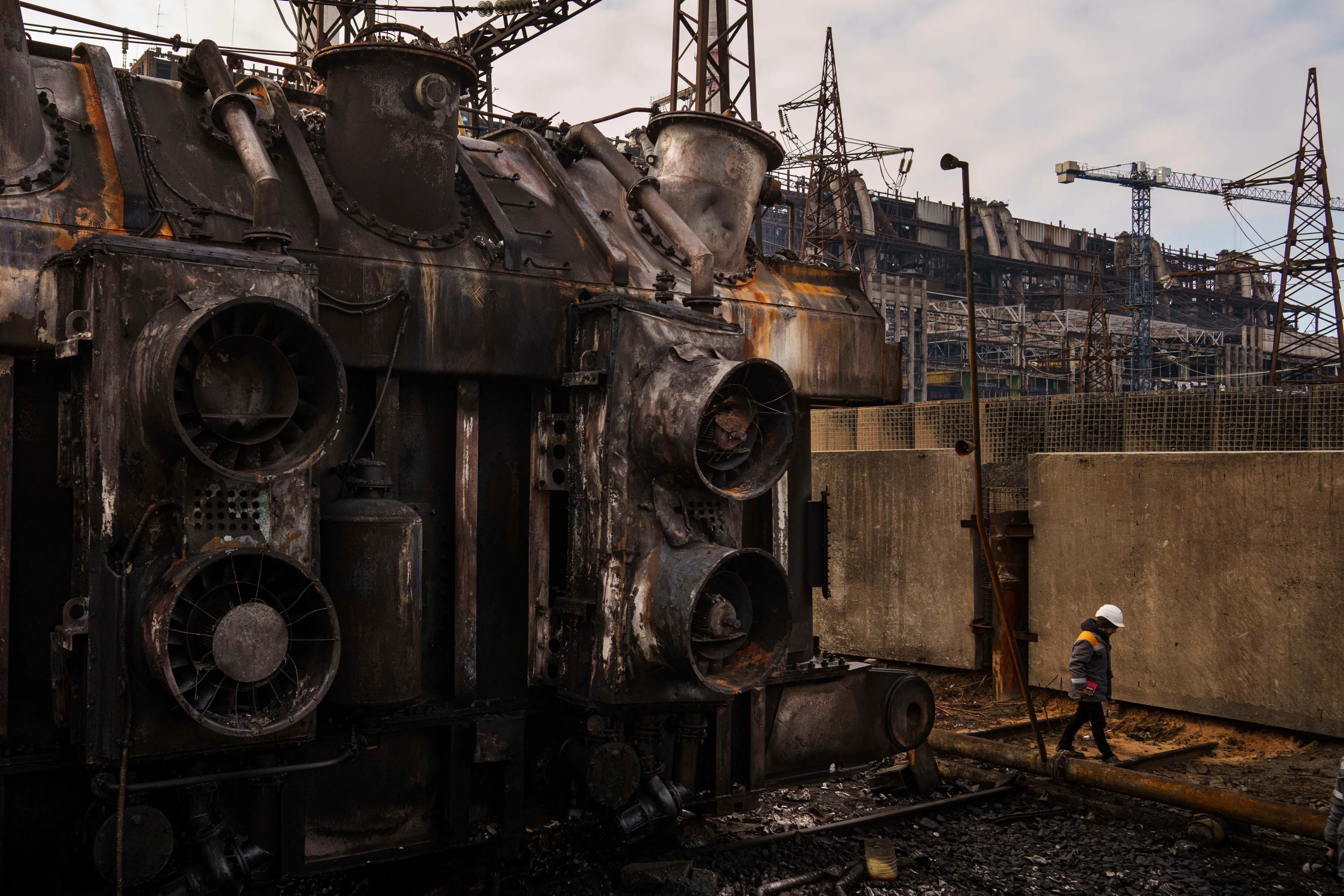






















On the evening of August 28, a Russian strike hit a site storing ammunition for Ukraine’s Defence Forces in the village of Myla, in the Bucha district of Kyiv region. The initial impact was followed by a major secondary detonation involving shells, mines, drones and other munitions, with explosions continuing for hours.
The consequences turned a strike on one military facility into one of the deadliest disasters of the year in the Kyiv region. Ukraine’s Security Service reported at least 37 deaths. Police recorded 19 people injured, including children, officers and emergency workers, while information about the missing changed as search operations continued.
The blast wave and flying debris damaged about 130 homes, as well as vehicles, shops, a business, filling stations and a residential care facility. Several houses were destroyed completely. Hundreds of people had to be evacuated while emergency crews worked in an area where ammunition was still exploding.
Within hours, however, Ukrainian officials were asking a question that went beyond the Russian strike itself. President Volodymyr Zelensky said the ammunition depot “definitely should not have been there” and described the storage of explosive material so close to civilians as a severe case of negligence.
Daycom’s analysis indicates that the tragedy in Myla contains two distinct lines of responsibility that should not be conflated. The Russian strike triggered the disaster, but the scale of the casualties separately requires an investigation into why a large ammunition stockpile was located inside civilian development.
Ukraine’s Security Service has already reflected that distinction in its investigation. Proceedings concern both the crime of aggression and possible negligent performance of military duties. Investigators are therefore examining Russian actions as well as decisions made by Ukrainian officials responsible for the site.
Ukrainian authorities have said the warehouse complex was struck by a Russian Geran-4 drone. The impact triggered the secondary explosions. Zelensky confirmed that shells, mines, drones and other munitions used by the Defence Forces were stored at the facility.
Russia’s Defence Ministry said it had attacked an ammunition depot and claimed the site contained components and launch boosters for Ukrainian long-range drones. All elements of that description have not been independently established.
Ukraine, however, does not dispute the central fact that ammunition was stored there. That shifted the domestic question quickly from whether the site had a military function to who authorised its location so close to homes and other civilian infrastructure.
That distinction also matters under international humanitarian law. A weapons or ammunition depot can qualify as a military objective. But attacking a military target does not remove the obligation to assess expected civilian harm, take feasible precautions and comply with the principle of proportionality.
At the same time, the law of armed conflict also places obligations on the side controlling the territory. Where feasible, military objectives should be kept away from densely populated areas, and civilian populations should be protected against the foreseeable effects of military operations.
An investigation into possible Ukrainian negligence therefore does not erase Russia’s responsibility for launching the attack and prosecuting the war. Nor does Russian responsibility make an internal examination unnecessary if storage practices exposed civilians to avoidable danger.
Investigators have not yet publicly established the complete chain of responsibility. It remains unclear who selected the location, who approved the storage of ammunition there, what inspections were carried out and whether specific military safety requirements were violated.
That is why political statements by the president and prime minister should not be confused with a judicial finding. Zelensky described the circumstances as criminal negligence, while Prime Minister Serhii Koretskyi said repeating such mistakes in the fifth year of full-scale war was unacceptable. Criminal responsibility for particular individuals still has to be proven.
Those comments carry particular weight because Myla was not the first similar incident in Kyiv region. In July, a Russian strike caused explosions and a fire at another weapons-storage site in Vyshneve, prompting a separate investigation into the decision to keep dangerous material near civilian buildings.
After that incident, Zelensky said preliminary findings pointed to violations of existing rules and direct prohibitions. The role of officials at state enterprises was brought under scrutiny, and security agencies were instructed to examine other comparable facilities.
The president also stressed that Ukraine has designated locations for weapons and ammunition where residential buildings should not be nearby. The disaster in Myla only weeks later inevitably raised questions over how effective those inspections had been.
That repetition helps explain the unusually severe response from the government. After Vyshneve, the state already knew the risks created by storing explosive military material near populated areas. A second major disaster therefore looks less like a single bad decision and more like a possible systemic failure.
The consequences in Myla were especially severe because ammunition behaves very differently from ordinary stored cargo. Once struck, it can become a source of repeated explosions, with fragments travelling far beyond the original impact point.
For such facilities, distance from civilian housing is not merely an administrative requirement. It is part of the protective system. Even advanced air defence cannot guarantee interception of every drone or missile, so military logistics must assume that a depot may eventually be detected and attacked.
Myla illustrates what happens when that assumption is not adequately built into planning. The Russian strike did not need to destroy every item individually. Once a fire and initial explosion began, shells, mines and other explosive material inside the facility multiplied the destructive effect.
The secondary detonations explain why the disaster spread well beyond the warehouse grounds. Homes and civilian businesses were damaged, fragments of munitions were left on roads and in gardens, and rescue teams had to work while further explosions remained possible.
The danger also extended to those responding to the emergency. Police officers and rescue workers were among the injured. A local community leader who joined the response was also killed, according to the president, illustrating how an ammunition depot can remain hazardous long after the first impact.
For many residents, the military nature of the neighbouring property became clear only after the explosion. They had understood the area as ordinary mixed residential and warehouse development and had not expected that large quantities of explosive material were stored nearby.
That creates a separate challenge for civil protection. Military sites cannot always be publicly identified for security reasons, but secrecy cannot substitute for safe distances, engineering measures and evacuation planning designed to prevent civilians from carrying the full risk.
War inevitably complicates ammunition logistics. Ukraine must receive, store and distribute enormous volumes of weapons quickly, while Russia systematically searches for depots, production sites and transport hubs. It is unrealistic to remove every military facility from every populated area.
But that makes it even more important to distinguish unavoidable wartime danger from risks that could have been reduced. The investigation in Myla is not about why Ukraine stores ammunition in rear areas at all. It is about whether a safer option existed for this particular stockpile and why it was not used.
That inquiry needs to examine the full decision-making chain. Who selected the site? Who approved it? Who assessed the distance to civilian buildings? Who determined how much ammunition could be stored there? Were inspections carried out, and did procedures change after the earlier disaster in Vyshneve?
If the case ends with punishment for only a few lower-level officials, the broader system could remain untouched. The second major incident in a short period makes the institutional question unavoidable: whether the safeguards intended to prevent such disasters are working at all.
At the same time, another boundary must remain clear. Ukraine’s internal investigation into possible negligence cannot be used to transfer responsibility for the Russian strike itself. Russia selected the target, chose the weapon and launched the attack. That conduct is being investigated separately as part of the crime of aggression.
Likewise, the military nature of the depot does not by itself answer every question about the lawfulness of the specific strike. International humanitarian law still requires parties to consider foreseeable civilian harm and take precautions even when attacking military objectives.
The tragedy in Myla therefore cannot be reduced to a simple formula with only one cause. Russia’s war created the threat and the direct attack. Possible Ukrainian violations of storage rules, if confirmed, may have greatly increased the consequences.
The most important result of the investigation should therefore be more than a list of names. After Vyshneve, officials had already said similar facilities would be reviewed. After Myla, the public needs an explanation of why previous warnings did not prevent another disaster and what will now change in the storage system.
For Ukraine, that is not only a question about the past. Russia continues to hunt ammunition depots, logistics nodes and defence production. Any dangerous site positioned without adequate protection for surrounding civilians remains a potential location for another secondary catastrophe.
At least 37 people died in Myla after a Russian drone struck an ammunition depot that, in the president’s words, should not have been there. Those two facts do not contradict one another.
Together, they define the central lesson of the disaster: in wartime, civilian protection depends not only on whether an incoming drone can be shot down, but also on decisions made long before that drone appears in the sky.