


















Before Russia’s full-scale invasion, Artem Murdid worked at a bank in Melitopol, eventually taking responsibility for monitoring money transfers. He had served a compulsory year in the Ukrainian military, liked cars and science fiction, and lived with his mother. When Russian troops occupied the city, he chose to remain.
Three years later, a Russian military court sentenced Murdid to life imprisonment on terrorism-related charges. His mother, Hanna Murdid, received 22 years, while his partner, Hanna Voshkoder, was sentenced to 20. All three denied committing the crimes described by Russian investigators.
Prosecutors alleged that Murdid established contact in June 2022 with a Ukrainian intelligence operative identified only as Oleh. According to the Russian case, he later began planting improvised explosive devices in occupied Melitopol and eventually brought his mother and partner into what prosecutors called a terrorist cell.
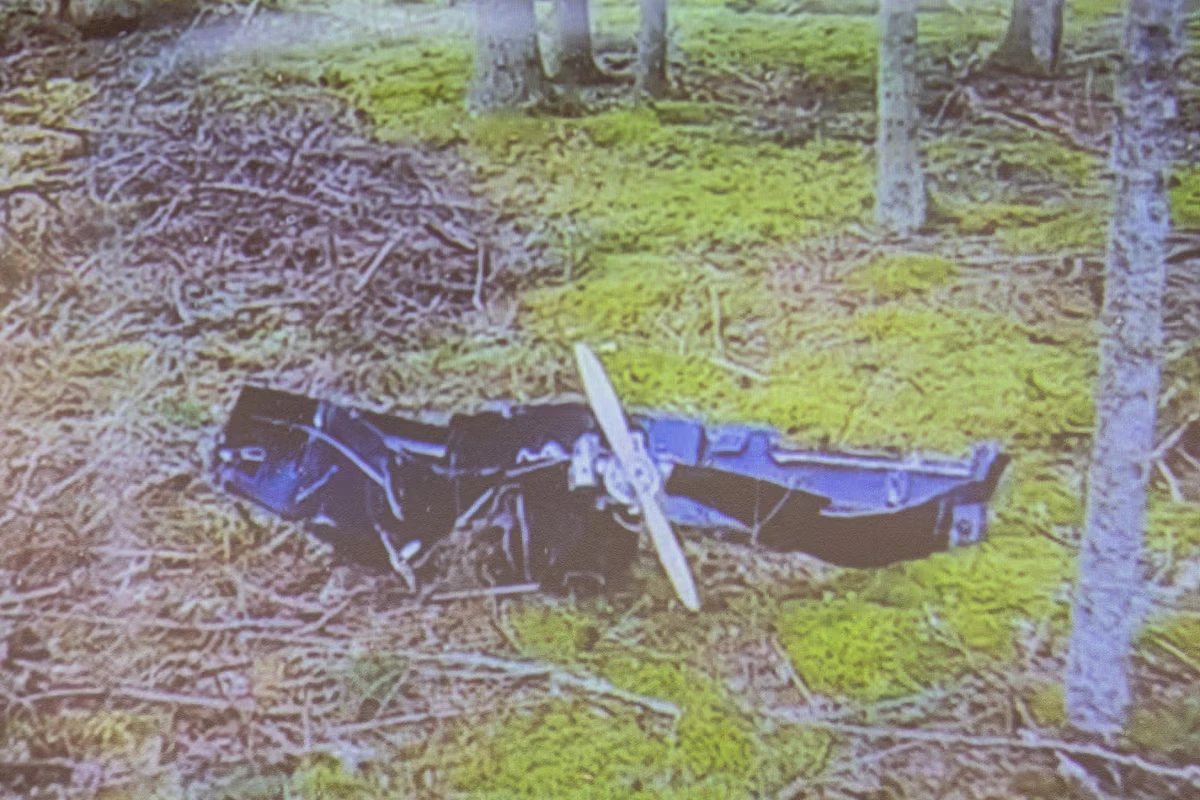
The gravest accusation concerned a car bombing on March 14, 2023. Russian investigators said Murdid placed an explosive device under the vehicle of Ivan Tkach, a Ukrainian who worked with the occupation administration and helped coordinate transport for Russian personnel. Tkach was killed and another person was seriously wounded.
Daycom’s analysis of publicly available court records and human-rights reporting shows why the case extends far beyond one family. It sits at the intersection of occupation law, allegations of coerced confessions and a wider system in which Ukrainian civilians can disappear into Russian custody without any clear route for eventual return.
Murdid says the case against him was built after he was subjected to severe abuse in detention. In his account, guards beat him, used electric shocks and forced him to sign documents without properly reading them. He later told the court that statements obtained after that treatment became part of the evidence used to convict him.
In a letter from custody, Murdid described threats of sexual violence against his mother and partner and said guards threatened to kill him and abandon his body by a road. He also said he was forced to watch his mother being abused. Russian authorities did not publicly provide a substantive response to those specific allegations.
Hanna Murdid also told the court that she had been tortured after her arrest. She described beatings and electric shocks and asked judges to take account of her deteriorating health. Hanna Voshkoder, meanwhile, stressed that her young daughter had been left without her mother and was being raised by relatives.
The family’s account cannot be independently verified in every detail. Yet the methods they describe closely resemble practices documented repeatedly by United Nations monitors among Ukrainian civilians and prisoners of war released from Russian detention facilities since the full-scale invasion began.
UN investigators have reported beatings, electric shocks, mock executions, death threats, sexual violence and prolonged incommunicado detention. Large majorities of released Ukrainian civilians interviewed by international monitors have described some form of torture or other ill-treatment while held by Russian authorities.
More recent UN findings have shown the same pattern. More than nine in ten released Ukrainian civilians interviewed in one reporting period said they had experienced torture or other abuse. Beatings and electric shocks were among the most frequently reported methods, alongside sexual violence or threats of it.
Those findings do not automatically prove every allegation made by Murdid. They do, however, provide a broader evidentiary context. His claims emerge not in isolation but against a documented pattern of treatment affecting detainees held in different institutions and in different Russian-controlled areas of occupied Ukraine.
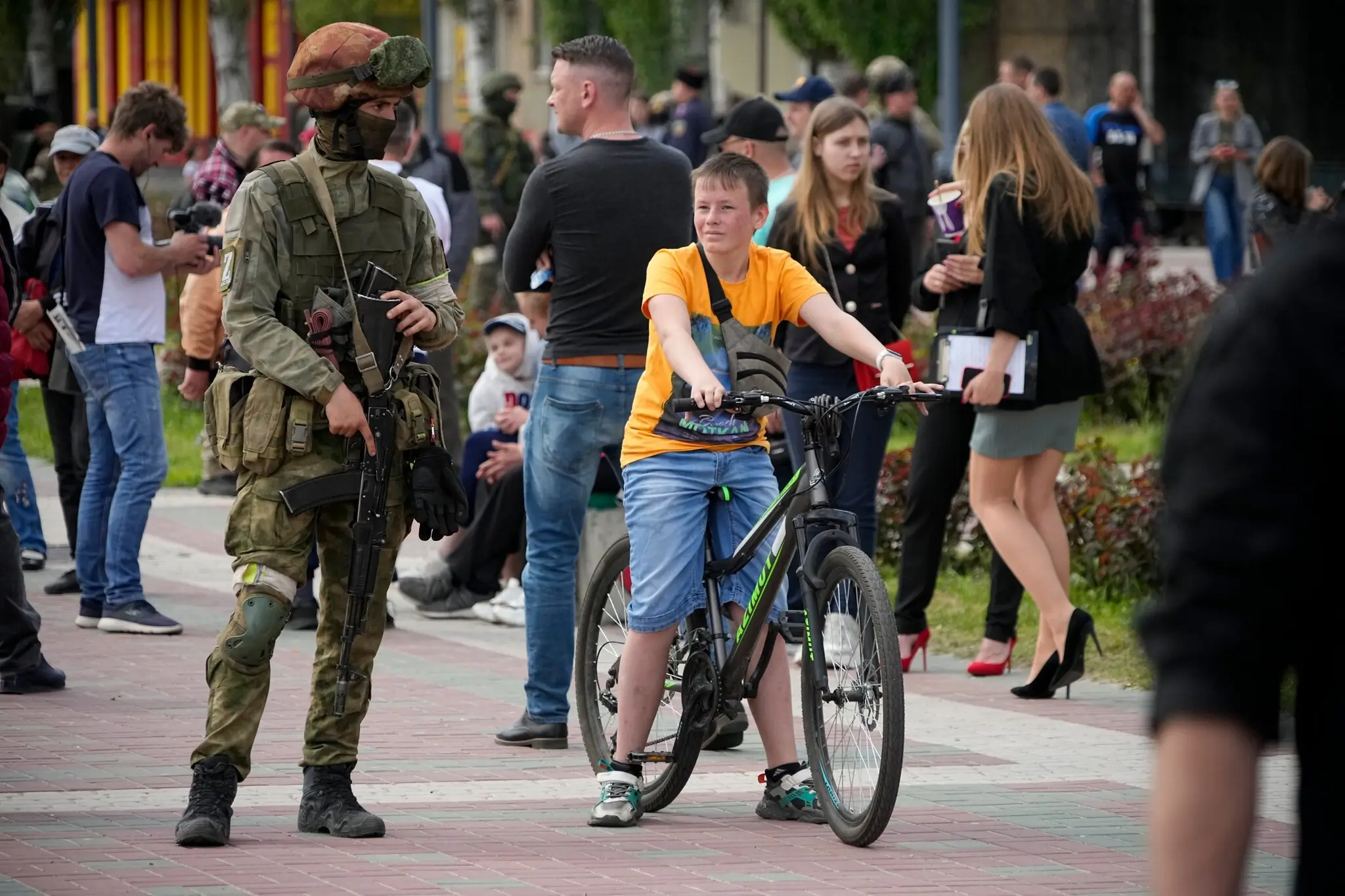
A separate issue concerns Russia’s use of its own criminal law and courts in occupied Melitopol. The city remains internationally recognised as part of Ukraine. International humanitarian law places significant restrictions on an occupying power’s ability to replace the existing legal order with its own institutions and legislation.
That does not mean civilians in occupied territory can never be detained for actions posing a genuine security threat. International law allows restrictive measures under defined circumstances, but requires legal safeguards, access to review and humane treatment. Evidence obtained through torture is incompatible with those standards.
Russian prosecutors insist Murdid was not prosecuted merely for holding pro-Ukrainian views. Their case alleges that he built and planted explosive devices and was responsible for an attack that killed a man. Murdid rejects that version entirely and says the prosecution relied on statements extracted through violence.
That clash between the two accounts is central to understanding the case. The Russian court accepted the prosecution’s evidence and imposed the harshest possible sentence. Murdid and his defence maintained that coerced confessions could not be treated as reliable and that his torture allegations had not been meaningfully investigated.
Before the occupation, little in the family’s life suggested such an ending. Murdid had graduated from university, completed military service and built a civilian career in banking. His mother spent much of her professional life at Hydromash, a large Melitopol industrial enterprise, eventually rising into a senior management position.
Voshkoder had worked as a sales assistant in a pharmacy and was raising a daughter. She and Murdid began dating in the months before Russia’s invasion. Her previous partner had died of a stroke at 24, meaning her arrest once again left the child separated from a primary caregiver.
Friends later said they repeatedly urged the Murdids to leave Melitopol after Russian troops seized the city. Hanna refused because her elderly parents remained there. Artem also said he could not abandon his mother and grandparents, a choice that kept the family inside a rapidly hardening occupation system.
People close to the family described them as openly pro-Ukrainian. They played Ukrainian music while driving through Melitopol and did not conceal their political sympathies. One friend said occupation authorities attempted to recruit Artem into the new police structure because of his military and security experience, but he refused.
Russian investigators later presented a radically different narrative. They alleged that by the summer of 2022 Murdid had already begun working with Ukrainian intelligence and preparing sabotage. He was arrested in March 2023, shortly after Tkach was killed, and his mother and partner were detained soon afterwards.
Their case forms part of a much larger pattern of civilian detention. Ukrainian human-rights groups have documented thousands of people seized by Russian forces or occupation authorities since 2022. Verified numbers run into the thousands, while researchers and Ukrainian officials believe the true total is substantially higher.
Hundreds of Ukrainian civilians have already been charged or convicted in Russian courts. Others remain in legal limbo for years, with relatives unsure where they are being held, whether a formal case exists or whether they have been transferred elsewhere. In some cases, contact ends immediately after detention.
Human-rights organisations describe this as one of the least transparent parts of the war. Unlike members of the armed forces, civilians do not fit neatly into the prisoner-of-war exchange system. Ukraine frequently describes many of them as civilian hostages, arguing that detention is being used as leverage as well as punishment.
International humanitarian law provides protections for civilians under occupation and requires internees to be released once lawful grounds for detention no longer exist. In practice, however, there is a profound gap between those legal principles and the mechanisms available to families trying to recover relatives held inside Russia.
For Murdid and his relatives, that gap means even the completion of court proceedings may not answer the central question: how could they ever return home? If their sentences remain in force, the three could be sent to different prisons or penal colonies far from Ukraine and separated from one another for years.
For Hanna Murdid, the prospect is particularly serious because of her health. She had already suffered injuries to her leg and arm before detention, and relatives say both conditions worsened in custody. In letters home, she wrote about fears of being transferred to a remote penal colony while trying to remain outwardly optimistic.
Artem’s letters are filled with much more ordinary subjects: food, relatives, the sea, a sauna, birthdays and parcels. He asked whether a Napoleon cake could be sent to his partner and joked with family members about the food they mailed him. Those details sharpen the contrast between his former civilian life and a life sentence.
His grandmother, 74-year-old Kateryna Murdid, has said the family continues to hope for a major exchange. For elderly relatives in Melitopol, that hope has become more realistic than travelling to Moscow or navigating the Russian legal system. Yet there is no guaranteed mechanism that would place the family in an exchange.
That is why Ukrainian civilians in Russian captivity may become one of the hardest questions in any future negotiations over the war. Military exchanges already have working procedures, however imperfect. Civilians convicted by Russian courts and sentenced to decades or life have no comparable, predictable path home.
The Murdid case captures that uncertainty in unusually stark form. It combines a fatal bombing, sweeping terrorism charges, denials of guilt, allegations of torture, the exercise of Russian jurisdiction in occupied territory and the absence of any reliable mechanism for returning detained civilians to Ukraine.
Behind the legal arguments lies a broader human problem. Thousands of Ukrainian families still do not know when, under what conditions or through which process they may see detained relatives again. For the Murdids, hope now depends less on the Russian courtroom than on whether a political mechanism can eventually bring civilians like them home.