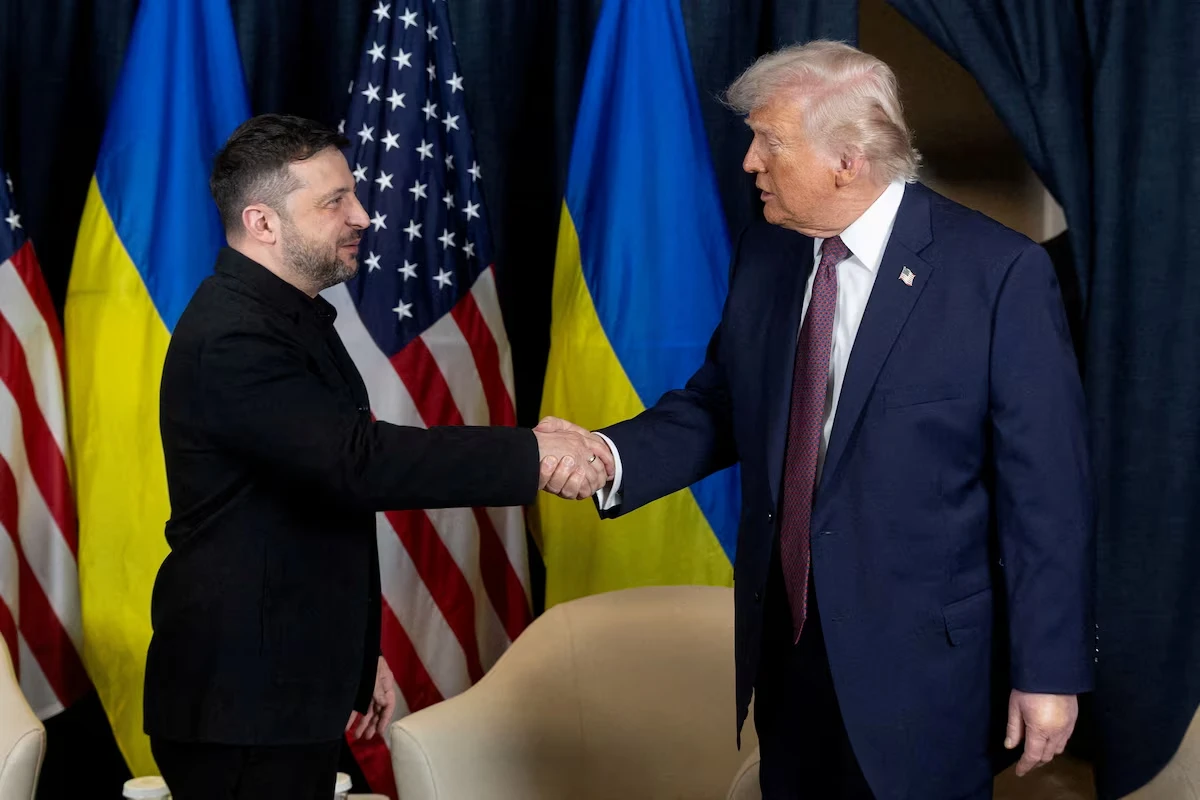


















Volodymyr Zelenskyy has publicly confirmed for the first time that Washington briefed Kyiv not about a single contact, but about a series of meetings held in Moscow over recent days. Ukraine’s president did not identify all those involved or disclose the substance of the talks, but thanked the United States for the information and for what he called the “necessary tone” in dealing with Russia.
Zelenskyy’s wording also matters because, according to his account, Ukrainian officials spoke with the Americans both before and after the Moscow contacts. That suggests at least some level of prior coordination, although it does not prove that Kyiv approved the agenda of every meeting or knew all the details in advance.
The best-known of those contacts remains CIA Director John Ratcliffe’s visit to Moscow on August 25. He met Sergei Naryshkin, head of Russia’s Foreign Intelligence Service, and other Russian intelligence officials, but did not hold a personal meeting with Vladimir Putin.
The Kremlin later said Putin had been briefed on the outcome. Naryshkin described his conversation with Ratcliffe as a working meeting and declined to reveal details. What is publicly established, therefore, is that a high-level intelligence channel was active, while no joint statement or formal agreement followed.
Daycom’s analysis indicates that the main development is not Ratcliffe’s visit itself, but the broader coordination around it: Washington is talking privately to Moscow, briefing Kyiv and maintaining separate contact with NATO allies. That looks like an effort to manage escalation while preserving room for diplomacy.
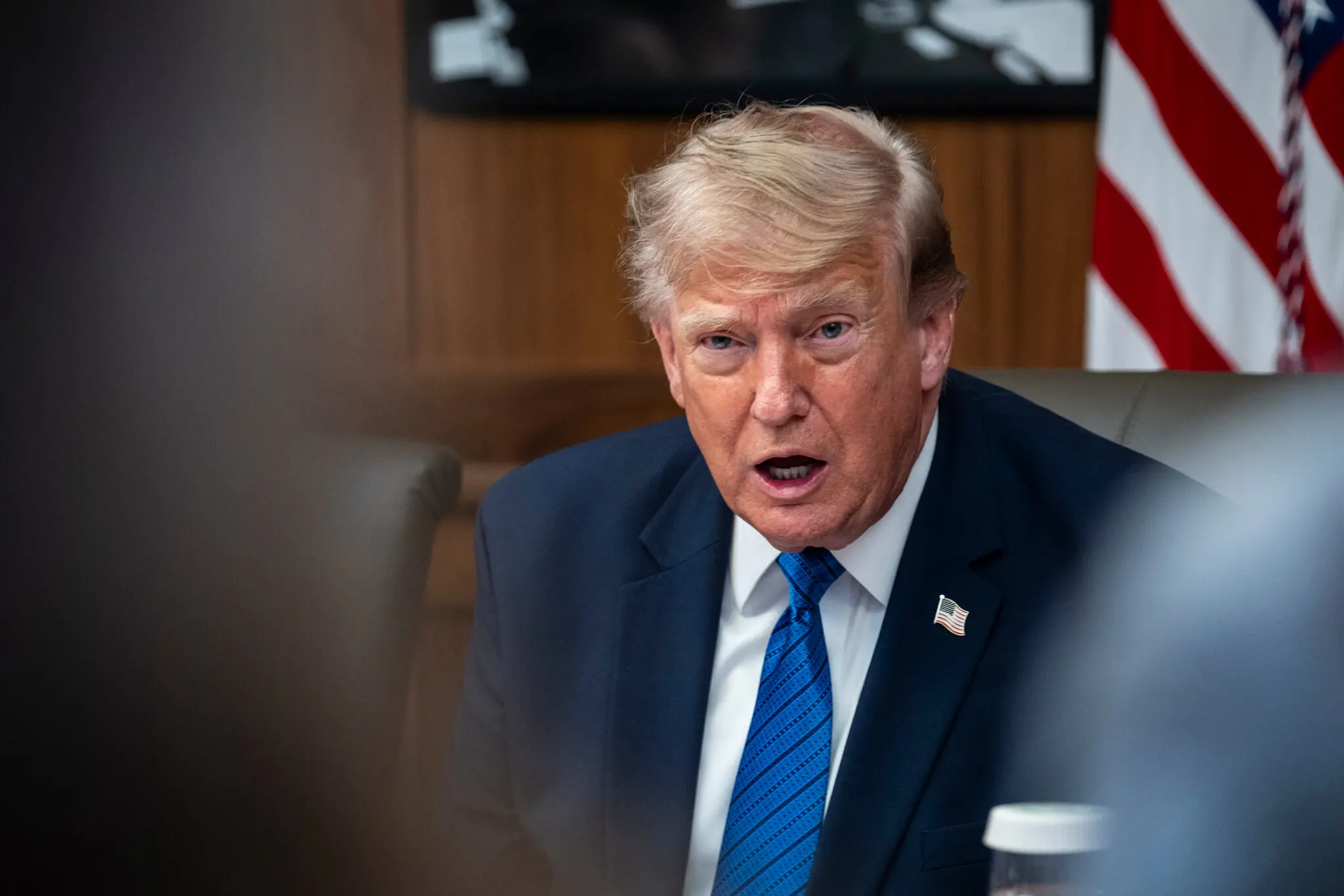
The most contentious part of the story concerns the possibility of a Russian operation against a NATO country. Donald Trump has said publicly that Putin will not attack alliance territory and played down Ratcliffe’s trip, presenting intelligence contacts between the two sides as largely routine.
Two people familiar with the discussions told Reuters, however, that Ratcliffe did raise the possibility of a Russian operation against a NATO member. They did not say that this was the only or even the main purpose of the trip, but their account confirms that the scenario was discussed.
One source also said the talks covered Russia’s support for Iran. That makes the Moscow contact broader than the war in Ukraine or relations with NATO alone: the CIA director may have used the direct intelligence channel to address several crises and communicate Washington’s position on each.
Trump’s account and the Reuters reporting are therefore not necessarily irreconcilable. The president may mean that Ratcliffe was not sent with a single formal ultimatum, while the CIA director could still have outlined American red lines regarding NATO during a wider strategic discussion.
Zelenskyy’s reference to the “necessary tone” of the conversation with Russia is especially notable. He did not explain what, specifically, he approved of in the U.S. approach, but his public remarks indicate that Kyiv does not see the Moscow channel as a negotiation conducted entirely behind Ukraine’s back.
That is a sensitive issue for Ukraine. Any direct U.S.-Russian contact inevitably raises fears that the future of the war could be discussed without Kyiv. Zelenskyy instead stressed coordination with Washington and signalled that he viewed the American approach positively.
His comments do not mean, however, that a new peace agreement is already taking shape. Zelenskyy announced no negotiated framework, no Russian concessions and no date for formal political talks. The available evidence points only to more active channels of communication.
Ukrainian officials have also spoken cautiously about possible further contacts. Kyiv expects technical discussions over the war, but has not promised a rapid breakthrough. Previous U.S.-mediated formats have failed to produce a final agreement between the sides.
Technical talks and a political settlement are different stages. The parties can discuss ceasefire mechanics, monitoring, humanitarian issues or the format of future negotiations while still remaining far apart on territory, security guarantees and the terms of a postwar settlement.
Territory remains one of the central unresolved issues. Moscow continues to demand concessions in the Donbas, including areas Russian forces do not fully control. Kyiv rejects the voluntary surrender of territory still under Ukrainian authority.
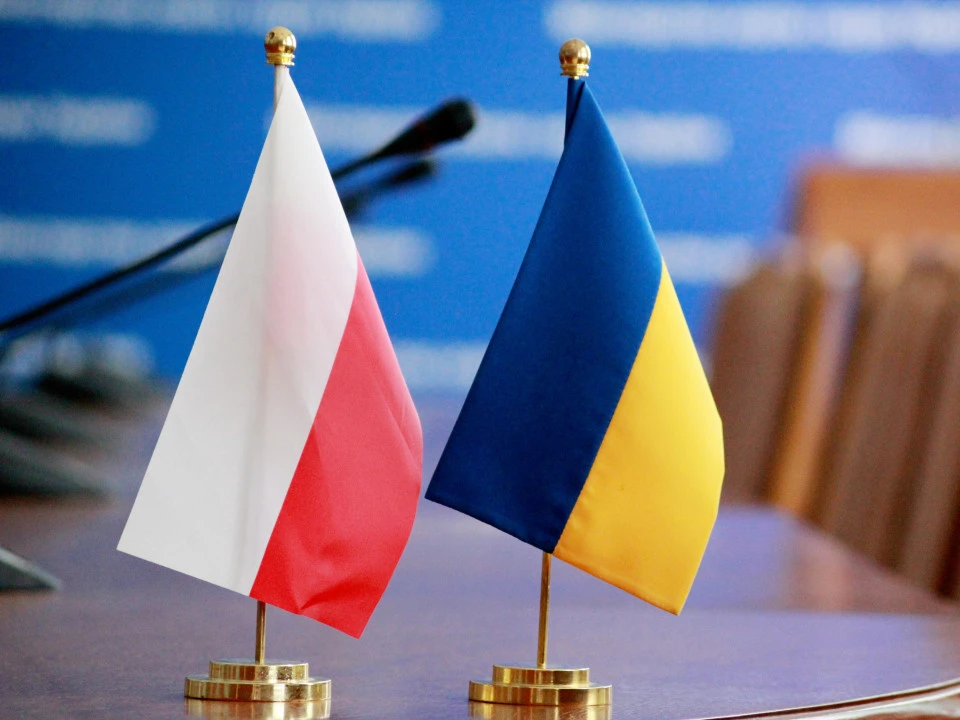
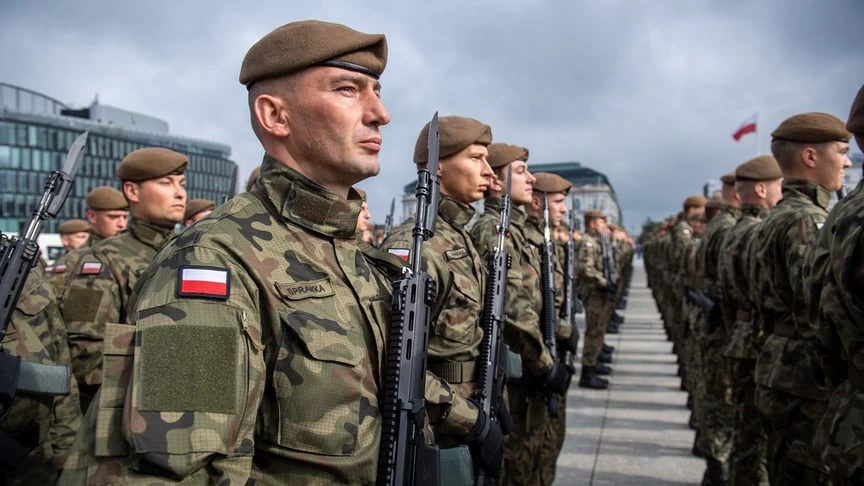
Poland has also emerged as part of the picture. Prime Minister Donald Tusk said Warsaw is in constant contact with CIA leadership and was not surprised by Ratcliffe’s visit. He added that Poland had also been informed of the need for urgent consultations with the United States at the highest possible level.
That detail is significant. Poland is both a key transit state for military assistance to Ukraine and one of NATO’s most important members on the eastern flank. If the Moscow talks touched on risks to the alliance, briefing Warsaw would fit naturally into U.S. coordination.
Tusk did not claim that Russia had already decided to attack NATO. He referred instead to public signals that Moscow may be preparing to intensify tensions both in the war against Ukraine and across the wider region, and described the coming autumn and winter as potentially important for Russia.
U.S. and European intelligence services are watching not only for the possibility of open war but also for sabotage, cyberattacks and other forms of grey-zone activity. Among the risks under consideration are operations designed to make Russian responsibility difficult to establish quickly.
That helps explain why intelligence agencies may discuss threats to NATO even while the U.S. president says he is confident there will be no full-scale attack. Their task is not simply to predict the most likely scenario, but also to prepare for events that may be less probable but extraordinarily costly.
Ratcliffe’s trip was unusual in historical terms as well. The last widely known visit by a CIA director to Moscow before this one was William Burns’s trip in November 2021, only months before Russia launched its full-scale invasion of Ukraine.
Burns used that channel to warn Moscow about the consequences of further escalation. The circumstances today are different and the two missions should not be treated as equivalent. Still, the level of representation shows that Washington continues to see intelligence contacts as useful even during extremely difficult political relations.
The United States also coordinated security-related issues with Ukraine before Ratcliffe travelled to Russia. That demonstrates a practical level of cooperation around the visit, though it does not establish that Kyiv knew the full agenda or had any role in determining what Ratcliffe discussed with Russian officials.
Against that background, Zelenskyy’s reference to several Moscow meetings takes on added importance. His wording is broader than the already confirmed meeting between the CIA director and Russian intelligence. Who took part in the other contacts, and whether all were focused on Ukraine, remains unknown.
That is precisely why the Ukrainian president’s statement should not be treated as proof that a new peace format has emerged. It confirms an information exchange between Kyiv and Washington, but does not expose the private diplomacy in enough detail to justify claims that an agreement is near.
Ukraine, meanwhile, is not shifting into a mode of waiting for diplomacy to deliver results. Kyiv continues to call for stronger long-range strike capabilities and expanded production of systems capable of intercepting newer Russian drones while keeping negotiating channels open.
That combination reflects the current phase of the war. Military pressure and diplomacy are developing in parallel rather than sequentially. Kyiv sees no contradiction between taking part in talks and continuing strikes on Russian military and war-related infrastructure while Moscow maintains its demands.
Russia, for its part, has shown no public move toward sustained de-escalation. Negotiating initiatives throughout 2026 have repeatedly run into fundamental disagreements, above all over territory and the conditions under which fighting might end.
The Moscow meetings could therefore have served several purposes at once. One is managing risk between the United States and Russia. Another is communicating warnings over NATO. A third is discussing Iran and other international issues. A fourth may be preparing the ground for another phase of talks on Ukraine.
There is no public evidence, however, that every meeting mentioned by Zelenskyy concerned the war in Ukraine. Nor is it known whether Ratcliffe took part in all of them. So far, only the direct channel between senior U.S. and Russian intelligence officials has been clearly confirmed.
For Kyiv, the fact of being briefed still carries political weight. Ukraine has insisted for years that decisions about its territory and security should not be taken without its involvement. Coordination before and after the Moscow contacts allows Zelenskyy to show that Washington is at least maintaining that informational link.
For the United States, the arrangement provides room to operate on several levels at once. The president can publicly lower the temperature, intelligence officials can address sensitive risks in private, and diplomatic teams can test the possibility of technical agreements without making sweeping promises.
Multichannel diplomacy is not, by itself, a sign that a breakthrough is close. It often emerges precisely when formal negotiations are stalled and the parties need to explore the real limits of compromise without taking on premature public commitments.
The next important indicator will be whether these contacts develop into a formal negotiating process. If technical meetings do take place, it may become clearer whether the Moscow channel was primarily an instrument of strategic risk management or also preparation for a renewed diplomatic phase.
For now, the picture is more restrained. Ratcliffe travelled to Moscow, spoke with Russian intelligence, the possibility of an operation against NATO was discussed, Poland was informed, and Ukraine received a U.S. briefing and approved the tone of the contacts.
Everything beyond that — from a broader deal to a change in the Kremlin’s position — remains unconfirmed. Washington, Kyiv and Moscow have not presented any agreement that would justify talk of a fundamental shift in the terms for ending the war.
Zelenskyy’s statement matters mainly because it opens a small window onto a mechanism that usually remains hidden. While the war continues on the battlefield and in the air, private channels among Washington, Moscow, Kyiv and Warsaw are operating in parallel to explore the limits of escalation and diplomacy.
Whether intelligence contacts become a genuine political process will depend not on the number of secret meetings, but on whether the parties are prepared to alter positions that remain incompatible. Until then, the U.S. channel with Moscow looks more like a tool for managing danger than evidence that peace is close.