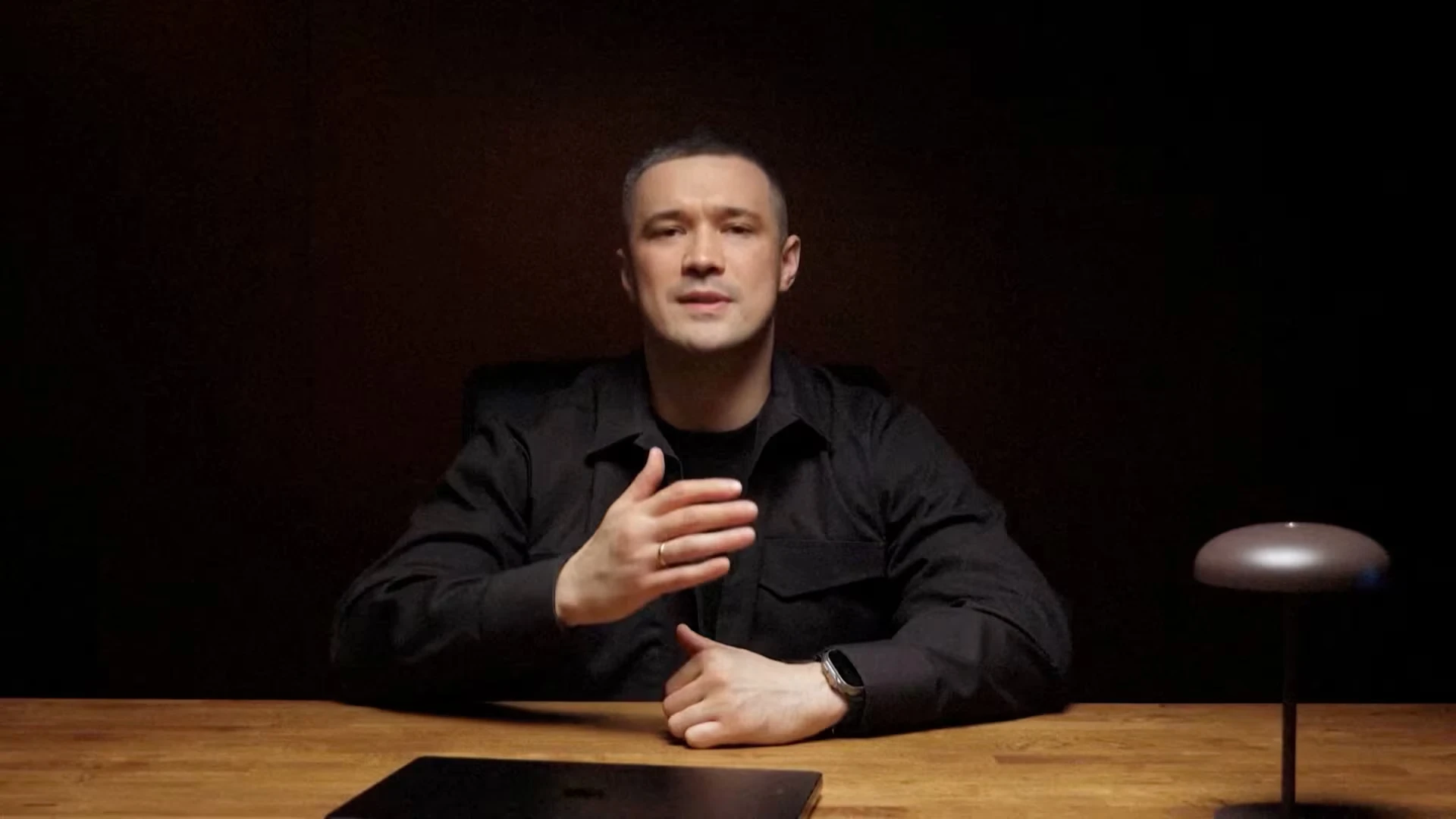















Less than two months after leaving his post as Ukraine’s defence minister, Mykhailo Fedorov has taken on a new role in Europe’s security architecture. On August 28, Italy’s Defence Ministry announced that the 35-year-old Ukrainian politician had agreed to become an adviser to Defence Minister Guido Crosetto on military innovation.
Crosetto framed the choice around Fedorov’s practical experience in digital government and wartime technology. During their meeting in Rome, the two discussed unmanned systems, air defence, emerging military technologies and the development of a more responsive defence innovation ecosystem.
Fedorov said he would help Italy adopt technologies associated with modern warfare, strengthen its defence sector and adjust to emerging global security challenges. The position is advisory: it does not place him inside the operational chain of command of the Italian armed forces.
For Rome, the attraction is not simply a list of technologies Fedorov worked with in Ukraine. Crosetto also highlighted the ability to move experimental systems rapidly into large-scale use — a challenge that increasingly exposes the limits of traditional European defence procurement.
Daycom’s analysis indicates that Fedorov’s appointment matters less as a personal career move than as evidence of Ukraine’s changing role in European defence. A country that spent years asking partners for weapons is increasingly supplying something else in return: knowledge of how technology behaves in a real, adaptive war.
Fedorov became Ukraine’s defence minister in January 2026 after years at the centre of the country’s digital transformation. His earlier record included the Diia platform, the introduction of Starlink, the Army of Drones initiative, the Brave1 defence-tech cluster and efforts to open the market for drones, electronic warfare and ground robots.
By the time he moved into the Defence Ministry, Brave1 brought together more than 2,350 companies and over 4,900 developments. The Ukrainian model relied not only on state contracts, but on competition among private producers, rapid battlefield testing and quick scaling of systems that proved useful under combat conditions.
Fedorov tried to carry that logic into defence procurement. In the spring, the ministry said demand for drones should increasingly be generated from frontline performance data, allowing the state to prioritise systems that had already demonstrated effectiveness rather than relying only on conventional procurement cycles.
Another part of the model sought to create a more direct connection between combat units and manufacturers. Through Brave1 Market, military formations could use points earned for battlefield results to order drones and other equipment suited to their immediate needs.
By the summer, Brave1 had reported nearly 1,000 grants worth more than 5.8 billion hryvnias. Fedorov identified battlefield robotics, inexpensive cruise missiles with AI components, lower-cost short-range air-defence radars and directed-energy technologies among the areas Ukraine needed to accelerate.
His six months at the Defence Ministry, however, ended in conflict rather than political triumph. Reforms to procurement and mobilisation brought him into confrontation with parts of the military establishment and political rivals, exposing deeper arguments over how Ukraine’s war effort should be managed.
One of the central tensions was the gap between Fedorov’s technology-driven approach and the culture of a traditional military hierarchy. Reuters described serious disagreements with Commander-in-Chief Oleksandr Syrskyi over management, reform and the integration of new systems into combat practice.
His dismissal did not mean the underlying technological approach had been rejected as a failure. Crosetto offered him the Italian advisory role soon afterwards, praising Fedorov as one of the figures who had driven military innovation and helped Ukraine regain elements of initiative against Russia.
For Italy, that experience is arriving at a moment when the country is reassessing its own concept of defence. Rome is increasing military spending, discussing new industrial programmes and trying to understand how cheap, mass-produced drones alter the value of more traditional and expensive weapons.
Prime Minister Giorgia Meloni has already pointed to the Ukrainian battlefield as evidence that relatively inexpensive drones can neutralise systems costing many times more. For European militaries, that means reconsidering not only procurement priorities but the basic economics of combat power.
Italy’s Defence Ministry is also developing a broader strategy for artificial intelligence. AI is increasingly being treated not as an experimental niche but as a strategic capability likely to affect planning, intelligence, logistics, targeting support and autonomous systems.
That is where Ukrainian experience may be particularly valuable. Ukraine is applying algorithms in an environment where software, sensors and drones must function despite electronic warfare, infrastructure strikes, resource shortages and constant enemy adaptation.
Shortly before his Italian appointment was announced, Fedorov said some of the technologies he considered essential to changing the battlefield included AI-enabled autonomous drones, cheaper interceptor missiles and domestic ballistic systems. He also argued for saturating the front with sensors and reducing human exposure in the most dangerous zones.
His broader argument was that Ukraine already possesses many of the technologies it needs but lacks a sufficiently coherent system for scaling them. Crosetto has effectively identified the same problem: knowing that a technology exists is not enough if a defence system cannot move it quickly from experiment to operational use.
That is one of the most important differences between Ukraine’s defence-tech sector and much of Europe’s. War has compressed the cycle from idea to battlefield from years to months, and sometimes weeks. A system that cannot survive Russian jamming may become obsolete before a conventional procurement process is complete.
European armed forces have historically operated differently: lengthy tenders, multi-stage testing, large programmes built around complex platforms and budget plans measured in years. That remains necessary for fighters, warships and major air-defence systems, but it is less suited to the speed of change in drones and software.
Ukraine has effectively become a test ground for an alternative model. Manufacturers constantly change frequencies, control links, navigation methods, recognition algorithms and drone designs in response to Russian countermeasures. A successful system today may require major modification only months later.
Western governments are increasingly interested in that experience. Britain has expanded cooperation with Ukraine in defence artificial intelligence, including work involving battlefield data and automated target-recognition technologies.
Other partners are pursuing Ukrainian drone systems, joint production and technology exchanges. As a result, Ukraine’s defence-tech sector is gradually evolving from an internal survival mechanism into a distinct branch of international defence cooperation.
For Italy, this development coincides with rising defence funding and wider European efforts to expand industrial capacity. Fedorov’s advice may therefore matter less in choosing one particular drone than in redesigning the system through which new military technology reaches troops.
The central question is how to create a structure in which soldiers rapidly report what works, manufacturers quickly modify products, and the state scales systems that prove effective under real conditions rather than those that merely succeed in formal trials.
For Italy’s large defence companies, this does not necessarily require abandoning traditional programmes. More likely, it means creating a second track: a faster ecosystem for drones, sensors, software and countermeasures operating alongside long-cycle programmes for major platforms.
Counter-drone defence is an especially urgent example. The war in Ukraine has shown that destroying inexpensive UAVs with costly missiles is sustainable only on a limited scale. Militaries need combinations of electronic warfare, mobile fire teams, interceptor drones, automated detection and cheaper kinetic systems.
That is why Crosetto specifically raised unmanned systems and air defence in his talks with Fedorov. They are two sides of the same technological competition: how to use inexpensive autonomous systems at scale, and how to defeat them without spending weapons that cost many times more than the target.
For Fedorov himself, the Italian role offers a way to remain at the centre of the international defence-technology debate after his abrupt exit from Ukraine’s government. His relationship with Kyiv, however, remains politically complicated after he publicly criticised the management of the war.
After leaving office, Fedorov argued that Ukraine needed a significant strategic reset, criticised inefficiency in state institutions and warned of the risk of gradual deterioration without faster change. Ukrainian officials, in turn, noted that his public tone became more critical after he lost his ministerial post.
That gives the Italian appointment a paradoxical quality. Fedorov’s approach proved contentious enough inside Ukraine to coincide with his removal after six months, yet attractive enough to a major NATO country for its defence minister to seek his advice directly.
For Ukraine, there is a wider lesson. Some of its most valuable defence exports may not be finished drones or missiles, but institutional knowledge: how to create competitive markets, use battlefield data, shorten procurement cycles and scale systems while the enemy changes tactics continuously.
Equally important is Ukraine’s experience of working with smaller technology firms. Many systems that reshaped the battlefield emerged not from giant defence corporations but from teams able to redesign products quickly after feedback from troops and field a new version in a short period.
Italy now has to decide which parts of that model can be transferred into a much larger, more bureaucratic peacetime system without losing its central advantage — speed. Ukraine’s approach was forged under pressure for survival; European governments must learn how to reproduce its strengths before facing comparable pressure themselves.
Not every Ukrainian wartime solution can be copied directly. NATO militaries have different command structures, safety standards, legal frameworks and certification requirements. Some battlefield practices born of emergency conditions would not translate cleanly into a conventional European force.
The real value of Fedorov’s experience therefore may lie less in reproducing specific Ukrainian mechanisms than in adopting the underlying principle: a defence system must recognise technological change quickly, test it rapidly and avoid waiting years while an adversary advances to the next generation.
His appointment also changes the way Ukraine’s role in NATO’s security ecosystem can be understood, even though Ukraine is not a member of the alliance. Its combat experience is increasingly feeding into the doctrines, procurement debates and technology programmes of countries that once viewed Kyiv mainly as a recipient of support.
The flow of expertise is becoming two-way. Europe continues to provide Ukraine with weapons, financing and industrial capacity, while Ukraine is giving Europe practical lessons in mass drone warfare, electronic warfare, digital command systems and accelerated defence production.
Fedorov’s new job therefore extends far beyond the career of one former minister. It is another sign that after years of full-scale war, Ukraine is becoming not only a country Europe must help arm, but also a source of knowledge about how the weapons, industrial systems and military institutions of the next war may have to work.