

















Six months after the start of large-scale U.S.-Israeli strikes, Iran remains the same Islamic Republic that Washington had hoped to force into a fundamental change of behavior. The country’s military capabilities have suffered heavy losses, but its political system has not collapsed and no rapid American strategic victory has followed.
Operation Epic Fury began on February 28. Washington described its objectives as eliminating the threat from Iran’s nuclear program, weakening its missile arsenal, naval forces and network of allied armed groups. Within the opening weeks, U.S. commanders were already reporting thousands of targets struck and extensive damage to Iranian military infrastructure.
The political expectations were even more ambitious. Donald Trump appealed directly to Iranians at the start of the campaign, linking the strikes to the prospect of freedom from their current rulers. Yet there was no mass uprising, no decisive split within the leadership and no rapid breakdown of state institutions.
Tehran survived the death of Ayatollah Ali Khamenei and other senior political and military figures, transferred supreme authority to his son Mojtaba Khamenei and retained control of the security apparatus. The new supreme leader remained out of public view for an extended period after being wounded, while his office continued issuing political statements.
Daycom’s analysis indicates that the central contradiction of the U.S.-Iran war is the gap between military destruction and political coercion. Washington has demonstrated that it can inflict immense physical damage on Iran, but it has yet to show how that damage can be converted into Tehran accepting American terms.
By August, the Trump administration had effectively defined the next phase of pressure as economic. The Treasury Department launched Operation Economic Outcast, a campaign designed to restrict Iran’s financial channels, oil revenues and ability to bypass sanctions through third countries.
Treasury Secretary Scott Bessent said Washington intended to cut off the major economic arteries sustaining the Iranian system. U.S. authorities began increasing pressure on banks, intermediaries and entities in third countries accused of helping Tehran conduct international transactions and move money.
This is broader than another sanctions package aimed at a handful of generals or companies. The United States is trying to raise the cost for banks, traders, shipping operators and governments that help Iran sell oil, obtain foreign currency or process payments. In practice, the objective is to narrow Tehran’s external economic space as far as possible.
The problem is that Iran has lived under severe sanctions for decades. Over time, it has built networks of intermediaries, opaque financial arrangements, barter mechanisms and trade through friendly states. New restrictions can make those systems more expensive, but they do not necessarily destroy them quickly.
The economy is nevertheless under severe strain. International projections point to a sharp contraction in real GDP and exceptionally high inflation in 2026. For ordinary households, that means falling purchasing power, more expensive essentials and the rapid erosion of savings.
This is where the central political paradox of the American strategy emerges. Economic pressure is intended to force the leadership to change course, but its first effects are felt not by commanders of the Islamic Revolutionary Guard Corps, but by families paying for food, medicine, fuel and housing.
The economic crisis is compounded by the direct humanitarian consequences of the war. In the spring, millions of people were temporarily displaced inside Iran, particularly from Tehran and other major cities. The scale varied with the intensity of the strikes, but the movement exposed the vulnerability of the civilian population.
The number of Iranians killed remains disputed, and there is still no fully independently verified total. The death toll is in the thousands and includes civilians and children. The United States has also suffered casualties, with American service members killed during the conflict.
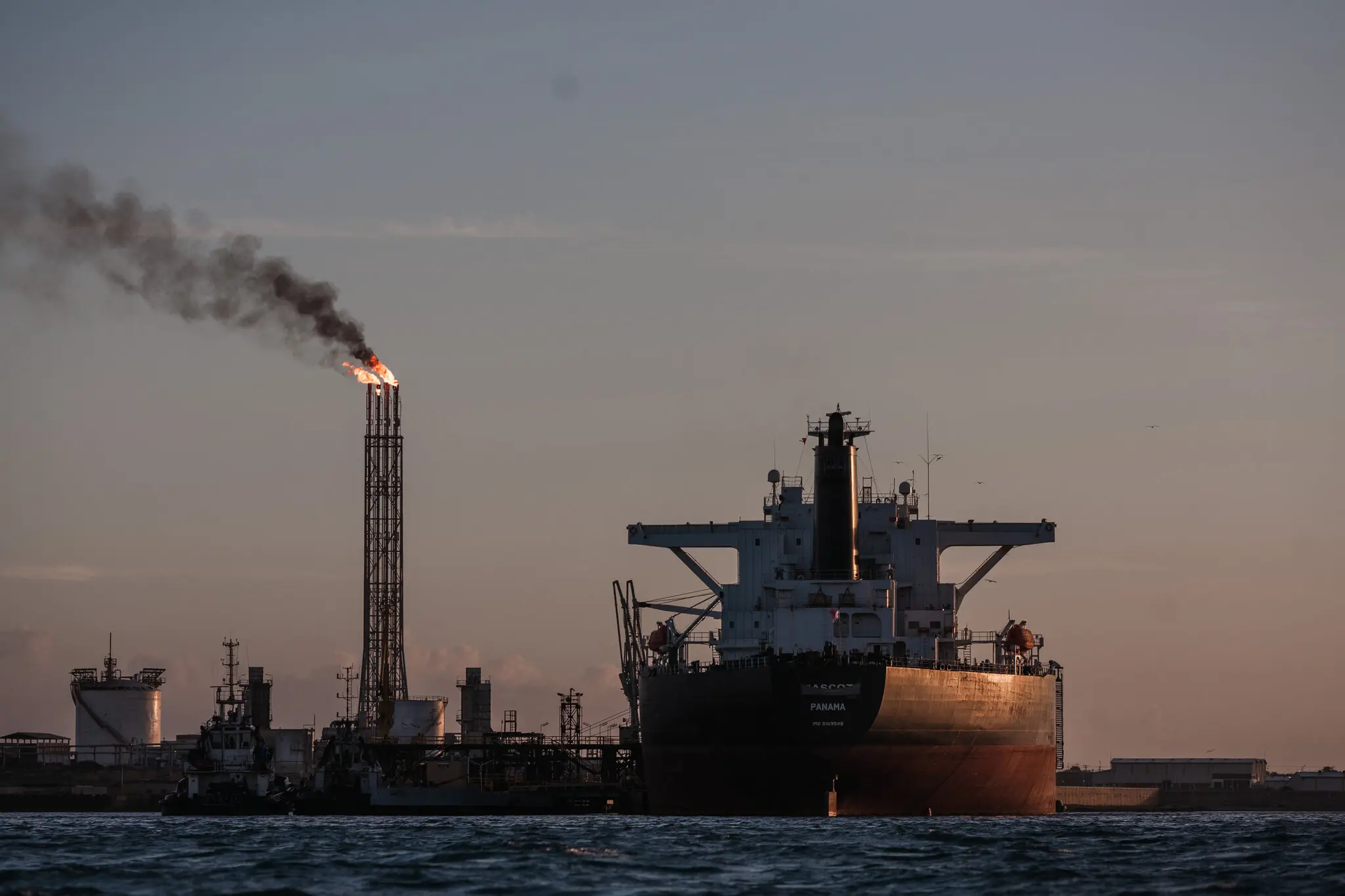
The cost of the war has extended far beyond the two countries. Iran retaliated with missiles and drones against U.S. facilities and American allies across the region, while Tehran’s most important strategic lever became the Strait of Hormuz, the narrow waterway through which a significant share of the world’s oil and gas supplies passes.
Control of the strait has become one of the central paradoxes of the campaign. Iranian military officials claim they exercise full control over it, while Washington says American forces secure the principal shipping routes and protect commercial vessels.
In reality, neither side enjoys unrestricted control. The United States can protect shipping and blockade selected Iranian ports. Iran, meanwhile, retains missiles, drones, fast boats and the geographic proximity needed to keep international shipping under constant pressure.
In June, it briefly appeared that this problem had been moved into a diplomatic framework. The United States and Iran signed a memorandum providing for a halt in fighting and the restoration of safer commercial passage through the Strait of Hormuz.
Oman, acting as an intermediary, continued talks over a future maritime arrangement. Tehran and Muscat emphasized safe navigation under international law and the rights of coastal states.
That framework soon broke down. In early July, U.S. commanders accused Iran of attacks on commercial shipping, after which the United States intensified military strikes again. Dozens of military targets were hit over several nights, including command facilities, missile infrastructure and drone sites.
What had looked like a diplomatic opening in June proved to be little more than a pause between phases of confrontation. Washington argues that Iran violated the arrangement through attacks on shipping. Tehran, in turn, accuses the United States of failing to honor its commitments and maintaining military and economic pressure.
That experience matters directly for the new sanctions campaign. Even if economic deterioration eventually pushes Iran back to the negotiating table, its leaders will have reason to ask why a new agreement should last longer than the June memorandum.
The problem of trust works in the opposite direction as well. The Trump administration may view any Iranian concession as a temporary maneuver designed to reduce pressure before Tehran resumes military activity. Both sides are therefore increasingly inclined to treat compromise as a potential trap.
Washington’s public objectives have also shifted noticeably. At first, the emphasis was on the nuclear program, missiles, naval power, allied groups and the freedom of ordinary Iranians. The new economic campaign is framed more narrowly around isolating the regime and depriving it of financial resources.
But the link between isolation and a specific political outcome remains unclear. Is Iran expected to give up part of its military capacity? Fully reopen the strait? Accept a new nuclear deal? Or does Washington still hope for regime change? There is no single public answer.
Sanam Vakil argues that the campaign has not delivered the American objectives that were originally set out. Suzanne Maloney similarly points out that massive physical destruction does not amount to strategic victory if the Iranian system continues to function and adapt.
Esfandyar Batmanghelidj highlights a different weakness in sanctions policy: economic coercion works best when the target knows exactly what behavior must change in exchange for relief. Without that clarity, economic pain alone does not create a route toward agreement.
Sina Toossi reduces the dilemma to its essentials: the capacity to hurt Iran is obvious, but the path from that pain to capitulation or political collapse is not. That gap between the ability to punish and the ability to produce a desired decision remains central after six months.
At the same time, the regime has responded to external pressure by tightening internal control. International human-rights mechanisms continue to document reports of death sentences, torture allegations, arbitrary detention and violations of fair-trial rights.
That makes any assumption of an automatic link between economic crisis and revolution especially risky. Impoverishment can deepen public anger, but an authoritarian state can simultaneously expand repression, information control and the role of the security services.
Even when dissatisfaction rises, it does not necessarily turn exclusively against the government. After external bombardment, parts of society can oppose the regime while also viewing American pressure as a threat to the country itself. That dual reaction complicates any strategy built on expectations of rapid internal revolt.
Iran’s leadership appears to operate according to the opposite logic: the survival of the political system is equated with the survival of the nation. That allows the authorities to frame economic losses as a necessary sacrifice and demand public endurance in what they describe as an externally imposed war.
Mojtaba Khamenei has also called for stronger coordination among Gulf states against external adversaries. The message suggests that Tehran does not see itself as a government preparing to capitulate, but as one trying to rebuild and reshape its regional relationships.
For the Gulf monarchies, the past six months have produced their own lesson. They have seen that overwhelming American military superiority does not eliminate Iran’s capacity to strike bases, infrastructure or shipping. That gives them an incentive to preserve close ties with Washington while keeping channels with Tehran open.
This is one of the unintended strategic effects of the conflict. The United States sought to reduce Iran’s regional influence, yet Iran’s neighbors now have an additional reason to maintain a working relationship with Tehran simply to reduce the risk of new attacks on their own territory.
The war has also collided with one of Trump’s core political identities: a president who promised not to entangle the United States in another prolonged Middle Eastern conflict. Six months later, tens of thousands of American troops remain in the region and the confrontation has already passed through bombing, a ceasefire, renewed escalation and blockade.
The shift to economic warfare partly lowers that political risk. Sanctions do not produce daily images of American airstrikes and do not require constant explanations for new combat losses. Ahead of the November midterm elections, that form of pressure is considerably easier for the White House to sustain politically.
But the economic campaign does not remove the danger of another military phase. If Iran responds with attacks on shipping or American facilities, Washington has already shown that it is prepared to move from sanctions back to airstrikes. The July escalation after the June memorandum illustrated that cycle clearly.
The result is an unstable equilibrium. The United States can tighten pressure on the Iranian economy, while Tehran can raise the cost and risk of shipping through the Strait of Hormuz and retain the threat of regional retaliation. Neither side has yet achieved enough to present compromise as victory.
The most dangerous scenario is that economic pressure does not replace the war but merely becomes an interval before its next round. The worse Iran’s situation becomes, the stronger the temptation may be to use the strait or military strikes to force Washington back into bargaining.
The Trump administration, in turn, may interpret any such move as proof that sanctions are insufficient and that another military operation is required. Under that logic, each side confirms the other’s worst assumptions and the space for a durable settlement grows narrower.
Six months of the U.S.-Iran war therefore produce a deeply mixed record. American forces have inflicted enormous damage on Iran’s military infrastructure, and the sanctions system can deepen the country’s economic crisis. Yet the regime remains in place, its security institutions still function and the core political disputes remain unresolved.
The most important change has occurred not in Tehran, but in Washington’s own strategy. In February, the United States tried to solve the problem quickly through air superiority. By August, it was relying on banks, oil flows, insurance, shipping and secondary sanctions.
This is a slower war and one that is harder to measure in destroyed targets. Its human cost, however, can accumulate for years. Inflation, shortages, falling incomes and the erosion of normal economic life do not guarantee regime change, but they do make life worse for millions of people.
Six months in, the central question is therefore no longer whether the United States can hurt Iran further. It clearly can. The unanswered question is what specific decision by Tehran Washington would consider sufficient to stop the pressure — and whether the current strategy is capable of producing that decision at all.