



























Britain’s local elections have become more than a bad night for Keir Starmer. They delivered an early verdict on the pace of his premiership. Labour began losing hundreds of council seats, while Nigel Farage’s Reform UK converted public frustration into real mandates.
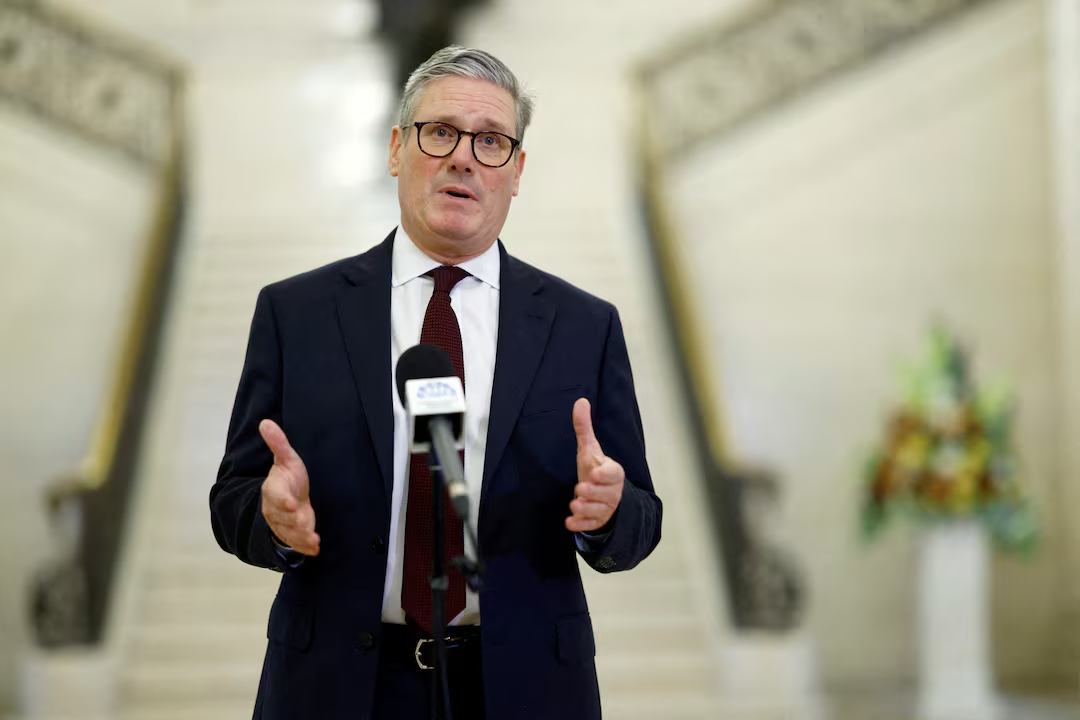
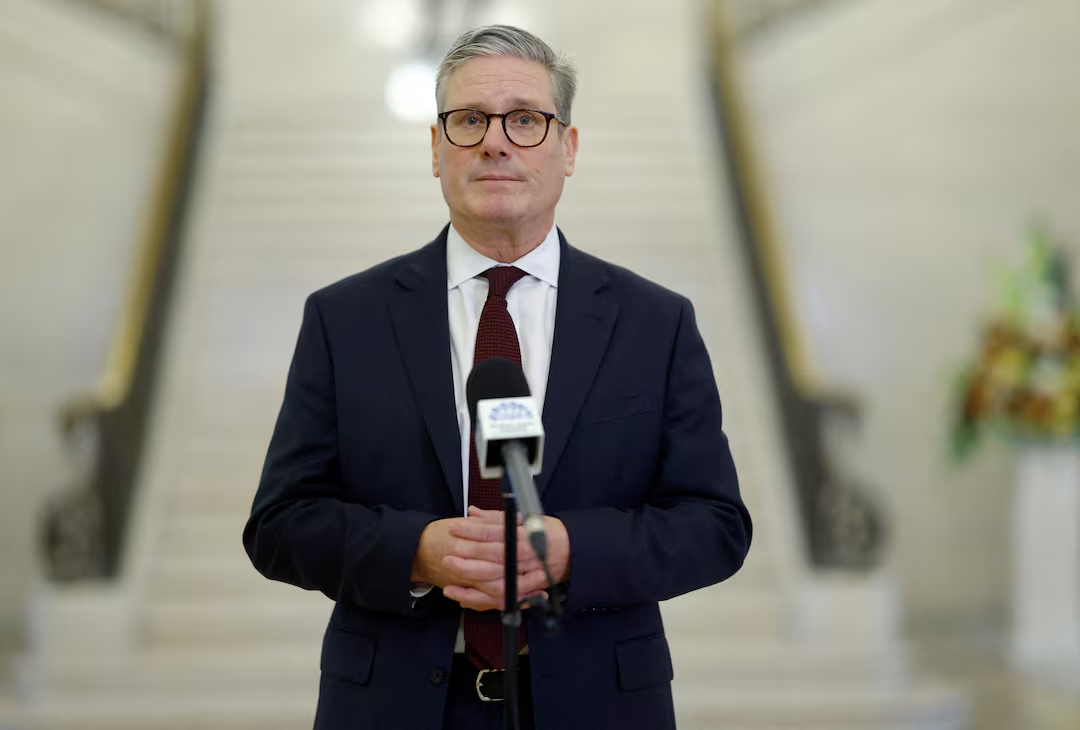
Starmer acknowledged the blow almost immediately. He said he took responsibility for the losses, would not “sugarcoat” voters’ message and understood their anger over the pace of change. But he also rejected resignation, warning that walking away would plunge the country into chaos.
By Friday morning, Labour had already lost almost 260 council seats in England. Reform UK had gained close to 400. With roughly 5,000 seats still being contested, the political direction was already clear: British voters are punishing the old centers of power.
Britain’s local elections have become more than a bad night for Keir Starmer. They delivered an early verdict on the pace of his premiership. Labour began losing hundreds of council seats, while Nigel Farage’s Reform UK converted public frustration into real mandates.
Starmer acknowledged the blow almost immediately. He said he took responsibility for the losses, would not “sugarcoat” voters’ message and understood their anger over the pace of change. But he also rejected resignation, warning that walking away would plunge the country into chaos.
By Friday morning, Labour had already lost almost 260 council seats in England. Reform UK had gained close to 400. With roughly 5,000 seats still being contested, the political direction was already clear: British voters are punishing the old centers of power.
According to Daycom’s earlier analysis, these elections matter not only because of Labour’s losses. They reveal a deeper shift: Britain’s two-party system is struggling to contain public discontent, which is now moving right, left and toward centrist alternatives at the same time.
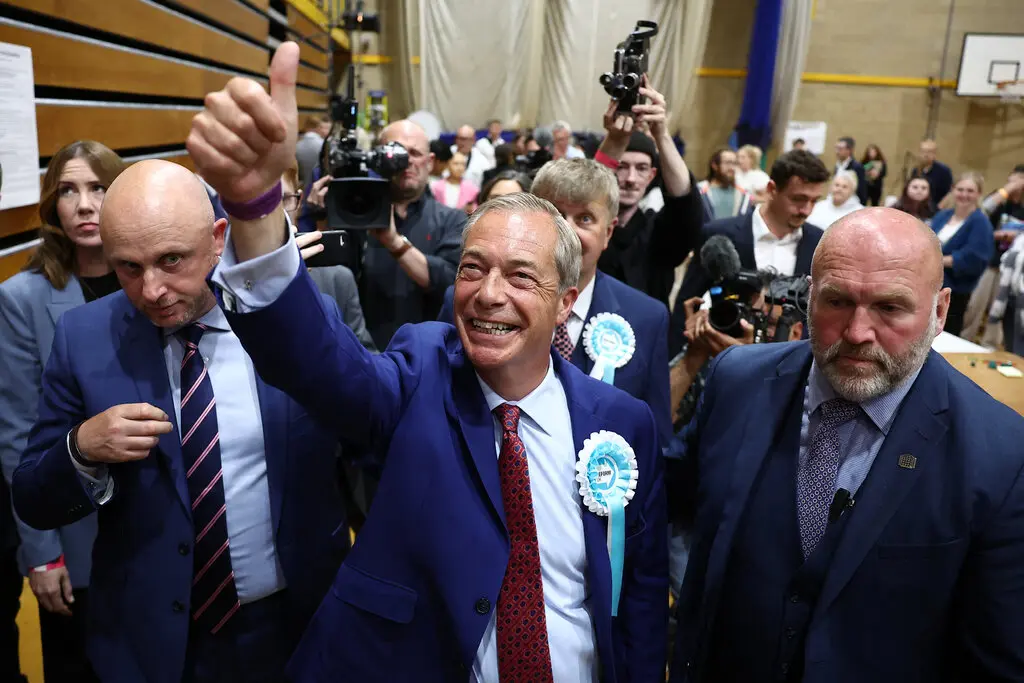
Farage called the results historic and said Reform UK should now be treated as a national force. That was more than triumphal rhetoric. If the party can win large numbers of local seats, it moves beyond television protest and begins building organizational power on the ground.
That is what British right-wing populism long lacked. It had slogans, media figures, Brexit as a political myth and a strong anti-elite emotion. But without local structures, it remained mostly a campaign machine. Farage is now trying to turn anger into a network.
For Starmer, this is more dangerous than an ordinary midterm loss of popularity. His government has been in office for only 22 months, yet it is already carrying the exhaustion usually associated with much older administrations. Voters do not see enough improvement in daily life, and economic pressure is shortening their patience.
Labour came to power after 14 years of Conservative rule, promising order, competence and the restoration of public services. But the inheritance was severe: high living costs, weak growth, debt pressure, a housing crisis, an overburdened health system and deep distrust of the political class.
Starmer chose caution: discipline, fiscal restraint, gradual reform and a refusal to promise quick miracles. That model was meant to reassure markets and restore seriousness to government. But to voters waiting for tangible relief, it increasingly looks like slowness.
The energy shock and rising borrowing costs have made the problem worse. The government cannot easily spend more, because markets are already watching British debt closely. It cannot slash spending aggressively, because society is exhausted. It cannot quickly cut taxes, because fiscal space is narrow.
In that trap, every political choice carries a bad price. Discipline irritates voters. Generosity alarms investors. Caution looks like weakness. Boldness risks fresh financial nervousness. That is why the local elections became not only a vote on councils, but a plebiscite on a feeling of deadlock.
The Conservatives have not found an easy route back either. Their 14-year record remains toxic for many voters, while Reform UK is taking those who want a harder right-wing answer. The traditional opposition is no longer the automatic beneficiary of government failure.
That is the central change in British politics. In the past, the fall of one major party almost guaranteed the rise of the other. Now disappointment is dispersing. Right-wing voters are moving toward Farage. Some moderates are turning to the Liberal Democrats. Left-wing and environmentally minded voters are strengthening the Greens.
Early results have already shown gains for both the Liberal Democrats and the Greens. That means Starmer is not losing to one opponent, but to a field of alternatives. For a government, that is much harder: one policy turn cannot bring back voters who have scattered in different directions.
Wales may become especially sensitive. If Labour loses dominance in a place where it has prevailed for generations, that would be a symbolic blow to the party’s historic core. It would mean erosion has reached not only protest areas, but traditional strongholds.
Scotland remains another crucial part of the wider picture. British politics there has long refused to fit a simple Labour-Conservative pattern. Any weakening of Starmer’s position in Scotland would complicate his national strategy before the next general election.
For Farage, the moment is almost ideal. He can attack Labour as the government, the Conservatives as the failed old order and present himself as the only politician speaking the language of anger. His strength lies not in a detailed governing program, but in giving voters a simple explanation for a complex crisis.
That is where the risk for Britain begins. When a country enters a period of expensive debt, high inflation, weak growth and fatigue with traditional parties, populist politics finds its best soil. It does not need to answer every budget question. It only needs to persuade people that everyone else is to blame.
Starmer insists he will not leave. Formally, that is the correct position: resignation after local elections could indeed throw the country into a fresh crisis of governability. Politically, however, he now has to prove that staying means more than waiting out the storm.
His central task is to produce visible results faster without breaking fiscal discipline. That is one of the hardest assignments for any modern government: improve voters’ lives quickly while keeping market trust and preventing a split inside the ruling party.
The first local election results are not yet a forecast for the next general election. The political landscape can still change before 2029. But they already show the direction of danger: Labour’s majority has not become durable trust, and protest against the old system has found a new organizational form.
British politics is entering a period in which power can no longer rely on the weakness of its opponent. Starmer will have to compete not only with Farage or the Conservatives, but with voters’ own feeling that the promised change has not arrived. That feeling has now become the strongest opposition in British politics.





 Девід Кемерон обіймав посаду прем'єр-міністра з 2010 по 2016 рік, пішовши у відставку після того, як Велика Британія проголосувала за вихід з Європейського Союзу на референдумі, який він скликав — Джастін Талліс
 Тереза Мей взялася за складне завдання переговорів щодо виходу країни з Європейського Союзу — Аріс Ойконому
 Борис Джонсон в останній день на посаді у вересні — Генрі Ніколлс
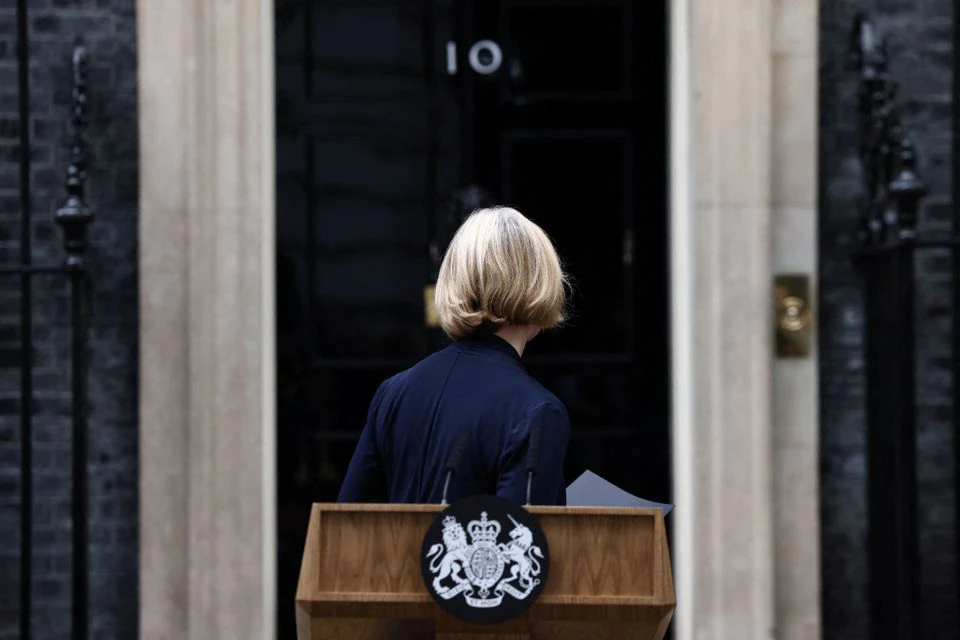 Прем’єр-міністр Великобританії Ліз Трасс оголошує про свою відставку, а її чоловік Х’ю О’Лірі стоїть поруч біля Даунінг-стріт, 10, Лондон, Великобританія, 20 жовтня 2022 р — Через Reuters
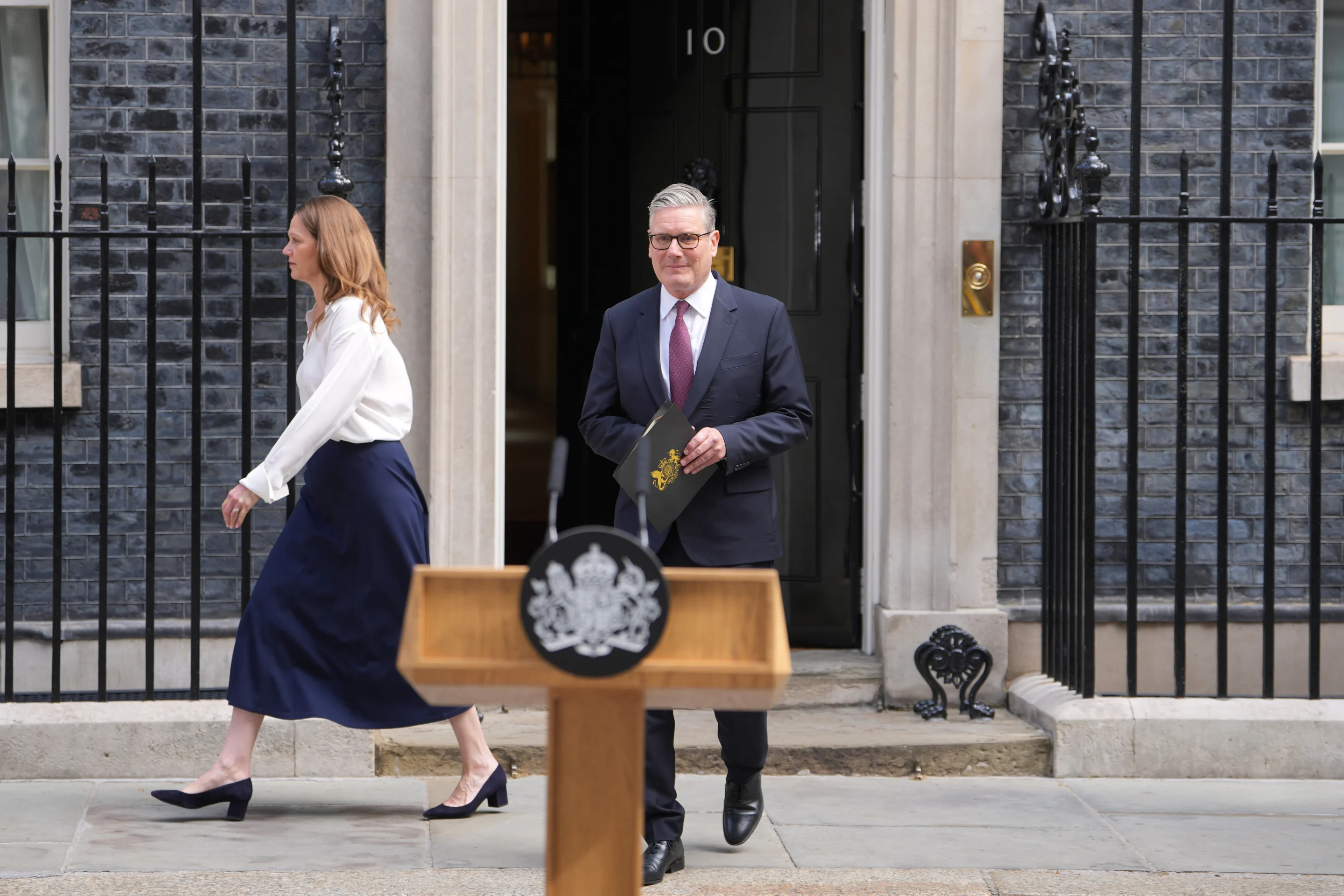
 Ріші Сунак під час своєї промови біля Даунінг-стріт, 10, перед тим, як зустрітися з королем Карлом III, щоб подати заяву про відставку у 2024 році — Кін Чеунг


 Прем'єр-міністр Кір Стармер проводить передвиборчу кампанію за Лейбористську партію в Лондоні у вівторок. Очікується, що його партія втратить багато місць — Карл Корт
 Найджел Фараж, лідер партії Reform UK, під час передвиборчої кампанії в Лідсі у березні — Олі Скарфф
 Мурал у Тредегарі, Уельс, із зображенням Анейріна Бевана, героя Лейбористської партії, який допоміг створити Національну службу охорони здоров'я Великої Британії — Ендрю Теста




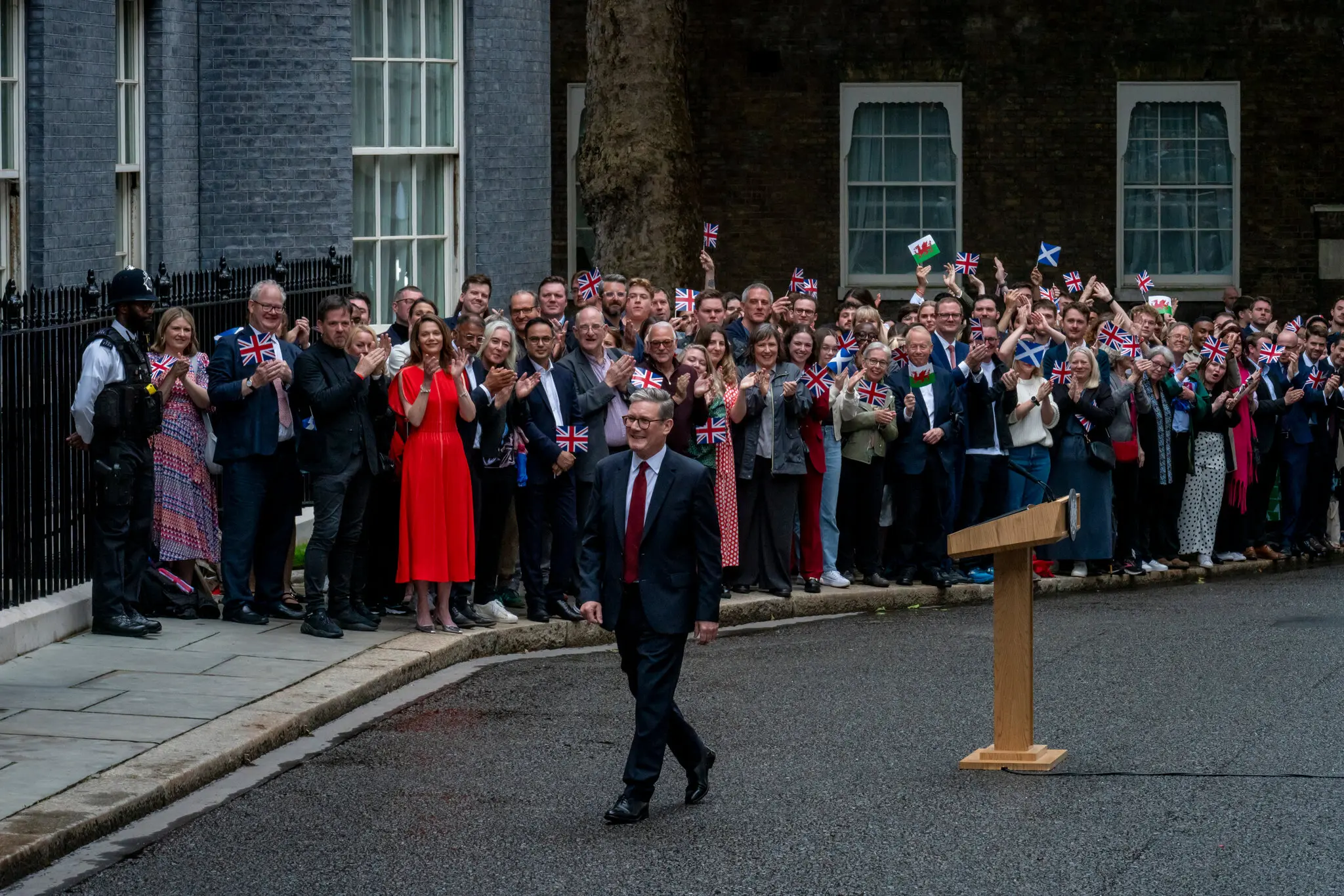

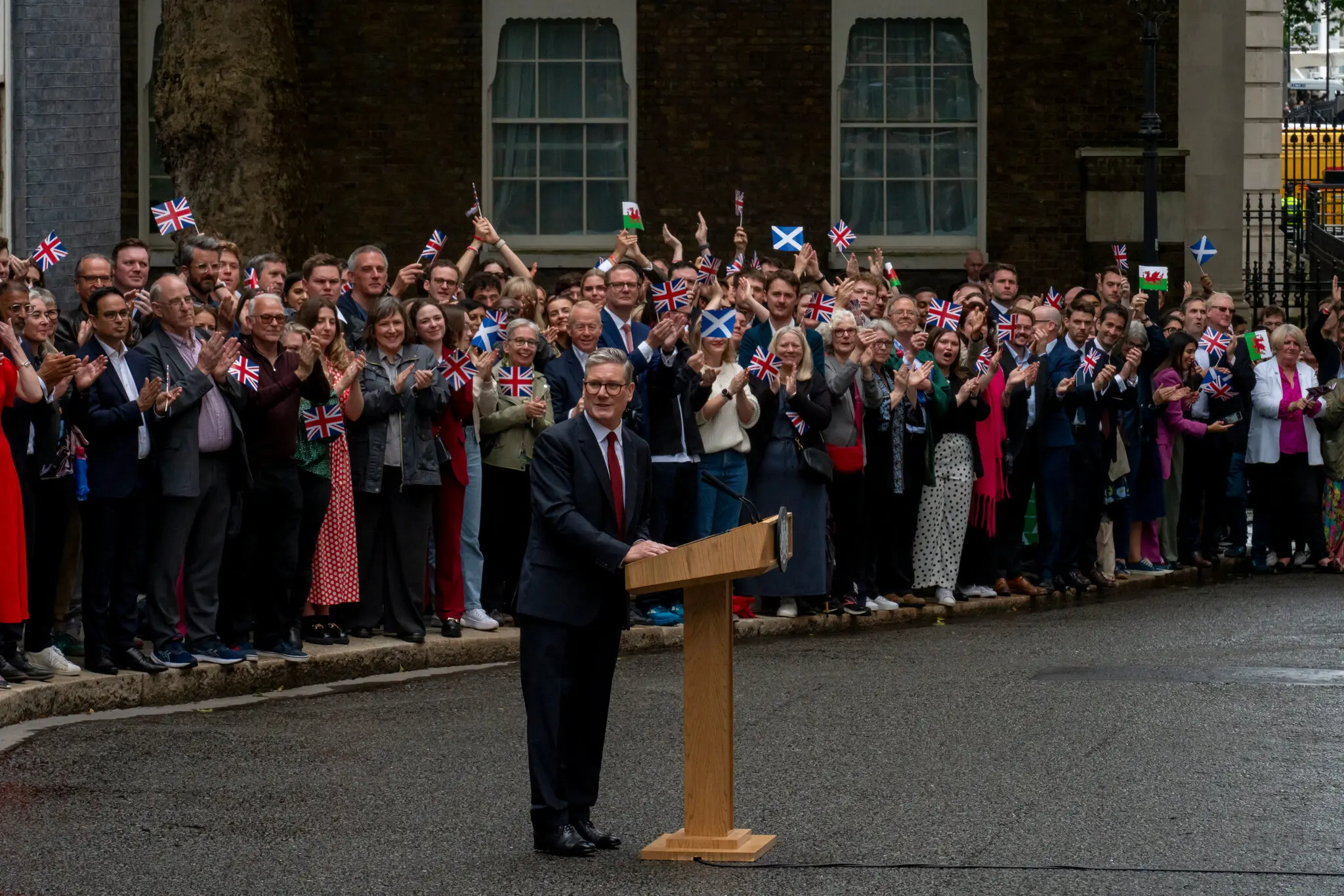
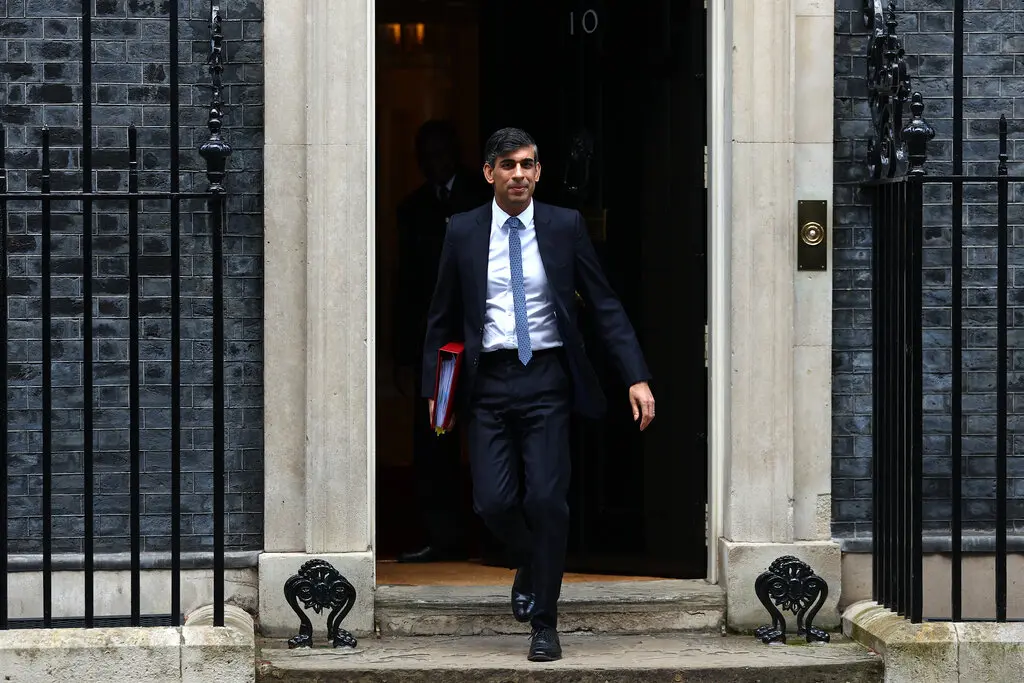
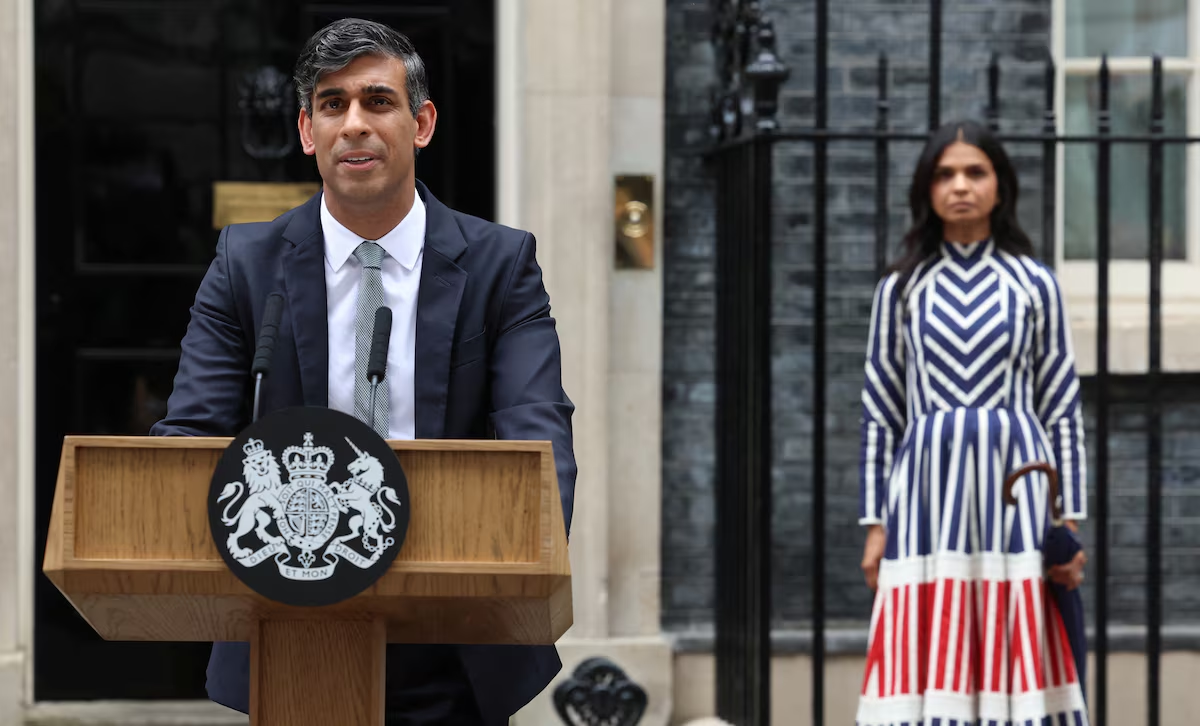 Прем'єр-міністр Великої Британії Ріші Сунак, який залишає посаду, виступає з промовою на Даунінг-стріт, номер 10, після оголошення результатів виборів, у Лондоні, Велика Британія, 5 липня 2024 року. Філ Ноубл