













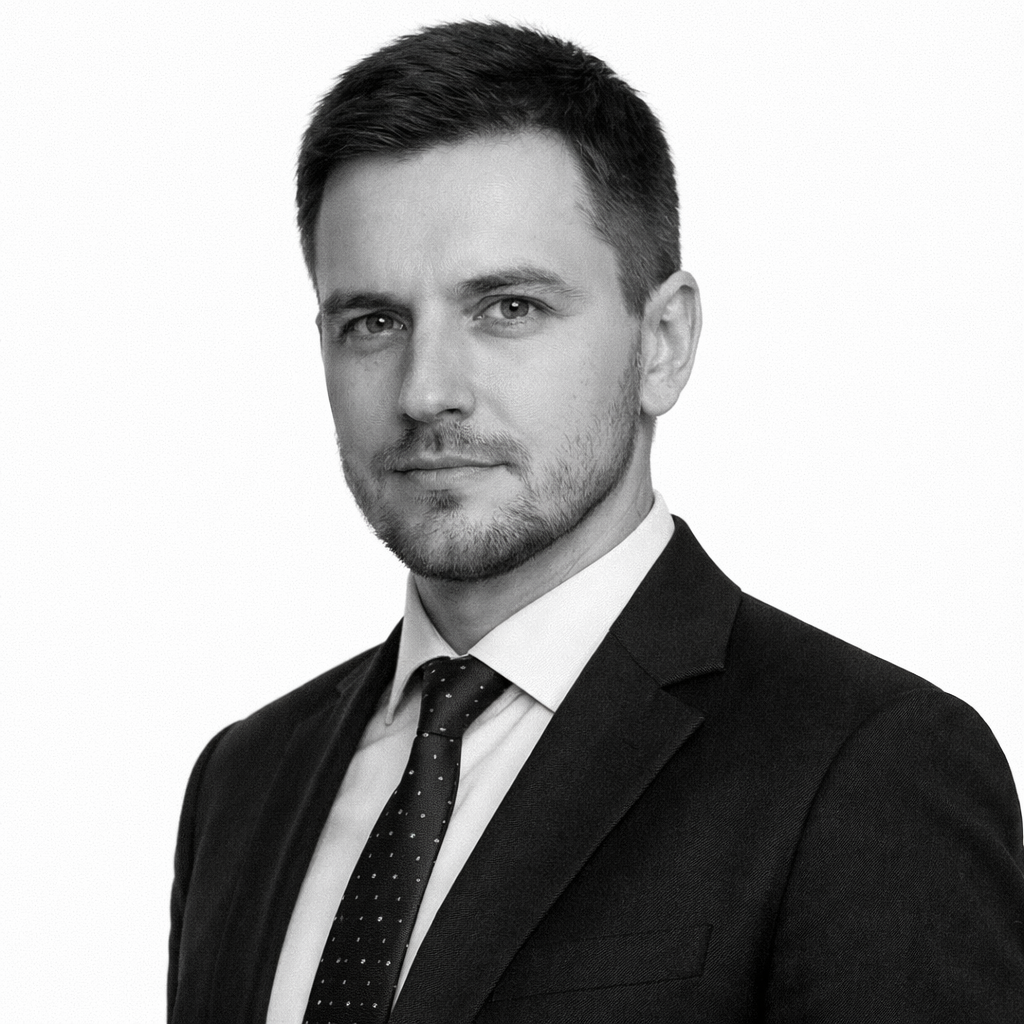


Yevhenii Khmara formally took control of Ukraine’s Defence Ministry on August 19 after parliament backed his appointment with 312 votes. The result ended the immediate uncertainty over who would run the country’s most consequential wartime ministry. Politically, however, the crisis surrounding the post remains far from resolved.
Khmara is not arriving after a routine cabinet reshuffle. His appointment follows one of the sharpest internal disputes of Ukraine’s wartime period, triggered by the July dismissal of Mykhailo Fedorov and followed by street protests, arguments over military leadership and questions about the consistency of defence policy.
Fedorov raised the stakes again just before the parliamentary vote. The former minister called for a legal mechanism to hold elections even if the war continues and described Ukraine as facing a systemic governance crisis. A dispute that began over one cabinet post has now widened into an argument about wartime political legitimacy.
The presidential administration, meanwhile, is facing pressure on another front after a new anti-corruption investigation involving senior officials. The timing means that Khmara’s confirmation comes as several separate controversies converge around the government at once, creating an unusually difficult political backdrop for a defence transition.
Daycom’s analysis indicates that Khmara’s appointment should not be understood as a simple change of names at the Defence Ministry. His task is to preserve continuity in wartime management, maintain the pace of reform and prevent the political confrontation surrounding his predecessor from disrupting the ministry’s daily operations.
Khmara has a markedly different professional profile from Fedorov. His predecessor entered the defence establishment as a civilian technology reformer. Khmara built his reputation inside the security system, with a career tied to special operations and senior responsibilities within Ukraine’s security apparatus.
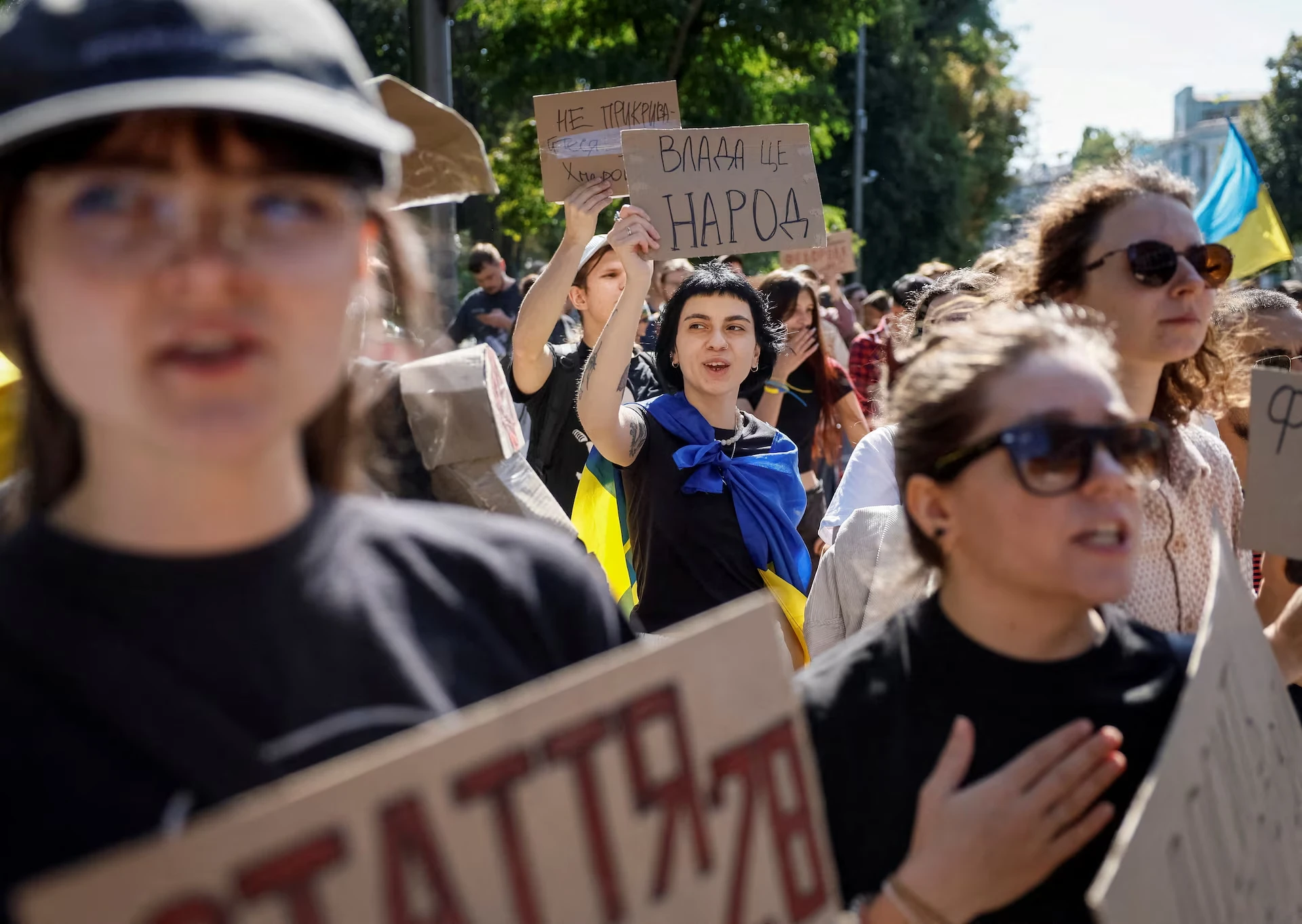 Учасники тримають плакати та вигукують гасла біля будівлі Верховної Ради під час мітингу на знак протесту проти рішення президента України Володимира Зеленського замінити Михайла Федорова на посаді міністра оборони на тлі нападу Росії на Україну, у Києві, Україна, 19 серпня 2026 року. Очікується, що український парламент розгляне кандидатуру Євгена Хмари на посаду міністра оборони після того, як президент Володимир Зеленський подав його кандидатуру після тижнів протестів — Гліб Гаранич
He is particularly associated with the development of Ukraine’s long-range strike capabilities. That field has become strategically important as Kyiv has expanded the use of drones and other systems against military, logistical and energy-related targets far beyond the immediate front line.
After the July crisis, Khmara was initially installed only in an acting capacity. That made him look like a transitional choice whose main responsibility was to keep the ministry functioning while the government searched for a permanent solution. Parliamentary confirmation now gives him a much stronger institutional mandate.
His most difficult problem, however, is larger than the daily flow of weapons and supplies. Ukraine has seen rapid turnover at the top of its Defence Ministry, with two recent ministers serving for only about half a year each. For an institution managing enormous budgets and long-term contracts, repeated leadership changes create risks of their own.
A new minister inherits programmes that cannot be paused for another internal reorganisation. Procurement contracts must continue, combat units need ammunition and drones, international partners require predictable counterparts, and technology programmes cannot simply stop while a new team learns the bureaucracy.
That makes continuity one of Khmara’s first tests. His success will depend less on unveiling another sweeping doctrine than on deciding which existing reforms should be preserved, which should be altered and how quickly he can impose his own management style without breaking programmes that are already functioning.
Fedorov entered the ministry in January promising a more data-driven model of war management. He emphasised drones, digital systems, procurement reform and shorter decision-making cycles, arguing that technological superiority could compensate for some of Ukraine’s disadvantages in manpower and conventional resources.
Six months later, he was removed. The president’s side presented the decision largely as the result of a dysfunctional working relationship with senior military leadership. Fedorov offered a different interpretation, saying entrenched resistance had obstructed reforms and exposed deeper disagreements over how the armed forces should be managed.
What might have remained an internal bureaucratic clash quickly moved into public view. Thousands joined demonstrations demanding Fedorov’s return and changes in the military leadership, an unusual display of sustained political pressure in a country where many domestic disputes had been muted since the full-scale invasion.
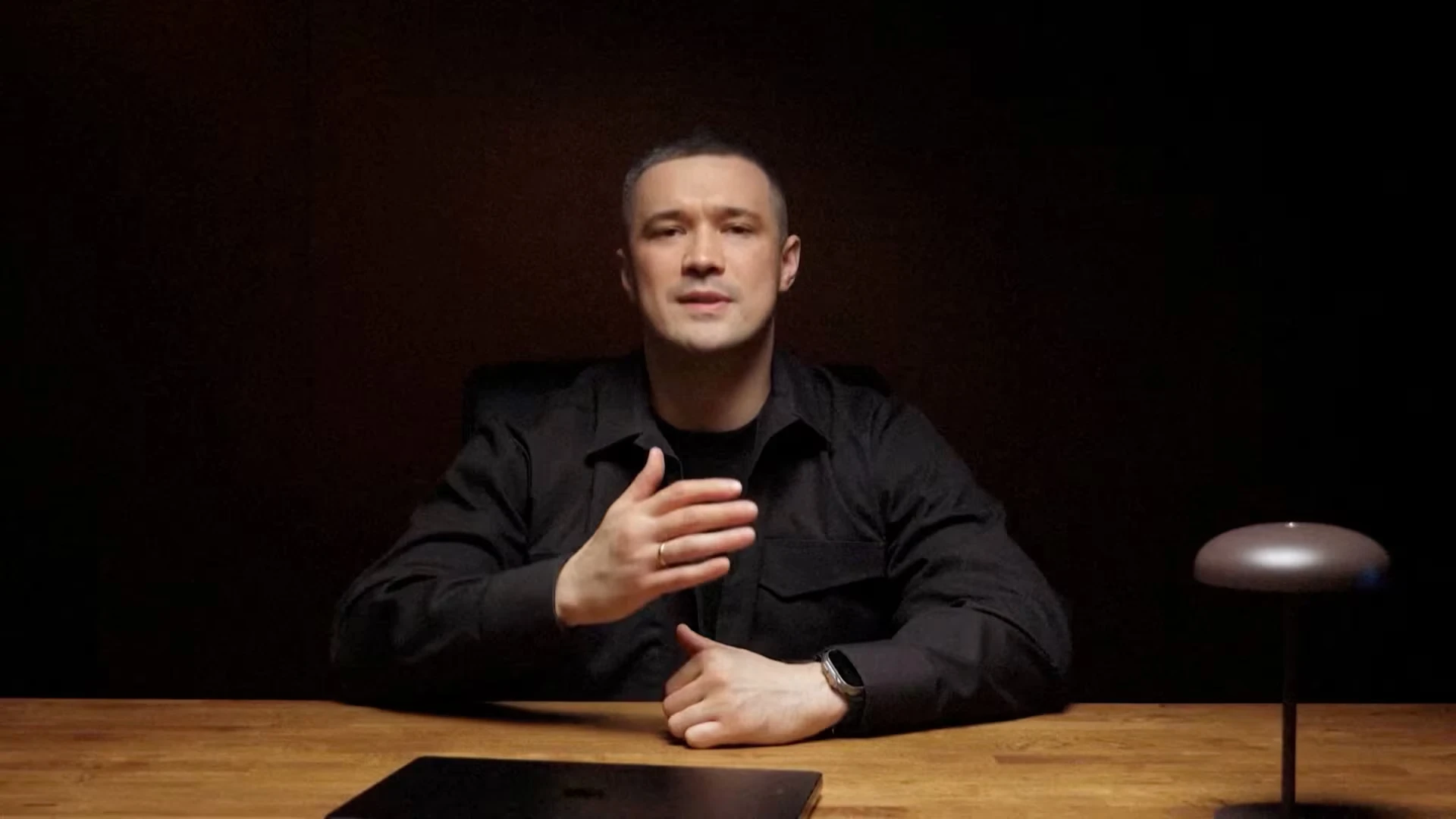
By the time Khmara was confirmed, however, the street campaign had lost much of its initial force. A rally supporting Fedorov near parliament on August 19 drew only a small number of participants, while some figures who had helped organise the original protests signalled that the campaign for his reinstatement was effectively over.
That matters for the new minister. Khmara is not taking office under the same wave of public hostility that surrounded the decision to remove Fedorov. Even some government critics acknowledge his military reputation and appear prepared to judge him by performance rather than by the politics of his appointment.
The underlying political conflict has not disappeared. Fedorov has simply moved it onto broader ground. Instead of fighting only to return to the Defence Ministry, he is now challenging the political framework under which the country is governed and asking how democratic mandates should be renewed if the war lasts indefinitely.
Public opinion, however, remains cautious about immediate elections. A majority of Ukrainians still oppose holding a national vote while active fighting continues, while a significant minority would consider elections only after a ceasefire backed by credible security guarantees.
That leaves Fedorov in an ambiguous position. He has found a potentially powerful political issue by presenting himself as an advocate of democratic renewal, but the proposal currently lacks a clear legal mechanism, a technical model and broad public support for implementation during active hostilities.
A wartime election would have to accommodate troops deployed at the front, millions of Ukrainians living abroad and large numbers of internally displaced citizens. It would also require secure polling, credible campaigning, independent observation and protection against cyberattacks and hostile influence operations.
For now, the legal position is unchanged. National elections remain barred while martial law is in force. Calling for a new mechanism does not mean such a mechanism already exists, but the very fact that a former senior minister is pressing the issue has moved the debate firmly into mainstream politics.
At the same time, a new anti-corruption investigation is adding to the strain on the presidential administration. Investigators are examining an alleged multimillion-dollar money-laundering arrangement connected to bail payments in an existing energy corruption case.
A senior official in the presidential office was removed shortly after investigative activity became public. She acknowledged that searches had taken place, said she was cooperating with investigators and stated that she would defend her reputation. The existence of an investigation does not itself establish criminal guilt.
For the government, the cumulative effect may matter more than any single scandal. Each episode can be explained separately as a personnel dispute, an institutional investigation or a consequence of wartime management. Together, they create an impression of political volatility at a time when military command depends heavily on predictability.
That is where Khmara’s role becomes particularly important. The Defence Ministry must remain functional regardless of how intense the struggle becomes between the president and his former ally. For the armed forces, opinion polls and political positioning matter far less than whether supplies arrive and decisions are made quickly.
Khmara has one advantage Fedorov did not: his background makes him more naturally aligned with the traditional security and military hierarchy. Yet the same quality could become a weakness if greater institutional comfort comes at the cost of reform momentum and a return to slower bureaucratic practices.
His tenure will therefore be judged on two levels. Operationally, he will be expected to keep the military supplied and strengthen Ukraine’s drone and long-range capabilities. Institutionally, he will be measured on whether procurement reform, digitalisation and accountability survive the leadership change.
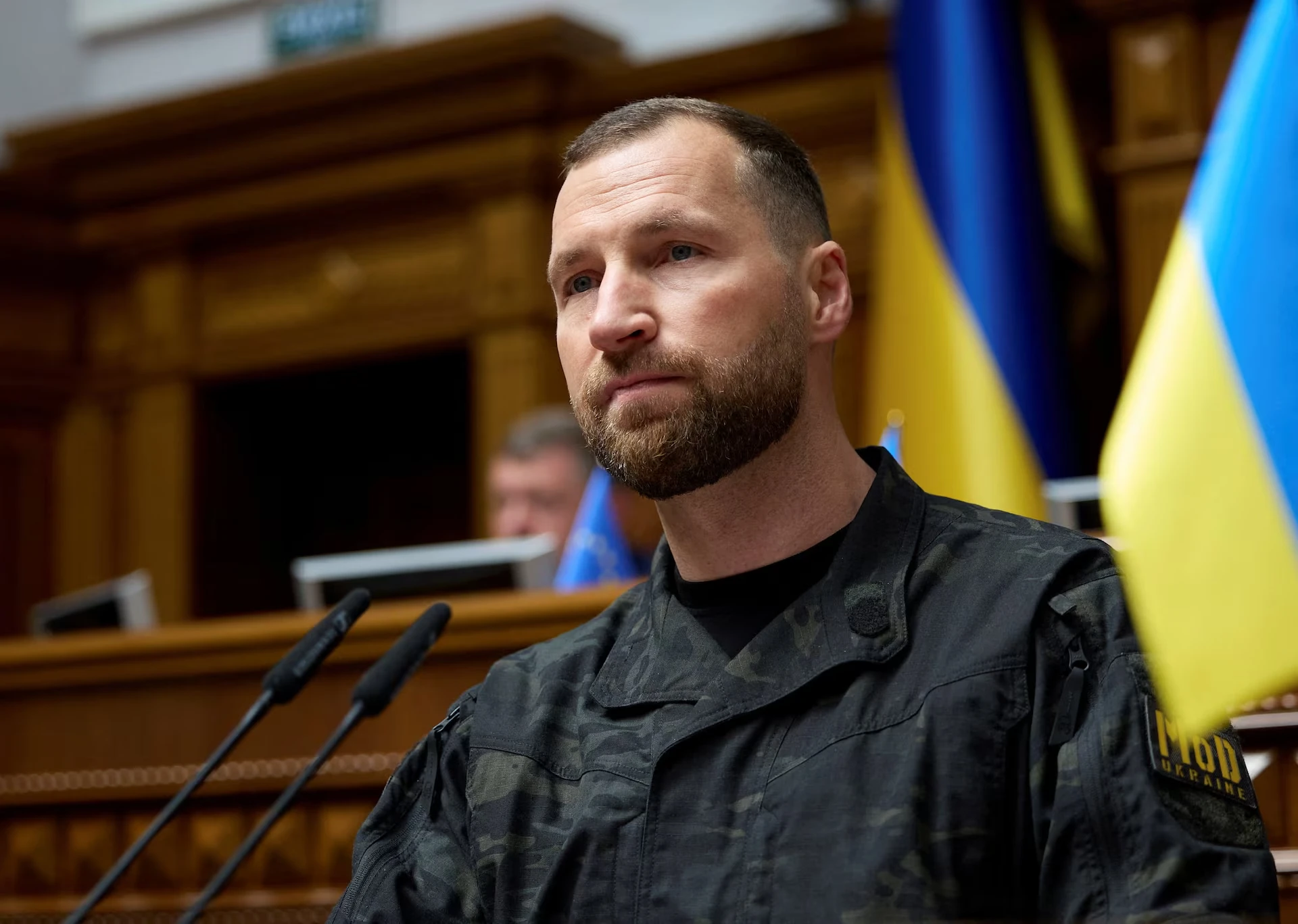 Новопризначений міністр оборони України Євгеній Хмара відвідує засідання українського парламенту на тлі нападу Росії на Україну в Києві, Україна, 19 серпня 2026 року — Stringer
The appointment also gives Zelensky an opportunity to close one of the most damaging personnel disputes of recent months. But a large parliamentary majority for Khmara does not answer the questions raised by Fedorov’s removal or erase public concern over how major wartime appointments are made and explained.
Khmara therefore inherits not only a ministry but a political liability created before his arrival. He will have to show that the change at the top does not mean another break in institutional development and that useful reforms can continue regardless of who originally introduced them.
Fedorov, meanwhile, is entering a different phase. With the campaign to return him to the ministry largely exhausted, he is free to define himself outside government. If he continues to build a public political role, the central question will be whether he is creating an alternative centre of influence rather than seeking another place inside the existing system.
That is why August 19 may prove more significant than an ordinary ministerial confirmation. Ukraine gained a permanent defence minister, but it also entered a period in which wartime effectiveness, anti-corruption credibility and future political competition are becoming increasingly difficult to separate.
Khmara takes office at a moment when a defence minister is expected to do far more than administer budgets and procurement. He must give the system a sense of continuity at a time when Ukraine cannot afford months of internal reorganisation while Russia continues to apply pressure both at the front and deep in the rear.
For the presidential administration, his performance will become a broader test of political recovery. If Khmara preserves technological modernisation, stabilises management and avoids another leadership conflict, the crisis triggered in July may gradually lose force. If not, the latest appointment may only postpone the next confrontation.