




















Ukraine’s parliament failed on September 1 to approve a package of legislation that would have changed the tax treatment of international parcels worth up to €150. The vote came as Kyiv undergoes a review of its IMF programme and the government warns that the funding gap for defence is becoming increasingly acute.
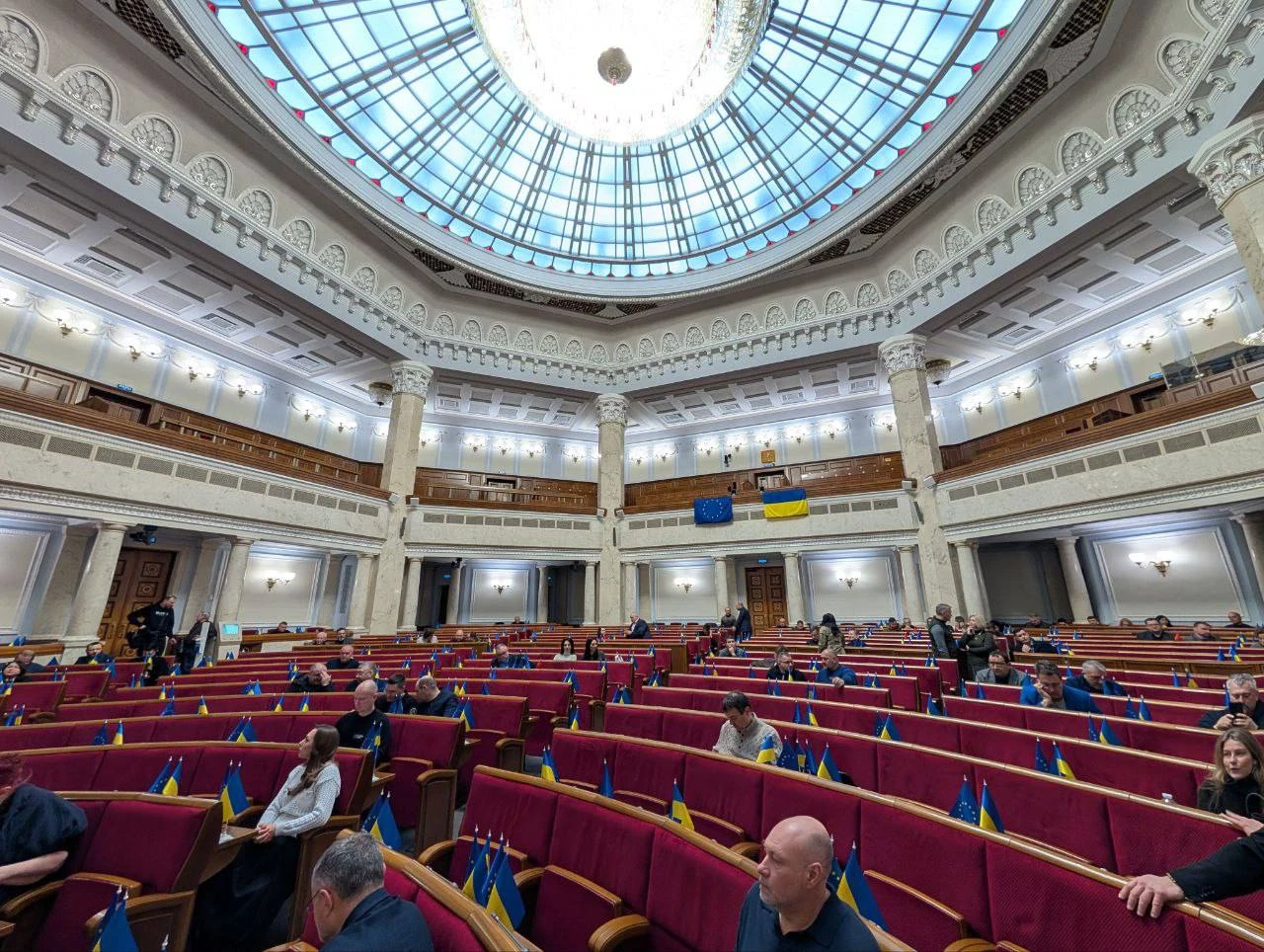
Parliament was in fact considering two linked bills rather than a single measure. Government bill No. 15460 dealt with customs procedures, while bill No. 15112-d covered VAT rules for e-commerce. The parliamentary finance committee had recommended that both be adopted.
Bill No. 15460 received 194 votes in its first reading, short of the 226 needed for passage. Seven lawmakers voted against it, 39 abstained and 66 did not vote. Parliament then backed returning the measure to the government for revision, meaning the customs component can still be brought back.
The tax bill, No. 15112-d, received 198 votes. Parliament also failed to find enough support to send it back for another first reading or further revision. As a result, the measure was rejected and removed from consideration.
Daycom’s analysis indicates that the parcel tax has become a much larger issue than the price of goods bought from foreign marketplaces. For the government, it is simultaneously a test of parliament’s ability to honour commitments to lenders, raise domestic revenue and preserve external financing as the war grows more expensive.
Under the current system, individuals can receive goods in international postal and express shipments worth up to €150 without paying VAT or import duty. Above that threshold, a 10% customs duty and 20% VAT are charged on the portion exceeding €150.
The proposed reform would have removed the VAT exemption for commercial purchases below €150. In practice, goods bought on foreign online platforms would have been subject to 20% VAT from the first euro of value. Non-commercial gifts between private individuals worth up to €45 would have remained exempt.
The government did not intend to require consumers to visit customs offices or calculate the tax themselves. The proposed model resembled the EU’s IOSS system, under which marketplaces include VAT in the final purchase price, collect it from the customer and transfer it to the state.
The Finance Ministry had stressed that the new system would not have taken effect before January 1, 2027, and only once postal operators, marketplaces and government IT systems were ready. Even if parliament had passed the legislation in September, parcel prices would not have changed overnight.
The government’s fiscal case rests on the rapid growth of low-value imports. In 2025, international postal and express shipments entering Ukraine were worth 167.3 billion hryvnias, with 92.9 billion hryvnias falling outside taxation because of the exemption. In 2023, the comparable amount was about 40 billion hryvnias.
During the first seven months of 2026, the total value of such parcels had already reached 136.3 billion hryvnias. Of that, 56.8 billion hryvnias, or roughly 42%, remained outside the VAT system because of the €150 threshold. The Finance Ministry estimated that the reform could generate about 10 billion hryvnias in additional annual revenue.
That is meaningful money for the state budget, but it does not by itself explain the political alarm surrounding the vote. Ten billion hryvnias is only about a quarter of a billion dollars. Much larger sums are involved because the reform forms part of Ukraine’s commitments to international partners.
The IMF programme explicitly lists the removal of the tax exemption for low-value imported parcels as a structural benchmark. Ukraine was expected to pass the relevant legislation by the end of July 2026, together with changes to the taxation of income earned through digital platforms.
By the time parliament voted on September 1, that deadline had already been missed. The IMF had previously warned that implementation of some structural reforms in Ukraine was slowing and that timely compliance remained critical to maintaining confidence in the programme and access to external financing.
The new four-year Extended Fund Facility is worth about $8.1 billion. Ukraine received roughly $690 million after the first review, while the programme schedule provides for another approximately $692 million after the second review, subject to performance targets and structural commitments.
It would nevertheless be inaccurate to say that Ukraine automatically lost €4 billion because of a single failed vote. Official documents do not establish a mechanism under which rejection of the parcel tax instantly cancels that entire amount. The issue concerns a broader package of unfulfilled conditions and future decisions by lenders.
President Volodymyr Zelenskyy said after the parliamentary session that three bills rejected that day could have unlocked more than $4 billion for Ukraine, while two additional decisions were directly connected to the IMF programme. More broadly, he linked about $30 billion in partner financing this year to decisions by the government and parliament.
According to Zelenskyy, roughly half of that work falls to the government: 44 decisions are expected to secure access to about $15 billion. Another approximately $15 billion depends on legislative action in parliament. He described some of those measures as difficult, unpleasant and unpopular, but necessary during wartime.
The stakes are especially high because of the condition of defence finances. Prime Minister Sergii Koretskyi told lawmakers that a government audit had identified a $27 billion gap in funding for the defence forces. He attributed it to the rising cost of the war, air-defence needs, new technologies and military support.
The dispute over parcels is therefore unfolding far beyond a narrow tax debate. Ukraine must simultaneously finance the front, social spending and repairs to infrastructure damaged by Russian attacks, while state needs are rising faster than domestic revenues can cover them.
For lawmakers who oppose the reform, the political argument is also clear. VAT on low-value foreign purchases could raise final prices for people already living through war, inflation and declining real incomes. The effect would be particularly visible for consumers who use foreign platforms precisely because goods are cheaper there.
The Finance Ministry argues that prices would not necessarily rise by exactly 20%. Marketplaces or sellers could absorb part of the tax through lower margins, discounts or adjustments to base prices. But the reform would undeniably introduce an additional cost somewhere in the transaction chain.
The government’s second argument concerns competition. A Ukrainian producer or importer operating through the regular retail system pays VAT, while a product ordered directly from abroad for less than €150 enjoys a tax advantage. Officials say that disparity is increasingly placing domestic businesses at a disadvantage.
The ministry has also pointed to schemes in which larger commercial consignments are divided into smaller parcels that formally remain below the tax-free threshold. For that reason, the reform is presented not only as a new tax but also as a way to reduce shadow imports and equalize conditions for Ukrainian and foreign sellers.
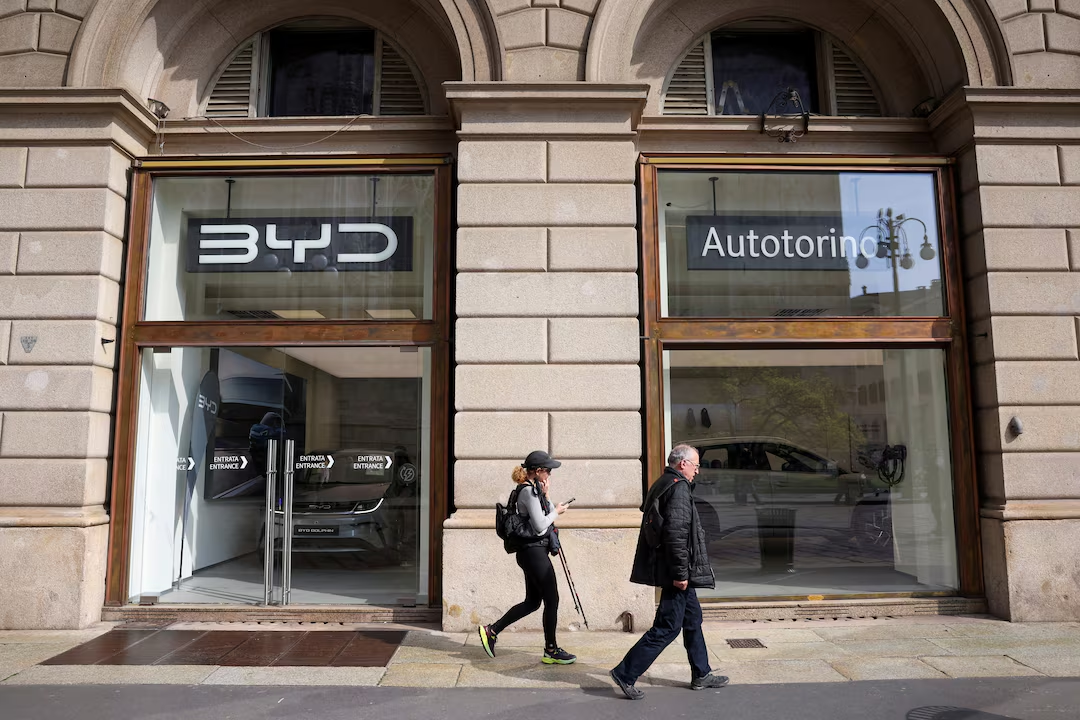
The European context partly supports that case. The EU has charged VAT on imported e-commerce goods regardless of value since 2021. From July 2026, the bloc also removed the customs exemption for parcels below €150 and introduced a temporary €3 charge per item.
Brussels has justified those changes by pointing to explosive growth in low-value e-commerce. About 5.9 billion low-value items entered the EU market in 2025, sharply increasing the burden on customs services and intensifying concerns about unfair competition.
For Ukraine, the debate has an additional dimension because the state budget remains heavily dependent on European support. Under the €90 billion Ukraine Support Loan for 2026–2027, around €45 billion is expected to be available this year, with a large share directed toward defence procurement and budget support.
The European Commission had previously planned another budget-support payment of roughly €3.7 billion in September, subject to the fulfilment of relevant conditions and safeguards. That does not mean the €3.7 billion tranche can be directly equated with the parcel-tax law, but it shows how sensitive the reform calendar has become.
European financing is structured around agreed benchmarks. Ukraine has already received tens of billions of euros under the Ukraine Facility, but each subsequent regular payment depends on how much of the reform agenda the government has actually completed.
That is why the failed vote matters beyond the roughly 10 billion hryvnias in potential VAT revenue. It adds another case to a broader problem already identified by the IMF: slower structural reform and difficulty securing parliamentary approval for some commitments. During wartime, lenders are assessing not only Ukraine’s budget figures but also its ability to deliver what it has promised.
The political paradox is that the parcel tax is far more difficult than its fiscal weight might suggest. Consumers would see the effect immediately in the checkout price of an online purchase. The benefit — a preserved tranche, a smaller deficit or more money for defence — is indirect and spread across the entire state.
The September 1 vote therefore exposed two competing political time horizons. Some lawmakers are focused on household costs today; the government is focused on budget shortfalls and lender conditions several months from now. Both concerns are real, but Ukraine’s current financing structure makes them increasingly difficult to separate.
The government can now revise bill No. 15460 and return the customs part of the reform to parliament relatively quickly. Bill No. 15112-d presents a more complicated problem: because it was rejected, restoring the underlying tax mechanism will require a new legislative initiative.
If the reform returns to parliament, the next vote will no longer be merely a debate about Temu, AliExpress or other foreign marketplaces. Lawmakers will have to decide what political price they are willing to pay to meet IMF and EU conditions — and what financial price the country can afford if those decisions are delayed again.
Against a $27 billion gap in defence financing, the arithmetic is especially unforgiving. The parcel tax itself cannot close Ukraine’s enormous budget shortfall. But its defeat has exposed a larger problem: substantial international financing remains available, while access to an increasing share of it depends on domestic decisions that are becoming politically harder to pass.